
Retrospectives
TTool · Retrospectives
“Regular team sessions examining what worked, what didn't, and how to improve.”
The sprint ended. Some things worked, some didn't. Nobody's stopping to ask which was which.
Retrospectives are agile's technique for structured team reflection. You gather at a regular interval, examine what worked and what didn't, and agree on specific actions to improve before the next one.
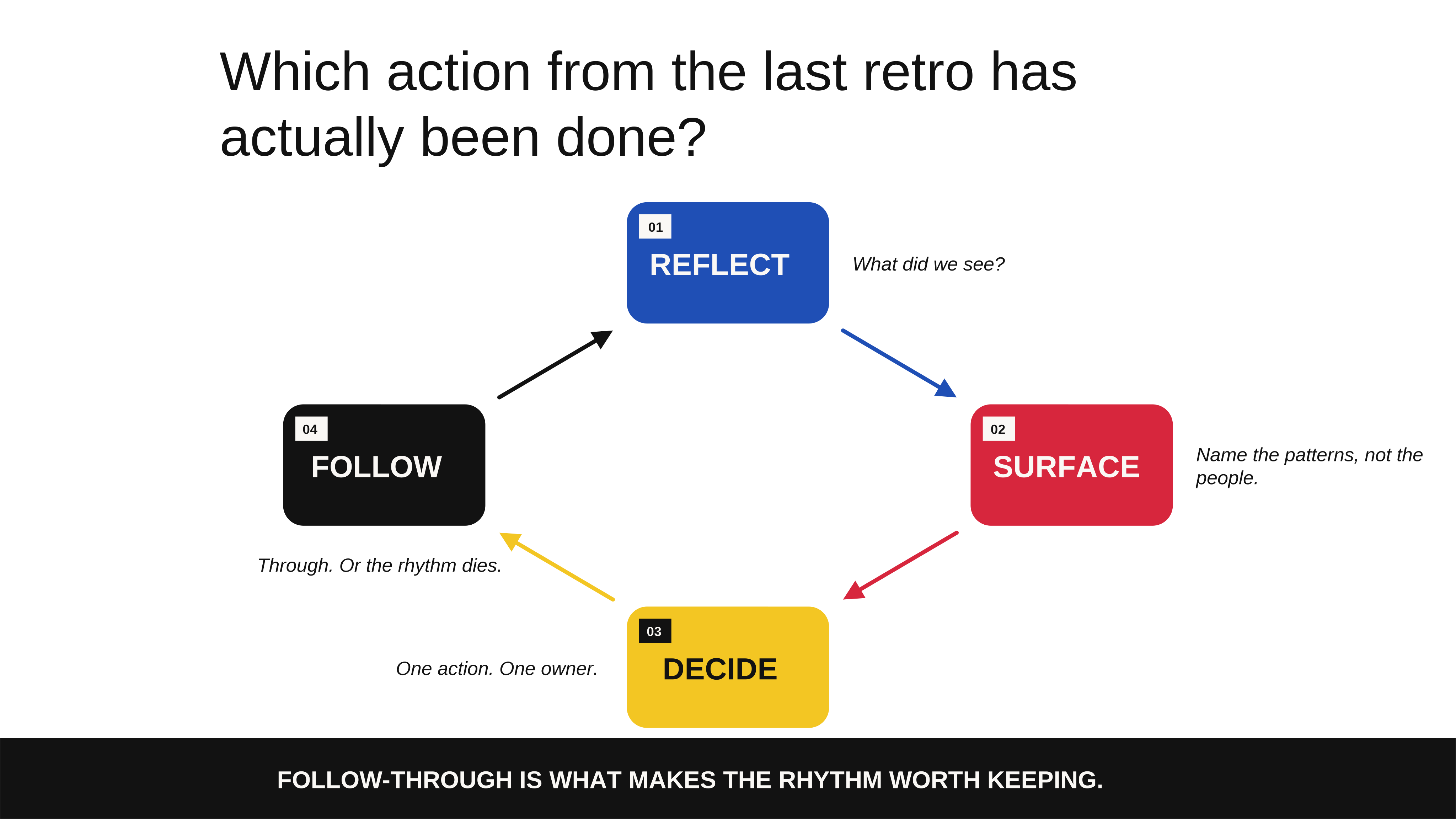
The value is in the rhythm, not the format. Sailboat, starfish, four Ls — the shape matters less than genuine engagement and follow-through on agreed actions. A retrospective that produces no change is an empty ritual, and teams learn this fast: after two or three rounds where nothing improves, honesty drops and attendance becomes grudging.
The technique needs psychological safety — people won't say what's actually wrong if they'll be punished for it. It also needs skilled facilitation to stop sessions becoming venting that feels productive but changes nothing. When it works, continuous improvement is embedded in team rhythm rather than left to chance.
Your next move: Which action item from your last three retrospectives has actually been done — and if the answer is 'none', what is the retrospective even for?
What it looked like for them
Marc Hedlund, Wesabe, 2010. Wesabe, a website for managing personal finances, lost to its rival Mint and shut down in the summer of 2010. That October Hedlund, who co-founded it and later ran it, wrote the post-mortem himself. He set out two mistakes. Wesabe chose not to use Yodlee, the service that collected bank data automatically for Mint, and built its own system too slowly.
And where Mint asked users to do almost no work, Hedlund put first the tools that would help people change their financial behaviour. "You can't blame your competitors or your board or the lack of or excess of investment," he wrote. A retrospective is worth what it names, and Hedlund's names two decisions and the person who made them.
“The dashboard says we're fine but I don't believe it.”