
Team Health Checks
“Regular assessments of team functioning across dimensions like mission clarity, collaboration, learning, support, and enjoyment.”
Something's off. The work gets done but the energy's wrong. Nobody's raised it and you're not sure how to start.
Team Health Checks are Spotify's structured assessment technique. You score team functioning across dimensions — mission clarity, collaboration, learning, support, enjoyment — using traffic-light indicators, then track the pattern over time.
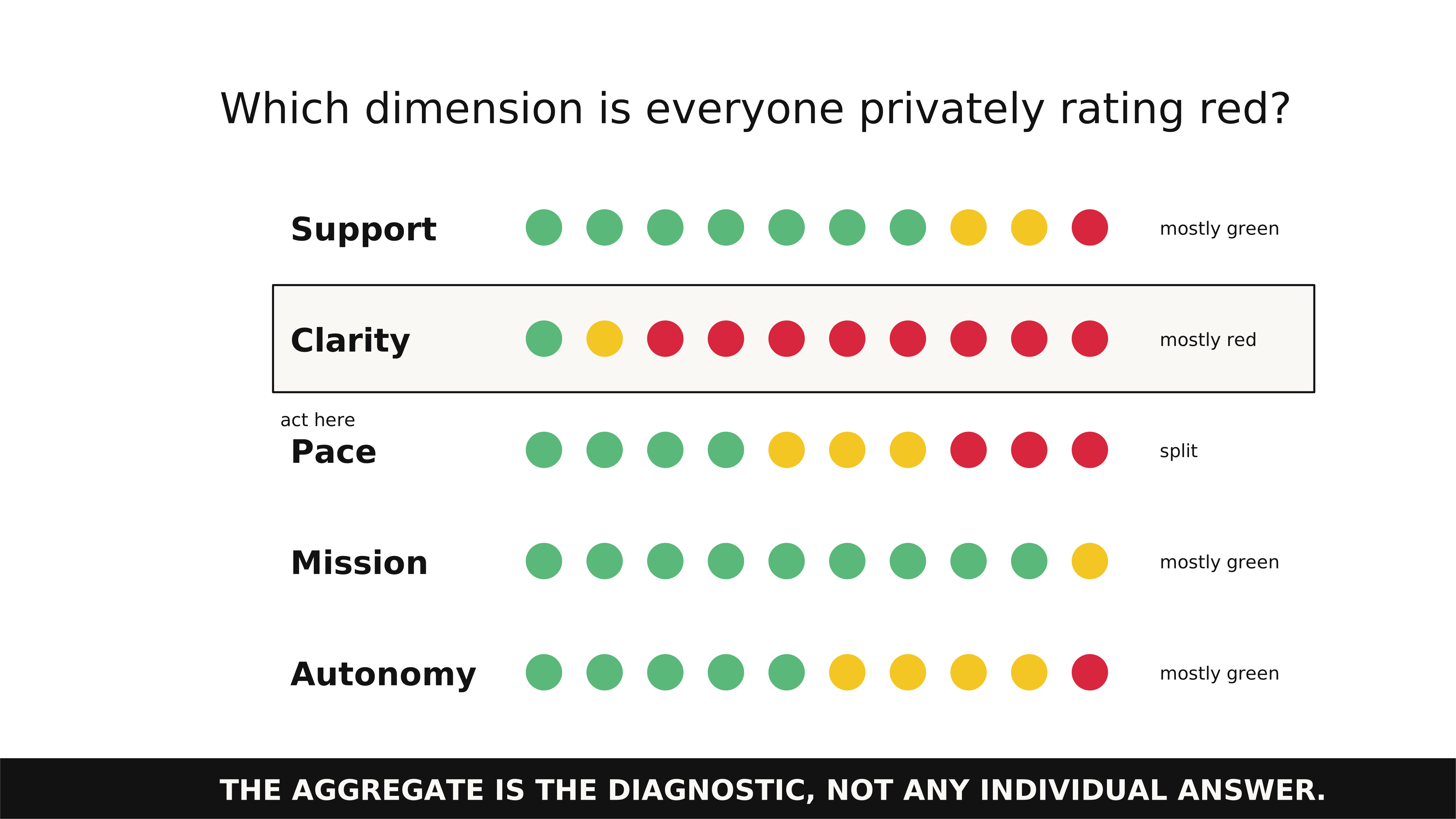
The scores aren't the point. The conversations they prompt are. A health check creates a structured opening to discuss team dynamics that would otherwise stay buried — the things everyone notices and nobody mentions. Run regularly, they reveal trends and catch problems early, while there's still time for a quiet fix rather than a crisis intervention.
The technique demands psychological safety; without it, people rate everything amber and the exercise produces comfortable lies. Results must drive improvement actions, not become performance measures that encourage gaming. When scores go to management as a judgement rather than back to the team as a mirror, honesty vanishes.
Your next move: Which dimension of your team's health would everyone privately rate red, but no one wants to say so out loud — and what's the cost of another quarter pretending it's amber?
What it looked like for them
Patty McCord, Netflix, 2000s. McCord noticed that the standard HR apparatus — expense policies, vacation tracking, formal performance reviews — was actively eroding morale by signalling distrust. Every policy said the same thing: we don't trust you to behave like an adult. Netflix stripped almost all of it. No vacation tracking. No expense approvals below a threshold. No formal reviews.
The team health check was implicit in the policy removal: if people took roughly the same leave without tracking (they did), if spending didn't increase without approvals (it didn't), if performance stayed high without formal reviews (it did) — the team was healthy. If any of those signals reversed, the team wasn't.
McCord's insight was that most team health checks measure symptoms. Netflix measured the environment. Remove the constraints that healthy teams don't need, and the team's behaviour tells you whether it's healthy or not. The check wasn't a survey. It was the absence of one.
“The dashboard says we're fine but I don't believe it.”