
Wardley Maps
“Simon Wardley's strategic mapping technique visualising value chain components by their evolutionary stage.”
The team is debating build versus buy again. Same components, same arguments. Nobody can quite say why this thing should be ours and that thing shouldn't.
Wardley Maps are Simon Wardley's strategic mapping technique. You plot the components of your value chain on two axes: how visible each one is to the user, and how mature it is — from novel custom-build at one end to off-the-shelf commodity at the other. The map shows where each component sits today, and where it's drifting.
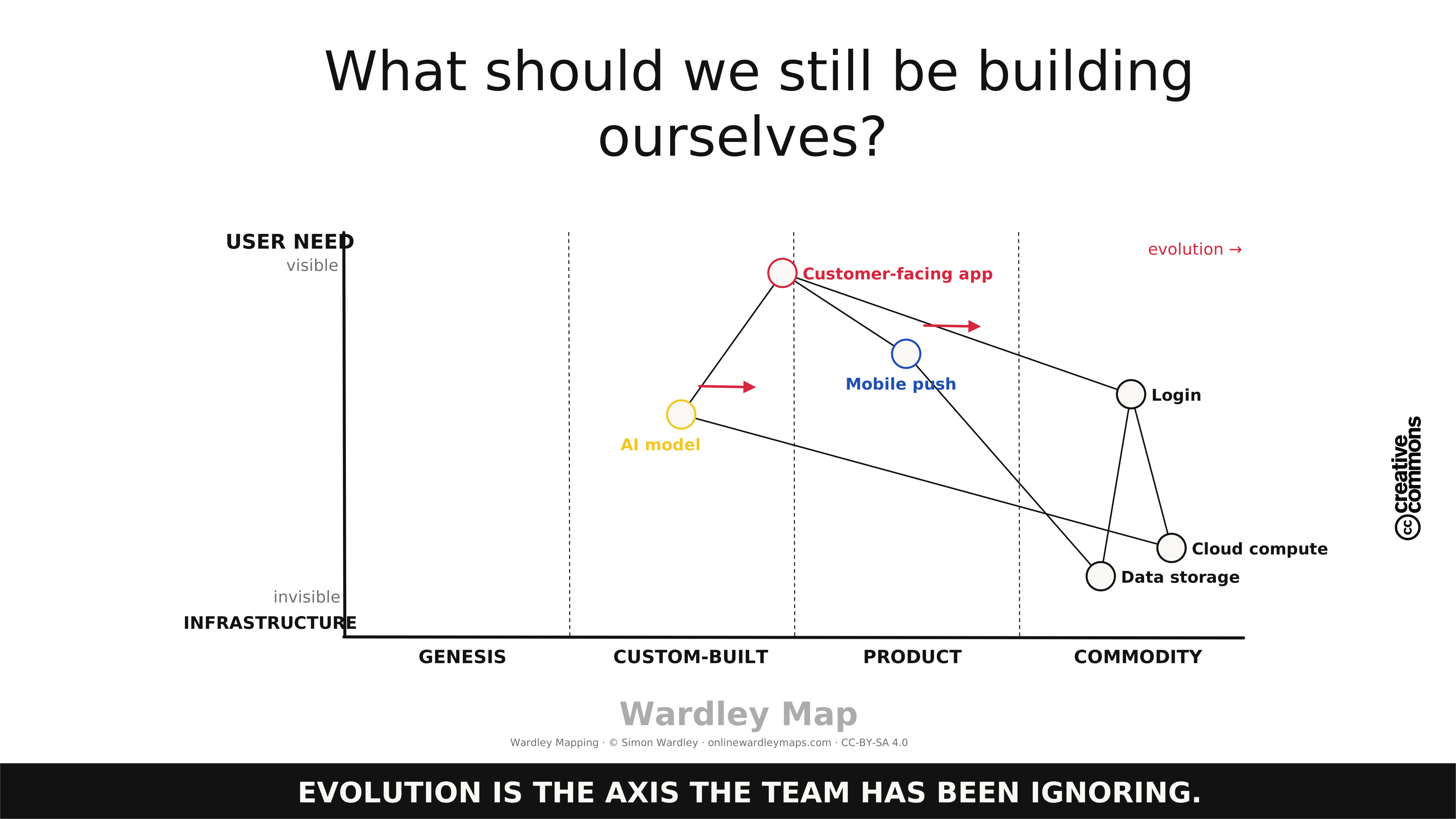
The map exposes assumptions executives leave implicit. The thing that was custom three years ago is a commodity now; the team building it doesn't always notice. Reach for it when the answer depends on understanding evolution rather than just the current snapshot — build-versus-buy, competitive positioning, investment prioritisation.
It's a poor fit for tactical decisions where a single component's position doesn't matter, and it's harder than it looks. Learning it inside an actual decision usually means making the decision twice.
Your next move: Which component of your stack is your team still custom-building because they always have — even though it's now a commodity that anyone can buy for the price of a coffee?
What it looked like for them
Aaron Harris, Tutorspree, 2011–2013. Tutorspree was a marketplace for in-person tutors. Almost all customer growth came from organic search — students typing "tutor in Brooklyn" into Google and finding Tutorspree. The conversion rate was good. The unit economics were good.
The growth curve was good. Harris knew the company was completely dependent on Google and planned to diversify once the next funding round closed. The round closed. They tried Facebook ads, paid search, university partnerships. Nothing generated enough volume at sustainable cost.
Then Google changed its search algorithm — a routine update, not aimed at Tutorspree — and organic traffic halved overnight. Six months later, Tutorspree shut down. A Wardley Map would have shown Google as a commodity component Tutorspree had no control over, sitting at the bottom of their value chain and bearing the full weight of customer acquisition.
The dependency wasn't hidden. Harris had named it, planned to fix it, and assumed he'd have time. The map would have made the structural fragility visible before the fix became urgent.
“I'm behind and I have to decide what to drop.”