
Innovation Funnel
“A stage-gate model for managing innovation portfolios.”
The innovation pipeline has too many ideas and not enough decisions. Resources are spread thin across initiatives at different stages of maturity. Nobody wants to be the one to kill a project that someone senior championed.
The Innovation Funnel is a stage-gate model for managing innovation portfolios. You set up progressive stages — broad exploration early, focused development late — with clear criteria at each gate, so that most ideas fail cheaply and early, preserving resources for the few with genuine potential.
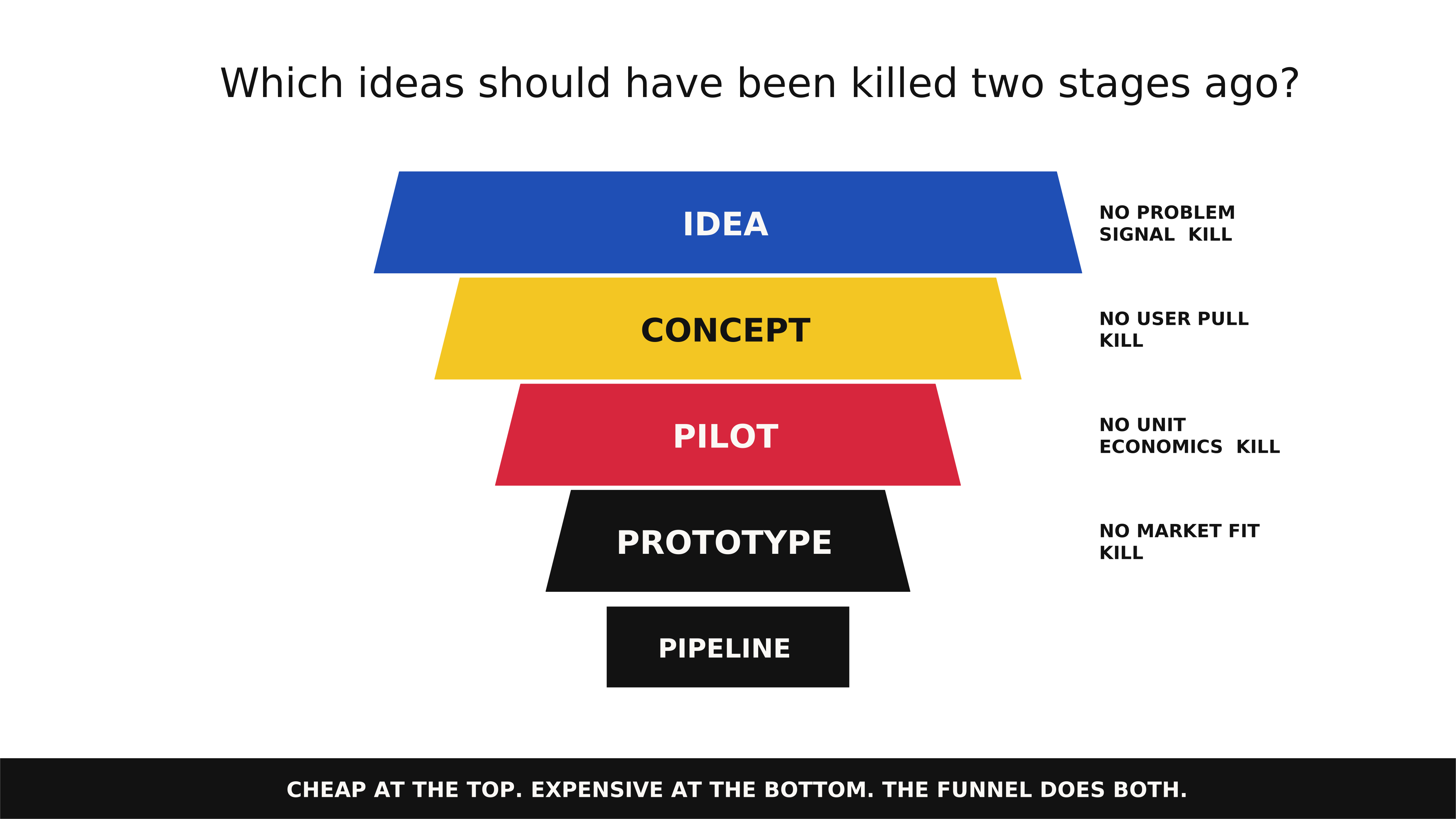
Its strength is making attrition intentional rather than accidental. Without it, ideas survive on politics rather than merit, and weak initiatives consume the resources that strong ones need. Reach for it when the organisation has more ideas than capacity and needs a disciplined way to decide which advance and which stop.
It works for balancing exploration (generating options) with exploitation (developing proven ones). It fails when gates are too strict — killing ideas before they've had a fair test — or too lenient, advancing everything and defeating the purpose. Without portfolio-level thinking, the funnel optimises individual ideas while the mix stays unbalanced.
Your next move: Which idea is currently consuming resources at stage three of your funnel that should have been killed at stage one — and who is too invested to let it go?
What it looked like for them
Brian Kovalchuk, Pabst Blue Ribbon, 2001 onwards. PBR's sales had been declining since 1977. The marketing budget was near zero. Competing with Budweiser and Miller for the mainstream was impossible. Kovalchuk's move was to stop trying.
Instead of pushing the brand through the standard funnel — mass awareness, broad consideration, mainstream purchase — he found the audience nobody else was fighting for. He sponsored indie bands, dive bars, bike messenger races, and independent record stores.
The brand entered communities where authenticity mattered and corporate marketing was actively unwelcome. The funnel was narrow by design: not many people in, but the ones who entered became fierce advocates. Sales doubled within five years and doubled again by 2009.
The brand eventually sold for several hundred times its bottom value. The innovation funnel's job isn't to maximise the top. It's to identify the right opening — the audience whose needs are unmet and whose loyalty, once earned, compounds. Kovalchuk found his opening where nobody else was looking.
“I'm behind and I have to decide what to drop.”