
OKRs
“Objectives and Key Results is a goal-setting framework pairing qualitative objectives with quantitative key results.”
The team has goals. Sort of. They're written down somewhere. But nobody can say how they'd know if they'd achieved them, and the quarterly review is a formality where everyone claims seventy per cent progress.
Objectives and Key Results (OKRs) is a goal-setting framework pairing qualitative objectives with quantitative key results. You define what you want to achieve (the objective) and how you'll measure progress (the key results) — then cascade them from company through teams to individuals, creating alignment while preserving autonomy in execution.
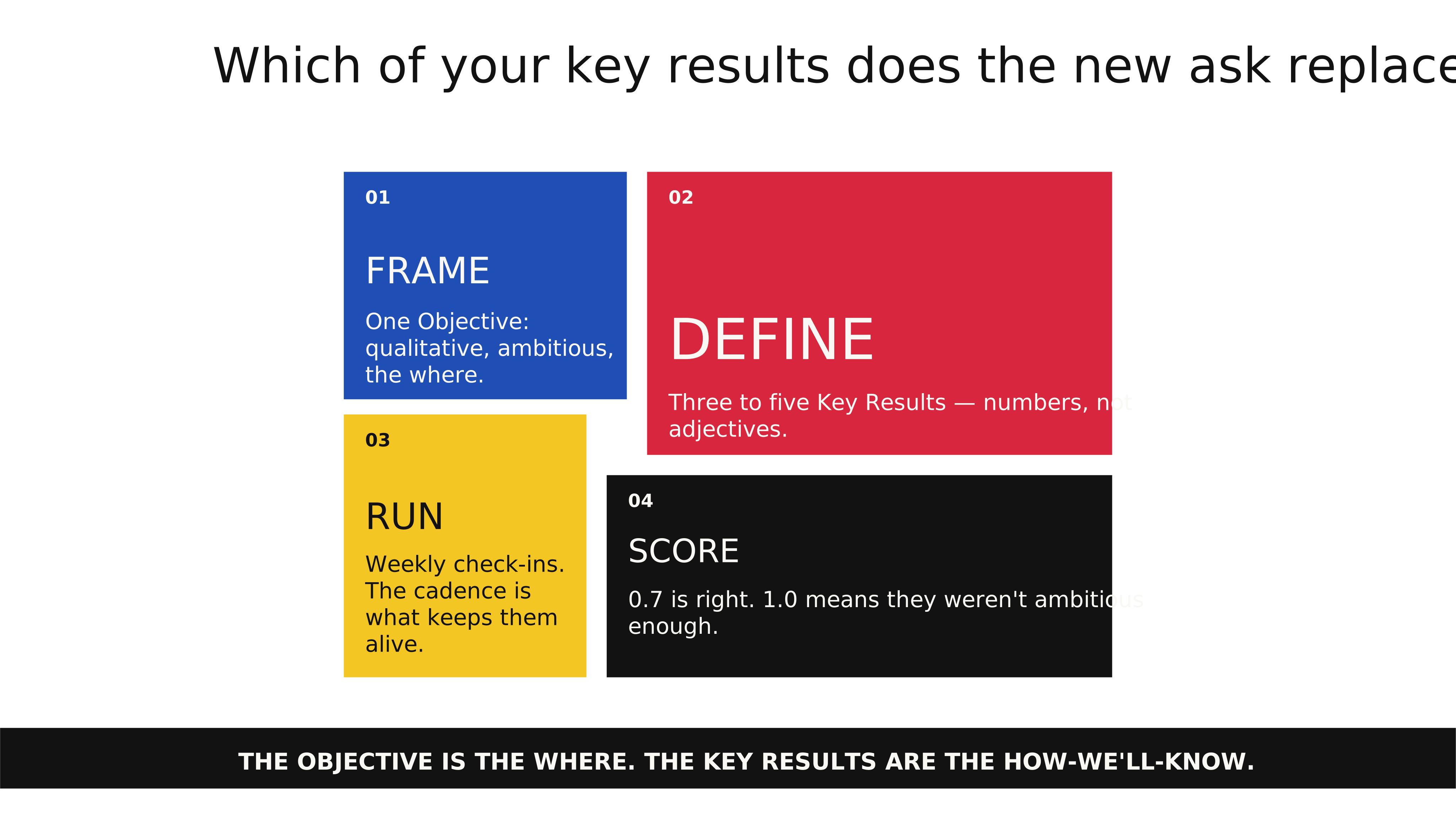
The framework's strength is forcing clarity about what success actually looks like — in numbers, not narratives. Seventy per cent achievement represents success; anything higher means the targets weren't ambitious enough. Reach for it when teams need shared direction with measurable checkpoints, or when "busy" has replaced "effective" as the default operating mode.
It fails when key results become task lists rather than outcomes — "launch feature X" isn't a key result, it's a to-do. Without alignment to strategy upstream, OKRs just measure activity. And the quarterly review discipline is non-negotiable; skip it and the framework decays into wallpaper.
Your next move: Are your current key results actually outcomes — or are they tasks dressed up in OKR language to keep someone upstairs happy?
What it looked like for them
Patty McCord, Netflix, 2000s. McCord was Netflix's Chief Talent Officer during the period when the company codified its operating culture in what became known as the Culture Deck. The deck didn't read like an HR document. It read like a strategy paper.
Every principle mapped to an observable behaviour and a measurable outcome. "Freedom and Responsibility" wasn't a value — it was an objective: hire people who don't need to be managed, measure whether they're producing results, act immediately when they're not.
The key results were baked into the culture itself: no vacation tracking (result: people took roughly the same amount of leave), no expense policy below a threshold (result: spending didn't increase), no formal performance reviews (result: the Keeper Test replaced them).
McCord's insight was that OKRs work when the objectives describe the culture you're trying to build, not just the metrics you're trying to hit. The Culture Deck set the objectives. Netflix's growth was the key result.
“I'm behind and I have to decide what to drop.”