
Value Proposition Canvas
“Strategyzer's tool for ensuring product-market fit by mapping customer profiles against value maps.”
The team is confident about product-market fit. But when pressed, the customer pains on the roadmap come from a workshop, not from customers. Nobody can quote a real user describing the problem in their own words.
The Value Proposition Canvas is Strategyzer's tool for testing product-market fit. You map a customer profile — jobs to be done, pains, gains — against a value map of pain relievers, gain creators, and products offered. Fit exists when the value map addresses what the customer profile actually says, not what the team assumes it says.
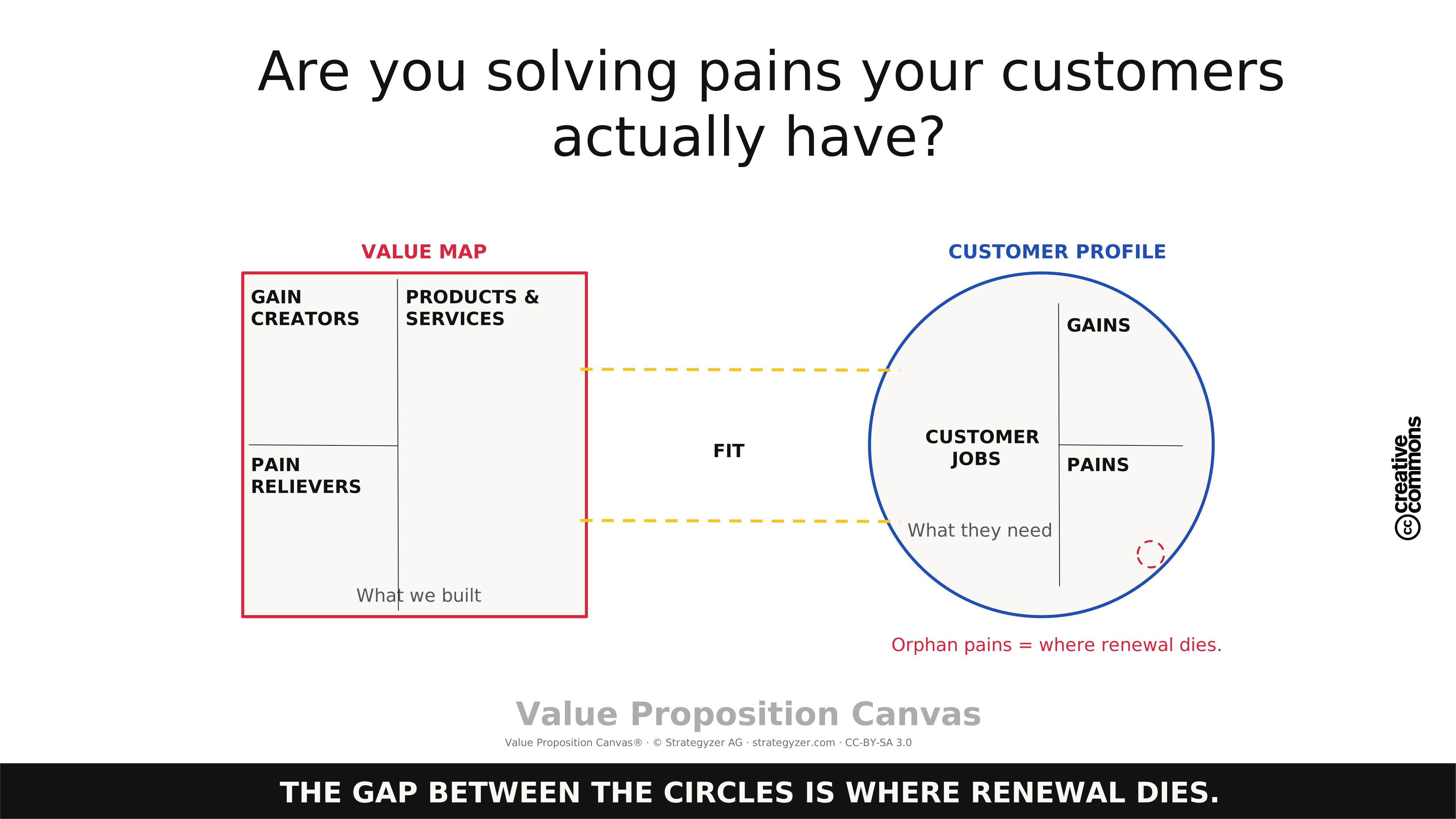
Its strength is making the gap between assumption and evidence visible. Teams often believe they have product-market fit because the logic feels sound internally; the canvas forces them to show the receipts. Reach for it when exploring new customer segments, when conversion data contradicts the team's confidence, or when the value proposition needs articulating for the first time.
It fails without genuine customer research feeding the profile side — a canvas filled from internal assumptions just validates the team's existing beliefs. For internal tools where the "customer" is captive, the effort rarely justifies itself.
Your next move: Which customer pain on your value map could you actually quote a real customer describing in their own words — and which ones did you make up in a workshop?
What it looked like for them
Intellibank, early 2010s. Intellibank was a file-sharing platform built before Dropbox existed in its current form. The product worked. The technology was sound. The investors were credible.
Enterprise clients tried it, used it for a while, then quietly stopped paying when renewal came. One of the founders put it in a single image: it's possible to sell soda in the desert because it's nice to have, but it's vastly easier to sell water because you'll die without it.
Intellibank was soda. Clients liked it. Their teams found it useful. None of them would have died without it. When budgets tightened — and budgets always tighten — the soda was cut first.
A value proposition canvas maps the gap between what customers say they want and what they'll actually pay to keep. Intellibank's canvas would have shown a product that scored well on "nice to have" and poorly on "can't live without." The gap between those two columns is where renewal rates go to die.
“I'm behind and I have to decide what to drop.”