
Scenario Planning
“A strategic planning technique exploring multiple plausible futures rather than predicting a single outcome.”
The strategy assumes the market stays roughly as it is. Nobody has asked what happens if it doesn't. The team is optimising for a single future that may not arrive.
Scenario Planning is a strategic foresight technique, pioneered by Shell, that explores multiple plausible futures rather than predicting one. You identify critical uncertainties, develop internally consistent scenarios around them, and test your strategy against each — not to forecast, but to prepare.
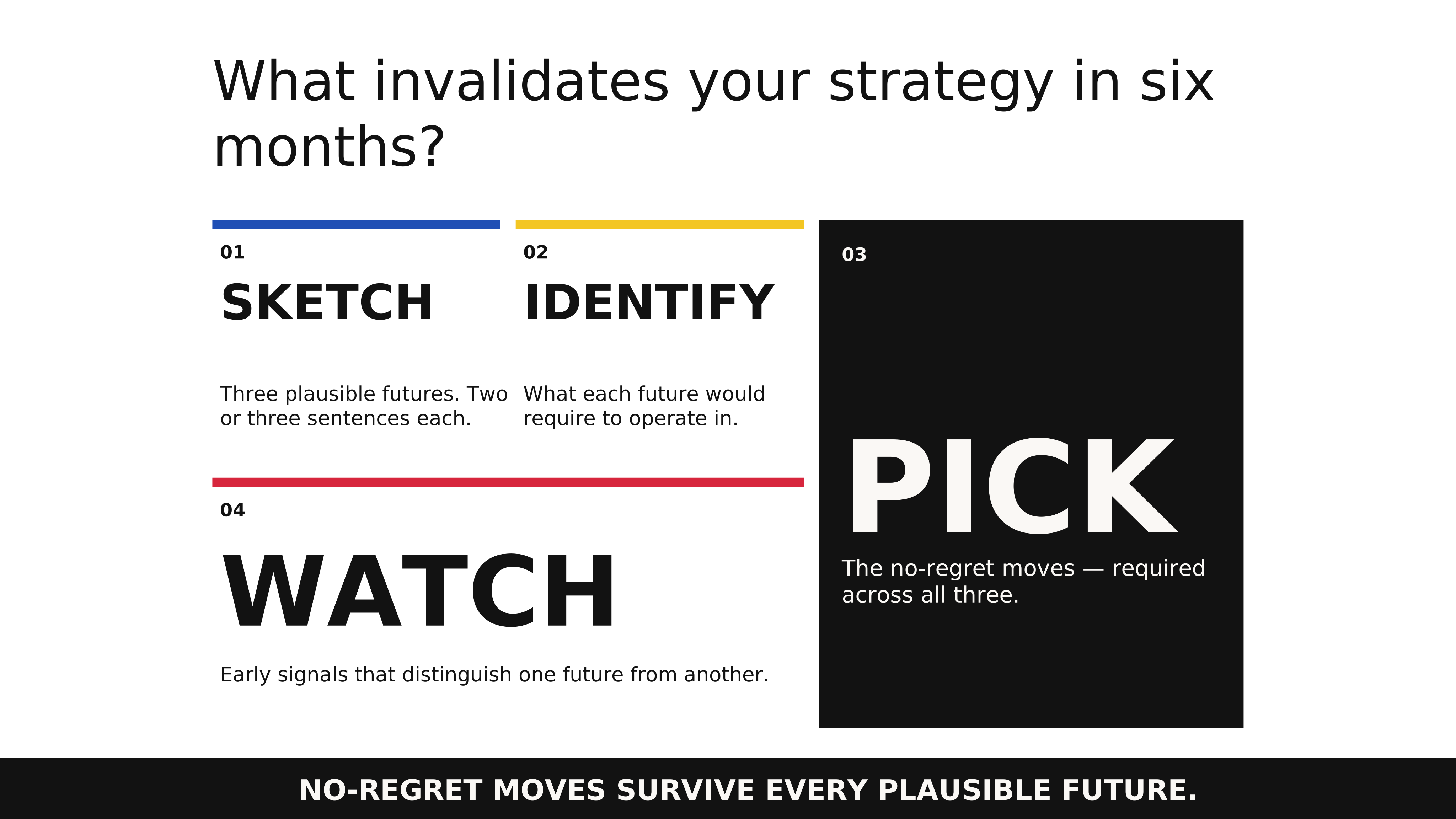
Its strength is expanding thinking beyond business-as-usual. Single-point forecasts feel precise but conceal fragility; scenarios expose which strategic bets survive multiple futures and which depend on one. Reach for it when the future is genuinely uncertain and consequential decisions can't wait for clarity — investment commitments, market entry, technology bets.
It reveals vulnerabilities and opportunities invisible in a single plan. It fails for short-term tactical decisions where the relevant variables are already known, and it needs diverse perspectives in the room — a homogeneous group will produce scenarios that all look suspiciously like the present.
Your next move: What's the one external change that would invalidate your current strategy in six months — and what are you doing today as if it couldn't happen?
What it looked like for them
Lookery, 2008–2009. Lookery was an advertising network built for the Facebook application ecosystem, launched when Facebook was aggressively opening its platform to developers. The business grew fast. The entire company depended on Facebook's platform policies remaining permissive. Facebook changed those policies without warning in 2009 — a routine update from their perspective, a business-ending event from Lookery's. There was no Plan B.
The dependency that failed wasn't a component the team could swap out; it was the platform their company existed on. They shut down within weeks. The lesson isn't "don't depend on Facebook" — that's retrofitted wisdom. Scenario planning exists precisely for the dependencies you'd rather not think about.
A single structured session asking "what happens if our platform partner changes the rules?" would have surfaced the exposure before it became fatal. The founders didn't fail to see the risk. They failed to plan for the scenario in which it materialised.
“I'm behind and I have to decide what to drop.”