
Real Options Theory
“Applying financial options thinking to product and project decisions.”
Someone in the room wants a decision today. The information to make it well won't arrive until next month. But the pressure to commit is winning over the logic to wait.
Real Options Theory applies financial options thinking to product and project decisions. You evaluate choices through three principles: options have value (flexibility is worth preserving), options expire (waiting too long has a cost), and never commit early unless you know why — because premature commitment destroys value that patience would have preserved.
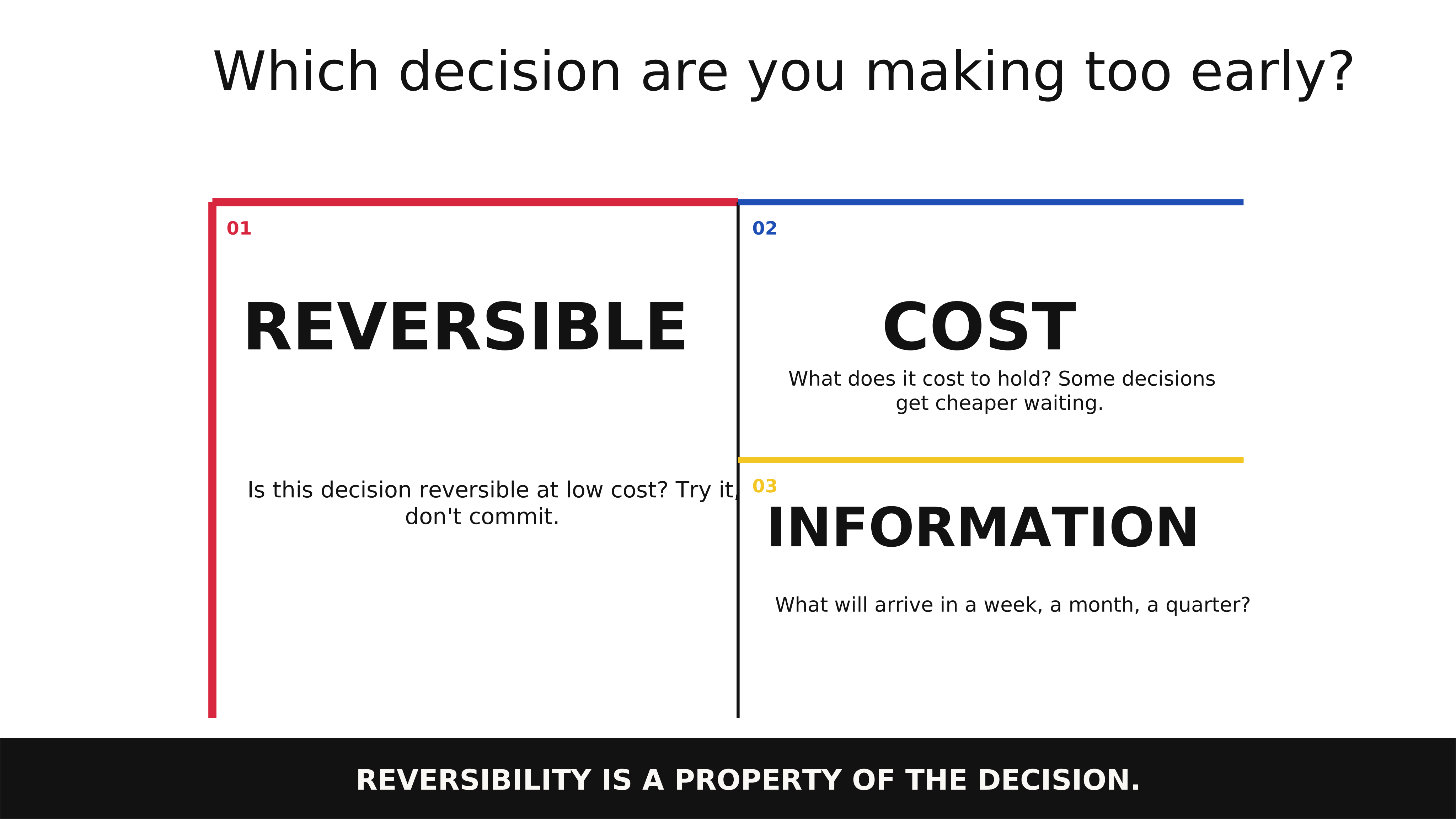
Its unique strength is giving "not yet" the same strategic legitimacy as "yes" or "no." Experienced practitioners do this intuitively; the framework makes it explicit and defensible. Reach for it when uncertainty is high and irreversible decisions are on the table — which, in product development, is most of the time.
It helps justify investments in flexibility even when they don't produce immediate returns. It fails when decisions genuinely can't wait — real deadlines exist, and the framework can become an excuse for indecision. For low-stakes, easily reversible choices, the overhead of options thinking isn't worth it.
Your next move: Which decision in your next meeting is genuinely irreversible — and which one are you about to treat as irreversible because someone wants closure?
What it looked like for them
Steve Huffman and Alexis Ohanian, Reddit, 2005. When Huffman and Ohanian built Reddit in its first weeks, they could have committed to a content strategy, hired editors, or signed deals with publishers. They did none of those things.
Instead, they created fake user accounts, seeded the site with links themselves, and waited to see what happened when real users arrived. Every decision was designed to be reversible. The fake accounts could be retired. The seeded content could be replaced.
The entire approach preserved optionality at every step — the founders never locked themselves into a path before the evidence justified it. When real users did arrive, the community developed its own norms, its own content patterns, its own governance structures.
Had the founders committed early to an editorial model or a content strategy, they'd have built something that couldn't evolve when the users showed them what Reddit actually was. The cheapest decision they made was the decision not to decide until they had to.
“I'm behind and I have to decide what to drop.”