
Disruptive Innovation Framework
“Clayton Christensen's theory explains how simpler, more affordable products can displace established competitors by serving overlooked segments before moving upmarket.”
A cheaper, simpler competitor keeps winning deals you didn't bother bidding on. Your team dismisses them — the margins are too thin, the product too basic. But their customer base is growing and yours isn't.
The Disruptive Innovation Framework is Clayton Christensen's theory of how simpler, more affordable products displace incumbents. You identify where new entrants are serving overlooked segments with products that appear inferior by traditional metrics but win on accessibility, simplicity, or cost — then trace the path those entrants will take as they move upmarket.
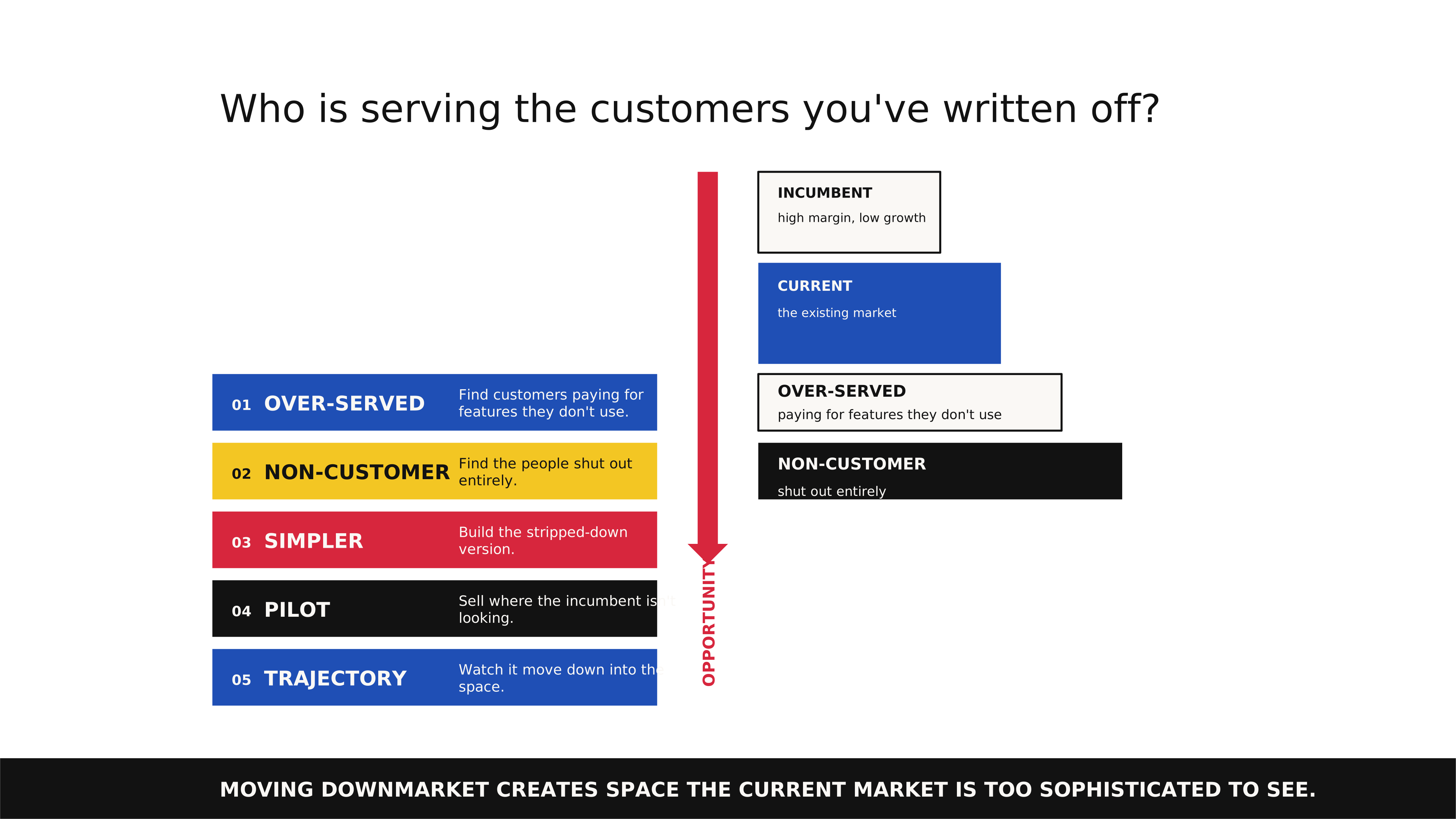
Its unique strength is explaining why rational incumbents lose: they ignore threats that don't yet serve their best customers. Reach for it when you need to assess whether a low-end competitor is a nuisance or an existential risk, or when exploring entry points into markets dominated by over-serving incumbents.
It fails when misapplied — not every new product is disruptive, and Christensen was precise about the mechanisms. Using it as a label rather than an analytical lens produces confident nonsense. Without a genuine strategic mandate, the analysis stays academic.
Your next move: Who is currently serving the customers you've decided aren't worth your time — and what happens in three years when they come for the ones who are?
What it looked like for them
Daniel Zhang, Alibaba, mid-2010s. When Zhang became CEO in 2015, every strategic option was a bigger version of what Alibaba already did — more categories, more merchants, more logistics. Standard e-commerce growth. Zhang's move was to change what the company was for. He integrated cloud computing, digital media, mobile payments, logistics, and entertainment into a single ecosystem where each part fed the others.
A customer who paid through Alipay, received goods via Cainiao, watched content on Youku, and used Alibaba Cloud at work was no longer a customer of an e-commerce platform. They were a customer of an infrastructure layer. The disruption wasn't aimed downmarket in the classic Christensen sense — it redefined which market the company was in.
Competitors still optimising their e-commerce operations found themselves competing with an ecosystem they couldn't replicate one piece at a time. The disruption came from redefining the territory, not from attacking the existing one from below.
“I'm behind and I have to decide what to drop.”