
Business Model Canvas
“Alexander Osterwalder's strategic template covers nine building blocks: customer segments, value propositions, channels, customer relationships, revenue streams, key resources, key activities, key partnerships, and cost structure.”
Everyone agrees the business model needs rethinking. Nobody agrees on what the current model actually is. The last strategy deck was forty slides and still dodged the hard questions.
The Business Model Canvas is Alexander Osterwalder's strategic template. You map nine building blocks — customer segments, value propositions, channels, customer relationships, revenue streams, key resources, key activities, key partnerships, cost structure — onto a single page, forcing a coherent picture of how the organisation creates, delivers, and captures value.
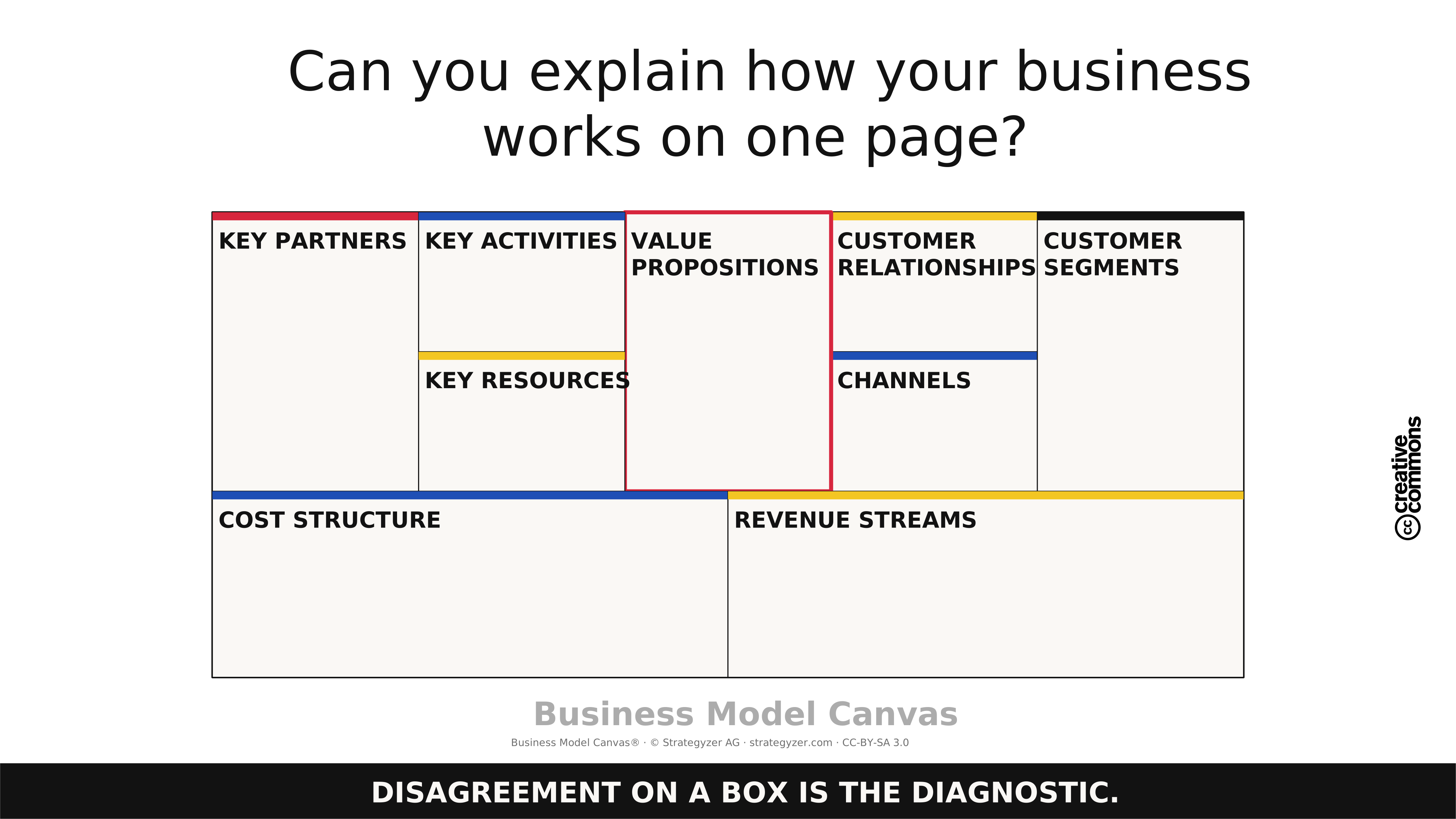
The canvas earns its keep in the arguments it provokes. When different people fill in the same box differently, the disagreement reveals unstated assumptions and strategic confusion that longer documents quietly bury.
Reach for it when the team needs a shared, challengeable picture of the business model — whether for redesign, partnership discussions, or simply alignment. It fails for small feature-level decisions where the whole model isn't in play, and it flatlines without cross-functional input. A room of like-minded people will produce a comfortable canvas, not an accurate one.
Your next move: Which box on your business model would your team argue about hardest right now — and why has no one called that meeting yet?
What it looked like for them
Outbox, 2012–2014. Outbox built an elegant system for intercepting physical mail, scanning it, and delivering a digital version to subscribers. The technology worked. The logistics were genuinely hard and they'd solved them.
The design won awards. What they hadn't solved was the business model underneath. People who still received physical mail had a relationship with it closer to tolerance than frustration — they weren't suffering from it, just living with it.
The amount they'd pay to stop was well below what the operation cost to run. Every box on a Business Model Canvas would have looked reasonable in isolation: customer segment identified, value proposition articulated, channels built.
The gap was in the relationship between the boxes — specifically, between what customers said they wanted and what they'd actually pay for. The founders' post-mortem named it directly: liking and needing are different things, and only one of them sustains a business model.
“I'm behind and I have to decide what to drop.”