
Pirate Metrics
“Dave McClure's AARRR framework: Acquisition, Activation, Retention, Revenue, and Referral.”
You're spending on acquisition. Growth isn't happening. Nobody's checked whether the problem is further down.
Pirate Metrics is Dave McClure's AARRR framework: Acquisition (how users find you), Activation (first great experience), Retention (users returning), Revenue (monetisation), and Referral (users recommending). You map your funnel to these five stages, measure each one, and find where it actually breaks.
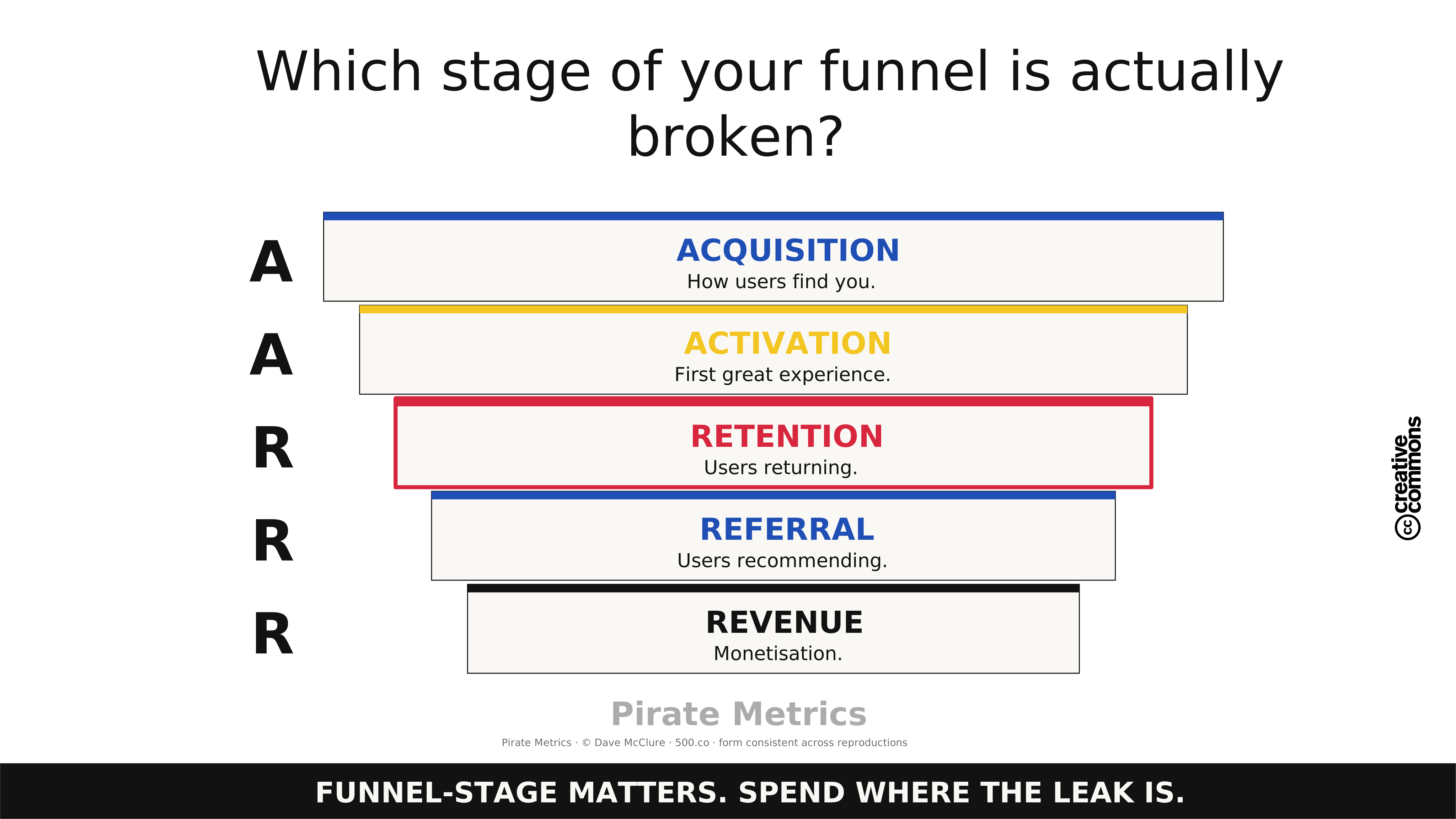
The sequential logic is the insight. Later stages depend on earlier ones — pouring spend into acquisition is pointless if activation is broken, and improving retention is wasted if nobody's arriving. The framework reveals your actual bottleneck and prevents scattered optimisation that treats symptoms rather than causes.
It works best when teams identify the current constraint and focus there, resisting the urge to improve everything at once. The model suits consumer and self-serve products with measurable funnels. It's less useful for B2B enterprise sales where buying cycles are long, multi-threaded, and don't fit neatly into five sequential steps. Without funnel data to populate it, the framework is just a diagram.
Your next move: Which stage of your funnel is your team currently pouring acquisition spend into when activation is the actual broken step — and who benefits from not noticing?
What it looked like for them
Chris Poole, DrawQuest, 2014. DrawQuest's AARRR funnel told a clear story — but only if you read it from left to right and stopped before the end. Acquisition: 1.4 million downloads. Activation: strong — users created drawings immediately.
Retention: solid — 400,000 monthly active users returned regularly. Referral: organic sharing drove steady growth. Revenue: zero. The first four stages of the pirate metrics funnel were genuinely healthy. The fifth was empty.
DrawQuest had built a product people acquired, activated on, retained with, and referred to friends — and never paid for. Poole shut the company down. The pirate metrics framework is designed to show exactly this: where the funnel breaks. DrawQuest's break was clean and visible at the Revenue stage.
The team had the framework. They had the data. What they didn't have was a mechanism to convert the engagement the first four stages had built into the income the fifth stage required. The funnel diagnosed the problem perfectly. The diagnosis arrived too late.
“The dashboard says we're fine but I don't believe it.”