
KPI Tracking
“The systematic monitoring of Key Performance Indicators.”
You review the dashboard every Monday. The numbers move. Nothing else does.
Key Performance Indicator (KPI) tracking is the practice of systematically monitoring a small set of indicators that measure progress toward important objectives. You select the right indicators, establish baselines, set targets, and review regularly — then act on what you find.
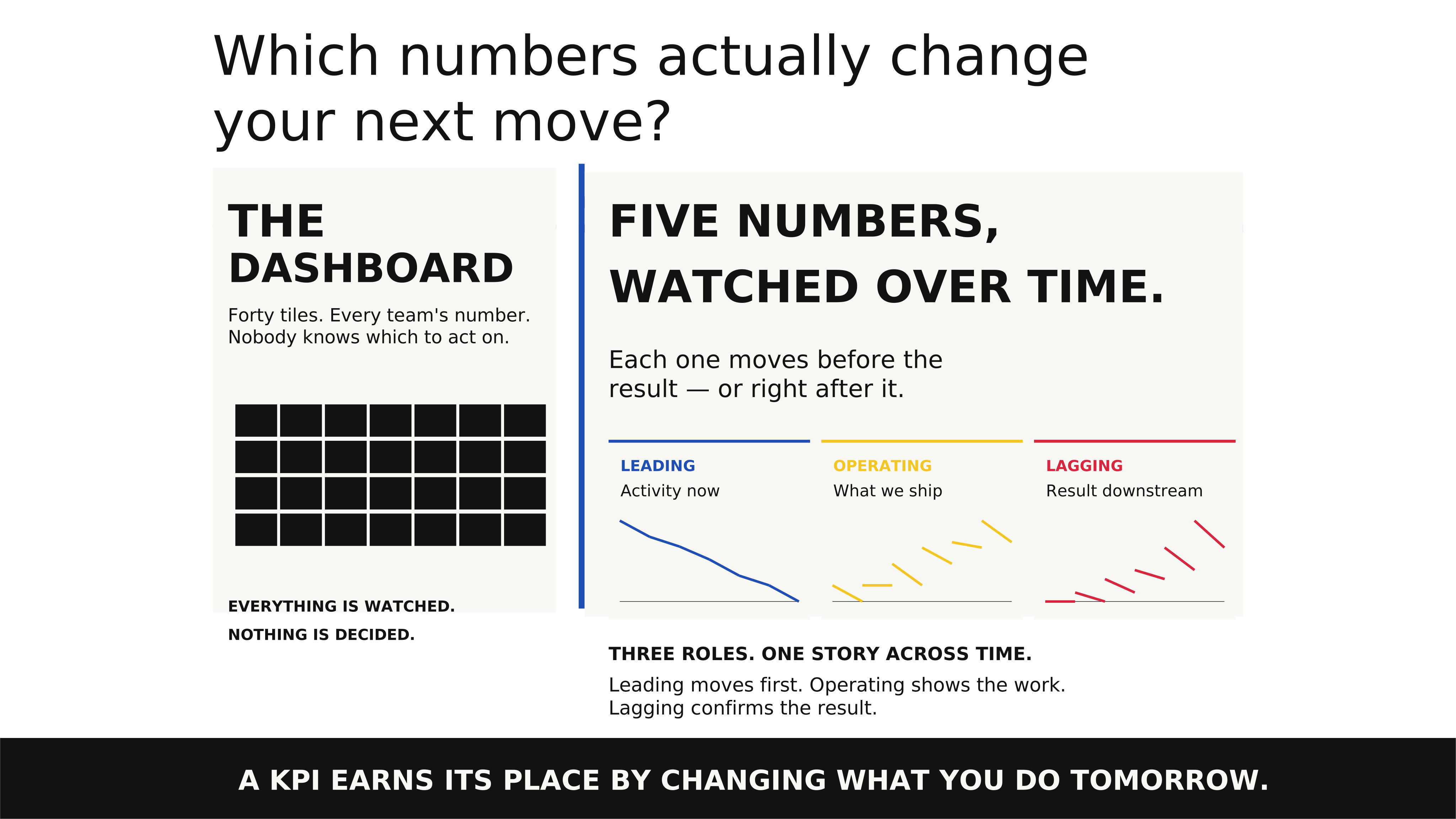
The discipline is in selection, not measurement. The SMART criteria are widely cited and widely honoured in the breach — teams that tick the acronym boxes often end up measuring what's convenient rather than what matters. Leading indicators predict future performance and give you time to course-correct; lagging indicators confirm past results and tell you it's too late.
Both have roles, but overloading on lagging metrics turns the dashboard into a rearview mirror. KPI tracking creates accountability and surfaces problems early, when correction remains possible. It fails when the numbers become decorative — reviewed out of habit, triggering no action, connected to no decision. If a 20% swing wouldn't change your behaviour, the indicator isn't key.
Your next move: If your top KPI moved 20% next month, would you actually do anything different — or have you been tracking it for so long that the number has become decorative?
What it looked like for them
Boeing, 737 MAX, 2010s. The KPIs existed. Production targets were tracked. Delivery schedules were tracked. Cost-per-unit was tracked. What wasn't tracked — or rather, what was tracked but never escalated — was the safety data that contradicted the production story.
The MCAS system's reliance on a single sensor was a known risk. Engineers had flagged it. But the reporting structure routed safety concerns through business-unit heads whose performance was measured against delivery timelines, not safety margins.
The KPIs that could have caught the problem were subordinate to the KPIs that couldn't. Two crashes. Three hundred and forty-six deaths. The fleet grounded for over a year. KPI tracking works when the hierarchy of metrics reflects the hierarchy of risks. Boeing's metrics hierarchy reflected the hierarchy of commercial priorities instead.
The most important KPI — "will this aircraft kill someone?" — was buried beneath the ones the quarterly review rewarded. Tracking the wrong KPIs with precision is worse than tracking nothing at all, because precision creates the illusion that someone is watching.
“The dashboard says we're fine but I don't believe it.”