
Innovation Metrics
“Measures for tracking innovation inputs, activities, and outcomes.”
You're spending on innovation. Leadership wants proof it's working. The numbers you have measure effort, not outcomes.
Innovation metrics are measures for tracking innovation inputs, activities, and outcomes across an organisation. You select indicators at each stage — investment and time allocated, experiments run and prototypes built, new products launched and revenue generated — then watch whether the portfolio is actually producing.
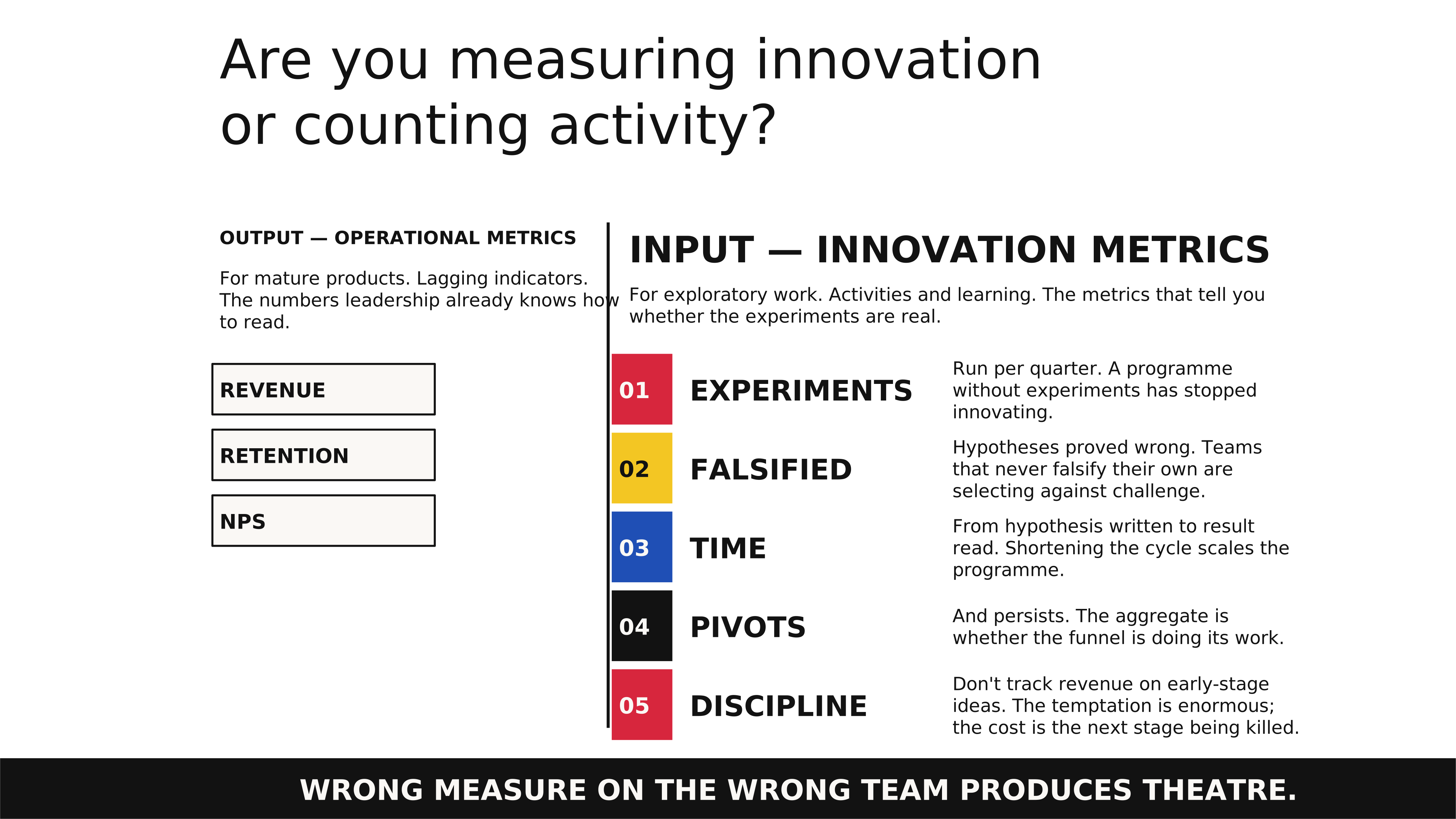
The challenge is measuring what matters rather than what's easy to count. Ideas generated means nothing if they're all incremental. Experiments run means nothing if none were risky enough to fail. Effective measurement balances leading indicators that predict future success with lagging indicators that confirm past results.
The critical failure mode is Goodhart's Law in action: the moment innovation metrics become targets, teams optimise for the metric rather than actual innovation — running safe experiments to hit a count, filing patents nobody will use. Without leading indicators, you'll only discover the pipeline is dry when it's too late to fill it.
Your next move: Which innovation metric on your dashboard is your team currently optimising in ways that have nothing to do with actual innovation — and how would you know the difference?
What it looked like for them
Chris Poole, DrawQuest, 2014. DrawQuest was a drawing app with genuine product-market fit. The numbers were real: 1.4 million downloads, 400,000 monthly active users, high engagement, positive reviews. By every innovation metric the team tracked, the product was working. Users were creating, sharing, and returning. The innovation had landed. What hadn't landed was a business underneath it. DrawQuest had no revenue path.
The users who loved the product had no mechanism to pay for it, and the team had no model for converting engagement into income. Poole shut the company down. The innovation metrics had been telling the truth — the product was genuinely innovative.
They'd been measuring the wrong layer. A product can be innovative and dead at the same time if the metrics tracking innovation don't include a line for whether the innovation can sustain itself. DrawQuest's metrics measured the art. Nobody measured the business.
“The dashboard says we're fine but I don't believe it.”