
Feedback Loops
“Systematic mechanisms for capturing signals about system performance and feeding them back to inform adjustments.”
Users are telling you something's wrong. The information takes three weeks and four handoffs to reach the person who could fix it.
Feedback loops are systematic mechanisms for capturing signals about system performance and feeding them back to inform adjustments. You identify the signal, shorten the path, and connect it to someone with the authority to respond.
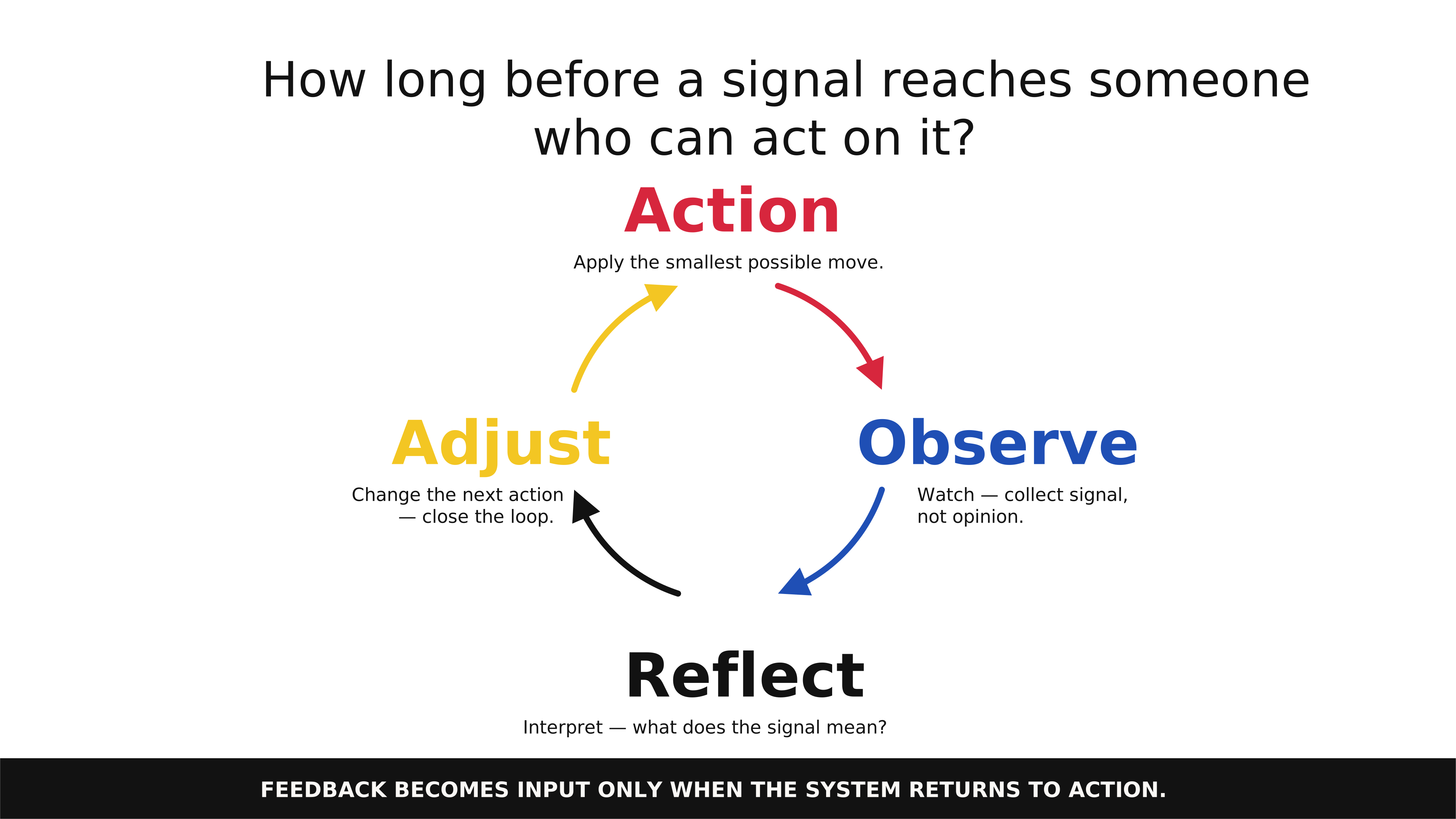
Speed is the defining variable. Short loops enable rapid iteration; long loops create dangerous lag between action and consequence. Effective loops are timely, specific, actionable, and connected to decision-makers. Built-in quality practices shorten technical loops; continuous discovery shortens product loops.
The default — hoping feedback emerges organically — reliably produces loops that are too slow, too noisy, and disconnected from anyone who can act. The failure mode isn't missing feedback; most organisations are swimming in it. It's feedback that arrives too late, in the wrong format, to someone who can't do anything about it.
Your next move: How long does it take for a user complaint today to reach the engineer who could fix it — and how many of those weeks are pure organisational friction nobody owns?
What it looked like for them
WWII Allied Forces, subordinate officers, 1940s. During operations like Market Garden, officers on the ground saw fatal flaws in the plans: bridges that couldn't be taken in time, supply lines that wouldn't hold, terrain the maps misrepresented. The feedback existed.
The loop was broken. Rigid command structures suppressed the warnings. Junior officers who raised concerns were overruled or ignored. Plans proceeded as written. Operations failed — in some cases catastrophically — for exactly the reasons the frontline had identified.
The information travelled from the ground up. The structure prevented it from arriving. A feedback loop requires more than the existence of feedback. It requires a path from observation to decision-maker that the organisation doesn't block.
The Allied command had the observations. It had the decision-makers. What it didn't have was a structure where the signal could survive the journey between them. The feedback loop was architecturally complete and functionally broken. People died in the gap.
“The dashboard says we're fine but I don't believe it.”