
Five Whys
“Toyota's root cause analysis technique of asking 'why' iteratively until reaching an addressable fundamental cause.”
The same problem has come back. You patched it last time. It's a different shape now but underneath it's the same thing.
Five Whys is Toyota's root cause technique. You take the problem in front of you, ask why it happened, then ask why again of that answer, and keep going until you reach something you can act on. Five is a guideline; some problems need three iterations, some need seven. The discipline is in the answers — each one has to be a verifiable fact, not a guess about motive.
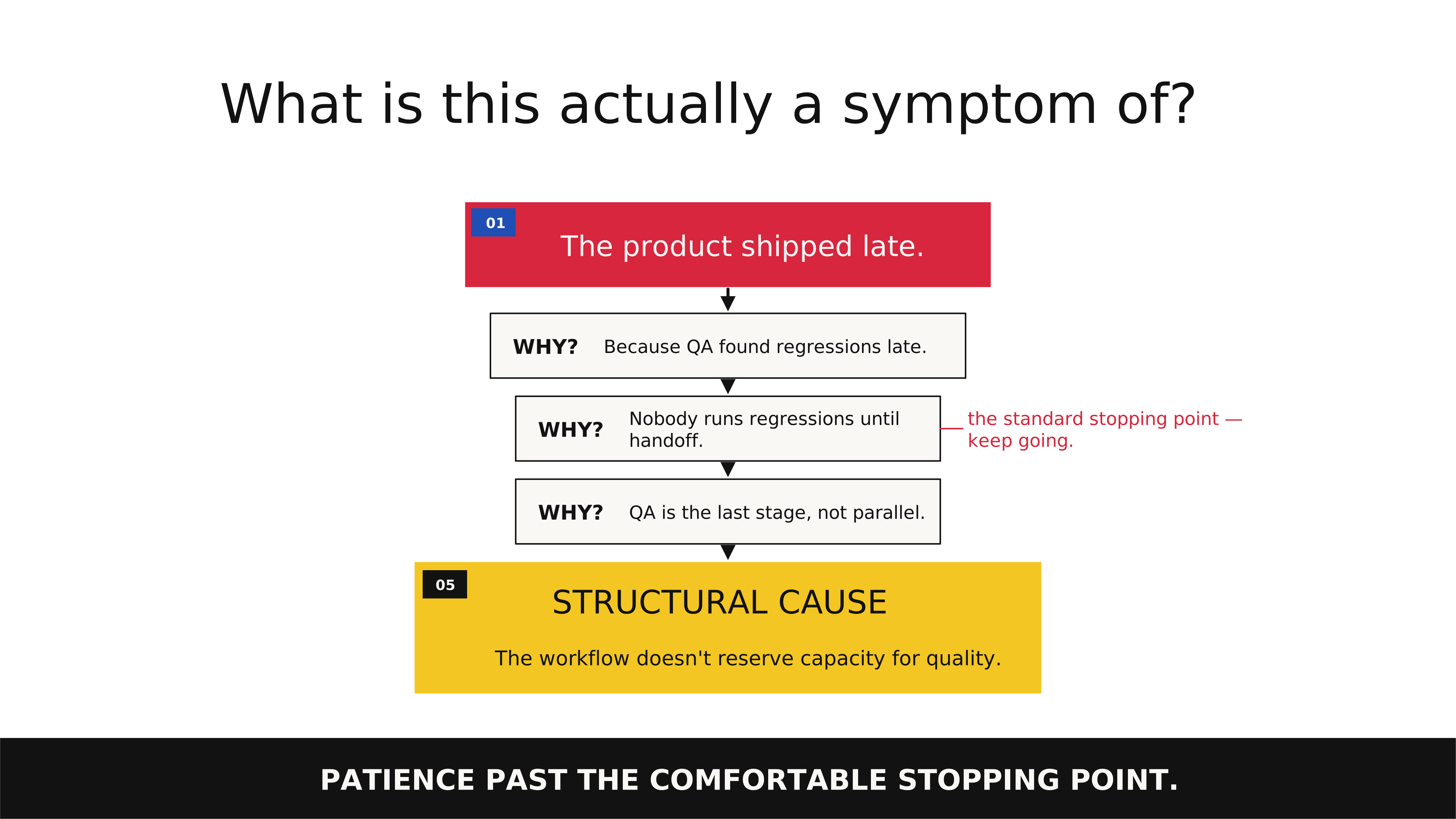
It's brilliantly cheap. Half an hour, no tools, no framework training, and the result is a problem statement you can actually fix rather than the symptom you've been treating. The trap is using it on the wrong kind of problem.
Genuinely systemic issues — multiple causes, feedback loops, emergent behaviour — don't reduce to a single chain. Five Whys will give you an answer; it just won't be the right one. The other failure mode is using it to find someone to blame, which kills the safety the technique needs and turns the answers into theatre.
Your next move: Take the problem on the agenda for your next meeting and ask 'why' five times — does the answer at the bottom look anything like the one at the top?
What it looked like for them
Marc Strauss, late 1990s. Strauss was a fresh MBA graduate running a small business shipping novelty condom keychains. He air-freighted ten thousand units to a Las Vegas trade show. Every unit arrived ruined — lubricant had been forced through the packaging seals. Why? The cargo hold's air-pressure change during flight created a differential the packaging wasn't designed for. Why hadn't the packaging been tested?
Because the MBA curriculum that got Strauss to this point covered strategy, cash flow, and market positioning — not aircraft pressure differentials. Why was he solving a pressure-differential problem alone? Because the scale of the business meant there was no one else.
He sat at his dining-room table through the night, cleaning salvageable units by hand so he could open his booth the next morning. The root cause wasn't the packaging. It was the gap between the problem he'd trained for and the problem he actually had.
“The dashboard says we're fine but I don't believe it.”