
Working Agreements
“Team-created guidelines establishing norms for collaboration.”
Two people on the team keep clashing over how late is too late to send a message. Nobody's ever decided. Everyone has a different rule in their head.
Working agreements are team-made norms for how you work together. Not values, not a charter — concrete agreements about things like response times, meeting cancellation, who decides what, when laptops close. The team writes them itself, in the room, and keeps them short enough to remember without looking them up.
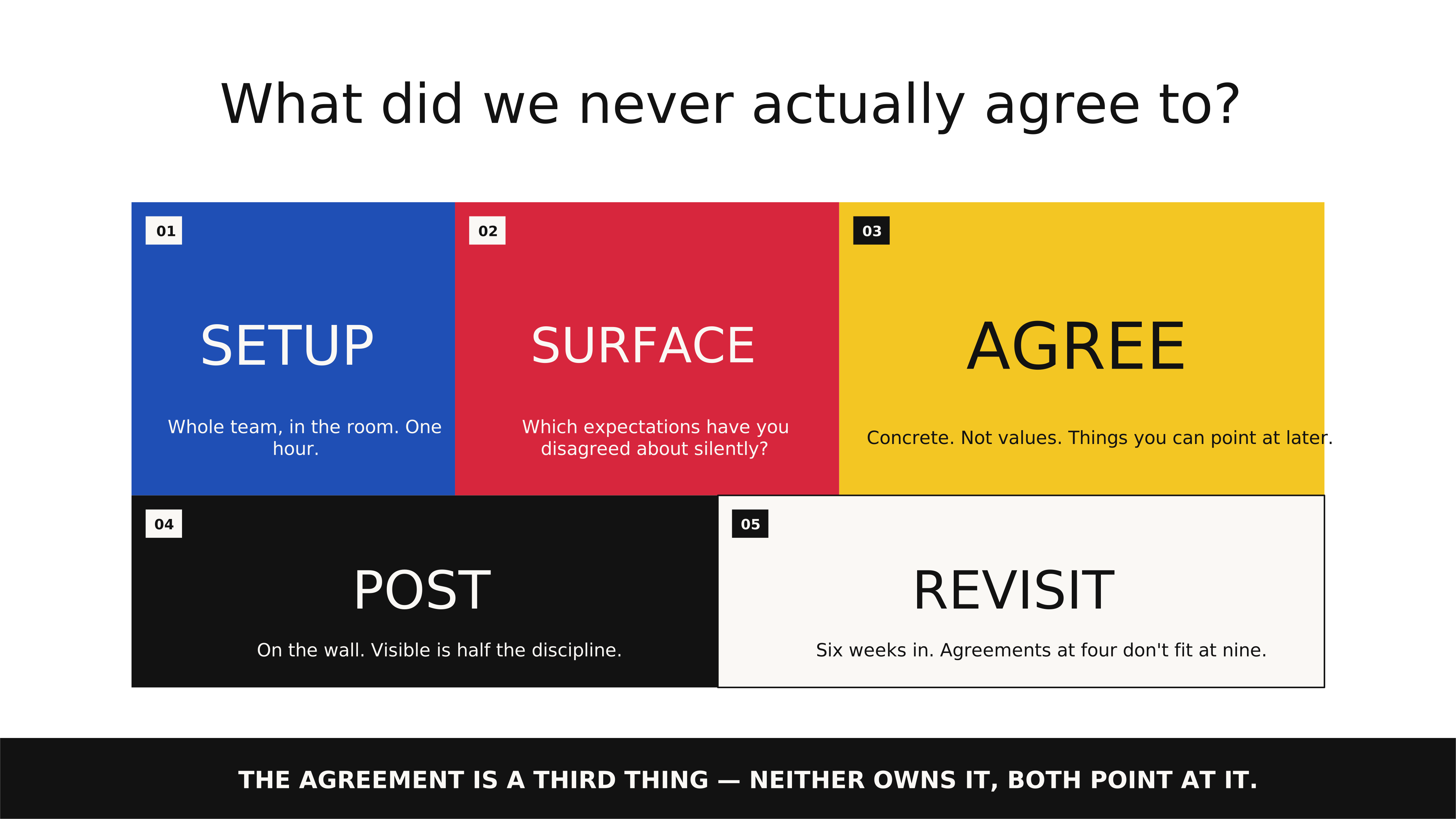
They work because the conversation is the point. Writing the agreement forces the team to discover the three things they've all been assuming differently. The document is the residue; the discussion is the value. Reach for them when a new team is forming, when remote working has loosened the implicit norms a co-located team relied on, or when friction keeps appearing around the same recurring situation.
They fail when imposed by a manager rather than agreed by the team — at that point they're just rules with a friendlier name. They also degrade if never revisited; the agreements that worked when the team was four don't fit when it's nine.
Your next move: Which unspoken expectation is currently producing friction on your team that nobody's ever actually agreed to — and what would happen if you put it on the table this week?
“I'm taking over a team that's just had a bad manager.”