
Team Charter
“A document establishing a team's purpose, membership, ways of working, and success criteria.”
Ask five team members what the team's purpose is. Get five different answers. Wonder why priorities keep clashing.
A team charter is a short document establishing purpose, membership, ways of working, and success criteria. You answer the questions that matter before work begins: Why does this team exist? What are we trying to achieve? How will we work together? How will we know we've succeeded?
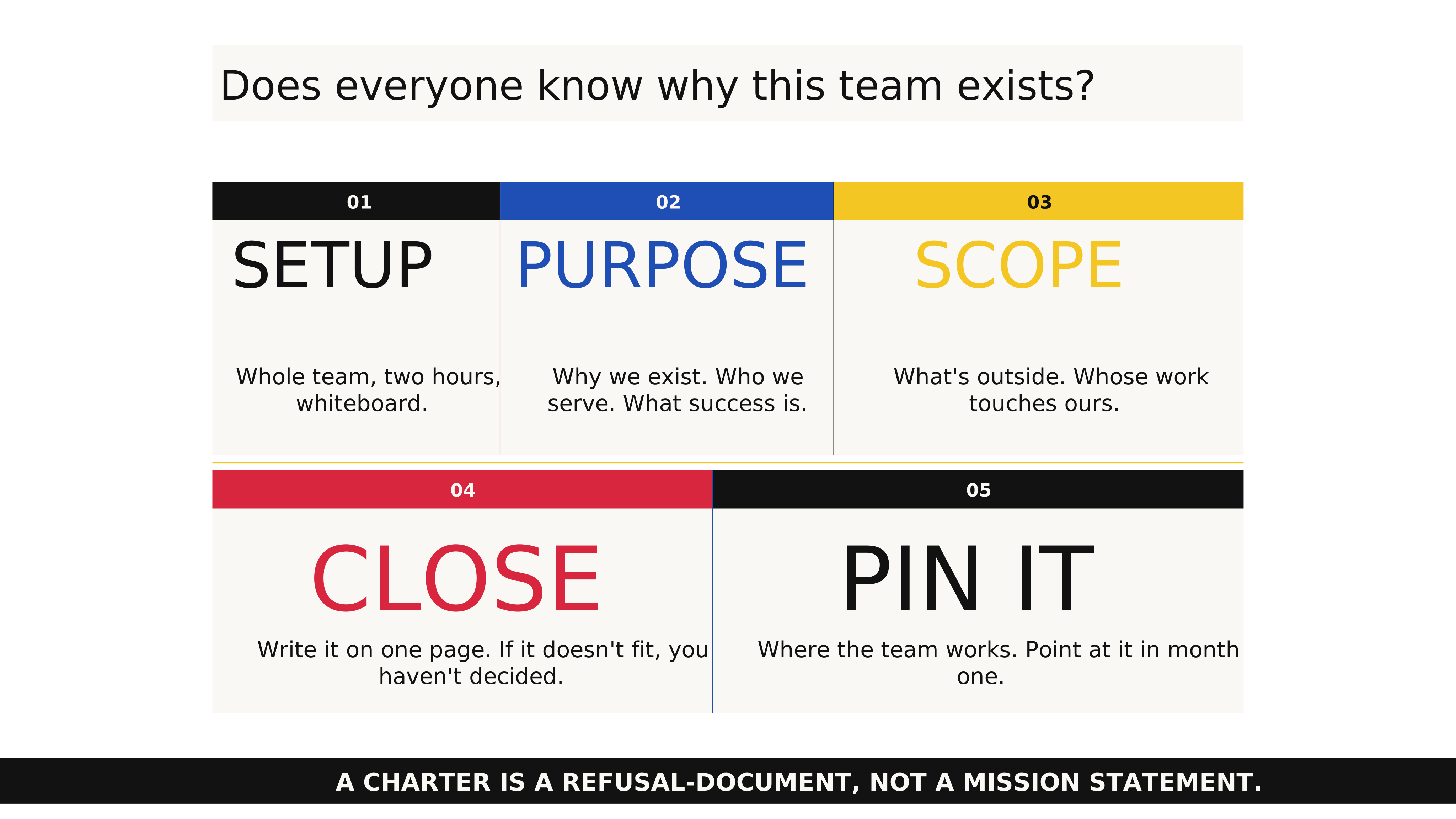
The creation process is more valuable than the document. The conversations surface misalignments that would otherwise emerge under pressure — disagreements about scope, priorities, and decision rights that the team was carrying silently. That's the unique strength: forced clarity before ambiguity costs anything. Reach for it when forming a new team, reforming around a new mission, or when an established team has quietly drifted from its original purpose.
Keep it brief and focused on what actually matters for how the team functions. It fails when imposed by management without team ownership — a charter people didn't write is just another document they'll ignore. And it needs periodic revisiting; a charter that never updates becomes a historical artefact, not a working agreement.
Your next move: If your team had to write its charter from scratch tomorrow, how many of you would write the same purpose — and what does the answer tell you about what you're actually doing together?
What it looked like for them
Alan Mulally, Ford, 2006. When Mulally arrived at Ford, the company was losing seventeen billion dollars a year and every division operated as an independent fiefdom. There was no shared understanding of what Ford was trying to be. Mulally's first move was to institute a weekly Business Plan Review where every executive reported status against the same set of goals using the same colour system. The review wasn't just a meeting.
It was a team charter made operational — a shared agreement about what mattered, how progress would be measured, and what honest reporting looked like. The charter's power showed itself the first time an executive reported red.
Mulally applauded instead of punishing, and the room understood: the charter included honesty as a non-negotiable term. Ford turned around without taking government bailout money. The charter wasn't a document on a wall. It was a weekly practice that made the document real.
“I'm taking over a team that's just had a bad manager.”