
Stakeholder Mapping
“A technique for plotting stakeholders on axes such as influence versus interest.”
You built the case. You got approval from the people in the room. Then someone you'd never considered quietly killed it.
Stakeholder mapping is a technique for plotting stakeholders on axes — typically influence versus interest — to determine who needs what level of engagement. You place each stakeholder in a quadrant and match your approach: high-power, high-interest stakeholders get close management; low-power, low-interest ones get minimal effort.
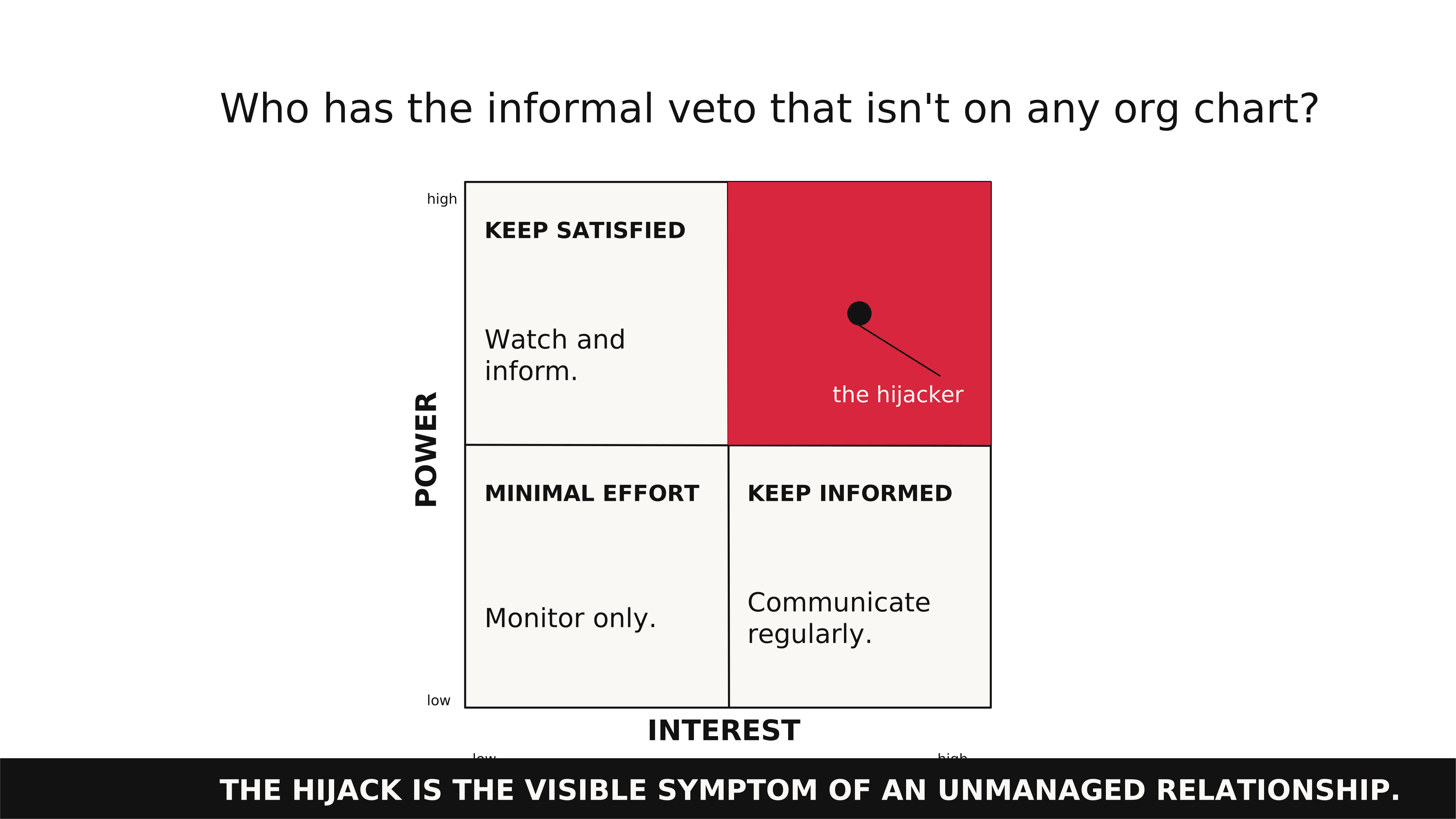
The map acknowledges what polite organisational discourse often denies: power matters, and limited energy must be allocated strategically. Its unique strength is revealing the informal influence structure — who actually shapes decisions, who needs convincing, and who can safely be informed rather than consulted.
Reach for it at the start of any initiative that needs buy-in beyond your immediate team, before a major announcement, or when you're encountering unexpected resistance. The exercise works best done honestly rather than diplomatically.
It fails when treated as a one-off — stakeholder positions shift as projects evolve, and yesterday's passive supporter can become today's active blocker. It also fails when the map stays private rather than informing actual engagement.
Your next move: Who has informal veto power over your project that isn't on any org chart — and when did you last spend any time managing that relationship?
What it looked like for them
Bob Iger, Disney, 2000s onwards. Iger navigated two of the largest acquisitions in entertainment history — Pixar and Lucasfilm — by mapping the stakeholder landscape before making his move. With Pixar, the critical stakeholder wasn't the Disney board or even the shareholders.
It was Steve Jobs, who held the emotional relationship with the company he'd funded through its early years. Iger spent months building a personal relationship with Jobs before any formal negotiation began.
With Lucasfilm, the critical stakeholder was George Lucas himself — a founder who needed to believe his legacy would be protected, not just bought. In both cases, the person who could kill the deal wasn't the most powerful person on the org chart.
They were the person with the strongest emotional stake in the outcome. Stakeholder mapping at this level isn't about identifying who has authority. It's about identifying who has the veto that no amount of authority can override.
“I'm taking over a team that's just had a bad manager.”