
SCARF Model
“David Rock's neuroscience-based framework identifies five social domains: Status, Certainty, Autonomy, Relatedness, and Fairness.”
You announced a reasonable change. The reaction was disproportionate. People you expected to be allies are pushing back, and the reasons they're giving don't quite add up.
The SCARF Model is David Rock's neuroscience-based framework identifying five social domains that drive behaviour: Status (relative importance), Certainty (ability to predict), Autonomy (sense of control), Relatedness (connection to others), and Fairness (perception of just exchanges). You map which domains a change threatens or rewards, then design accordingly.
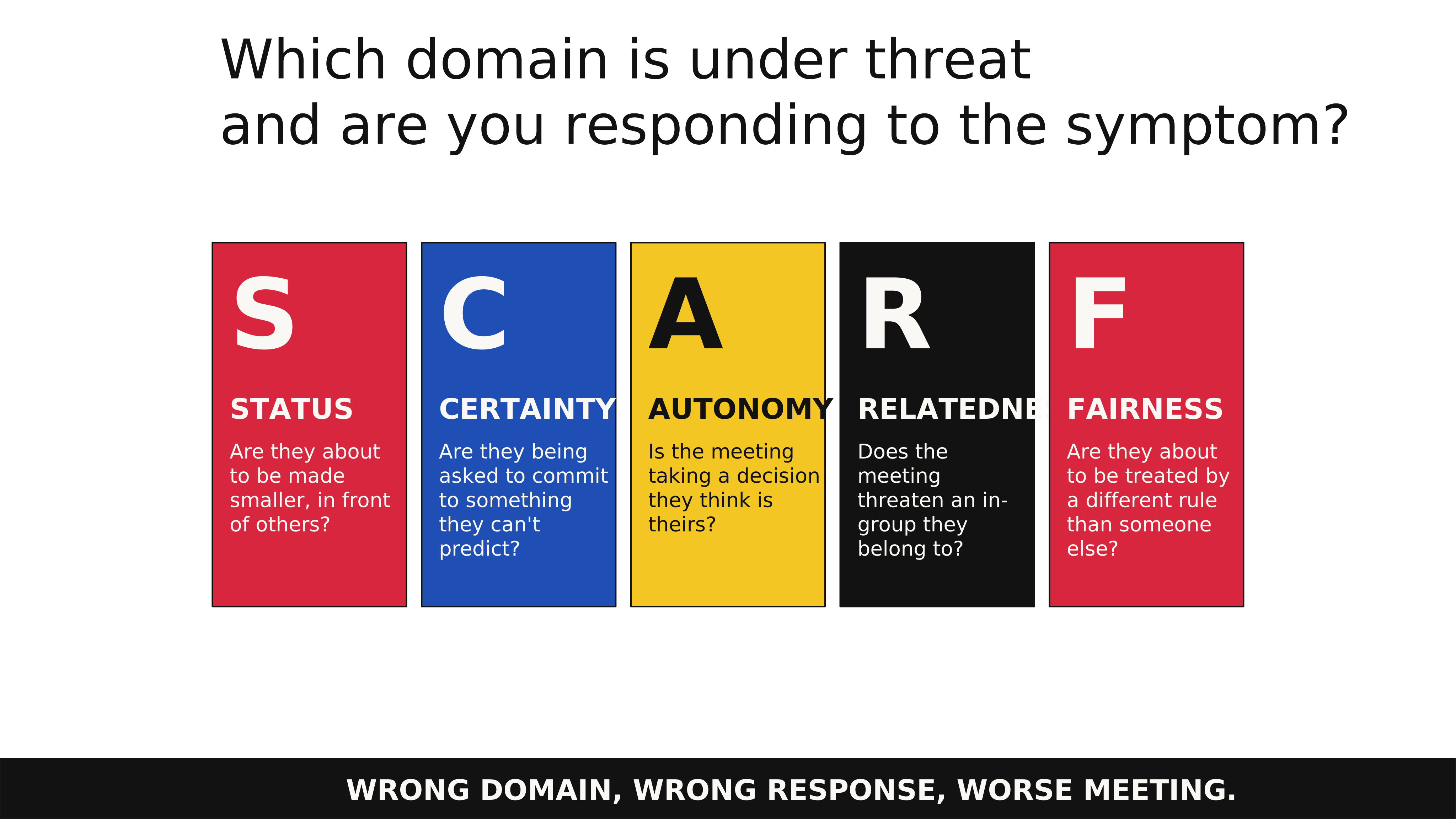
The model's unique move is decoding behaviour that looks irrational by revealing which social domain is under threat. A reorganisation that seems purely structural may simultaneously threaten status, certainty, and autonomy — three threat responses at once. Reach for it when resistance to a change seems out of proportion, when a team is disengaging for no obvious reason, or when designing how to announce and implement changes.
It pairs naturally with change management and conflict resolution. It fails when used as a manipulation playbook rather than a lens for genuine empathy — people can tell the difference. And it's less useful for situations where the resistance is straightforwardly about the merits of the decision rather than the social dynamics around it.
Your next move: Whose 'irrational' resistance to your last change was actually a perfectly rational response to losing status, certainty, or autonomy — and did you ever name the actual loss?
What it looked like for them
Ben Horowitz, Opsware, early 2000s. Opsware needed to renew a twenty-million-dollar contract with EDS. The EDS executive in charge had a personal attachment to a legacy inventory tool called Tangram — and a visible dislike for Opsware's product. Every SCARF domain was live.
Status: the executive's authority over vendor selection was on display. Certainty: the renewal was uncertain for both sides. Autonomy: the executive wanted to choose his own tools. Relatedness: there was no personal relationship between the two sides.
Fairness: the executive felt Opsware had been imposed on him. Horowitz bought the company that made Tangram for ten million dollars and gave it to the executive for free.
The move addressed every domain simultaneously — restored the executive's status, removed uncertainty, respected his autonomy, created a personal connection, and rebalanced the perceived fairness of the relationship. The renewal went through. The SCARF model doesn't just diagnose social threats. It maps the surface area where a disproportionate gesture can land.
“I'm taking over a team that's just had a bad manager.”