
RACI Matrix
“A responsibility assignment matrix clarifying roles: Responsible, Accountable, Consulted, and Informed.”
Something fell through the cracks again. Three people were on the email. Each thought one of the others was handling it.
RACI is a responsibility assignment matrix. For every activity or decision, you mark who is Responsible (does the work), Accountable (ultimately answerable, only one), Consulted (asked before the call), and Informed (told after). The grid forces you to spell out the roles that everyone usually leaves implicit.
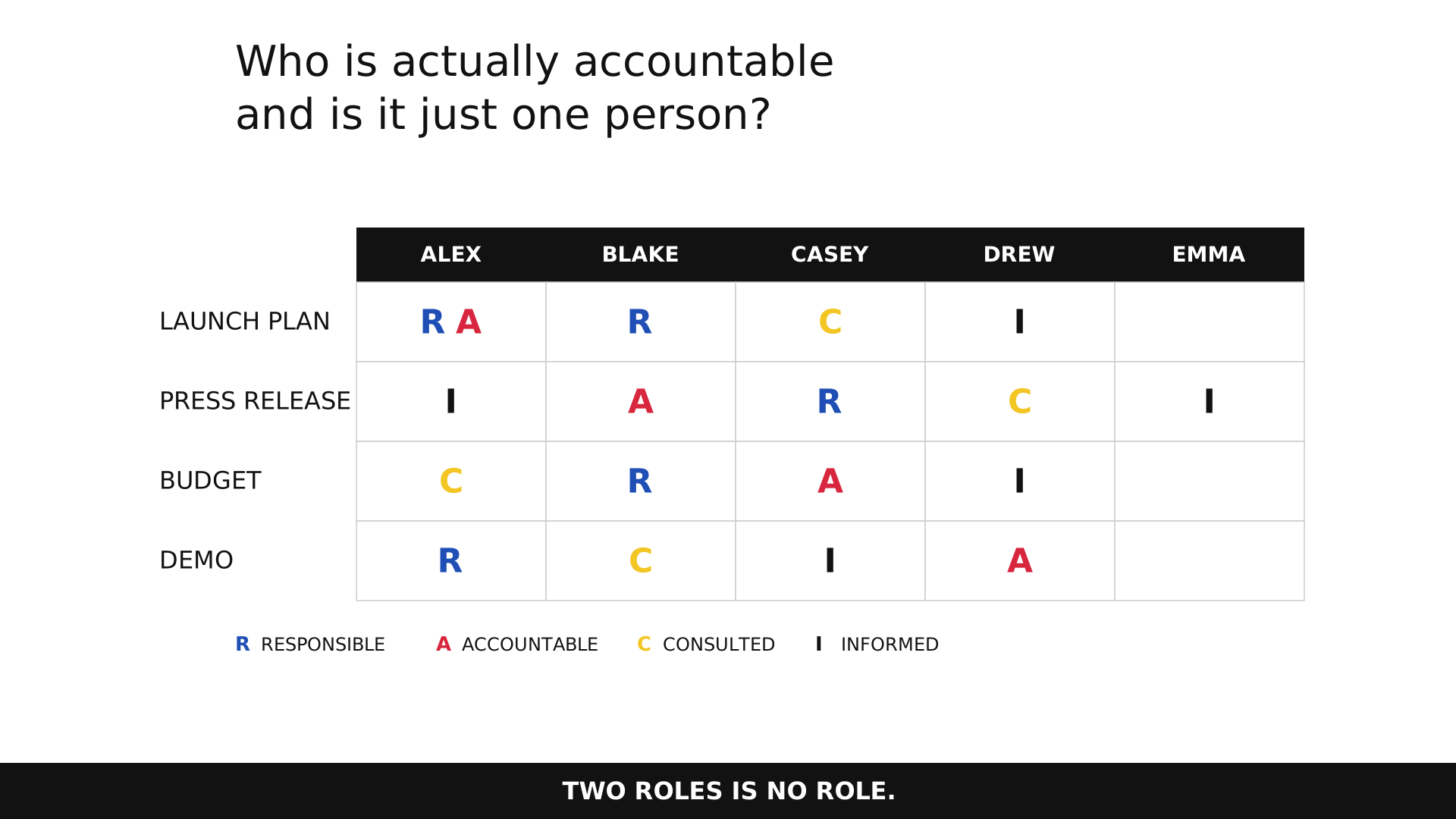
Most accountability problems aren't about people refusing to step up. They're about no one ever actually being asked to. RACI surfaces the gaps — cells with no A, or worse, multiple As — that explain why the same work keeps falling through. The conversation building the matrix is more useful than the matrix itself; the disagreements that come up are the ones the team would otherwise discover under pressure.
It works for cross-functional work where multiple teams or specialists touch the same activities. It's overkill for small co-located teams who already know who's doing what. And it tips into bureaucracy if maintained too granularly — a RACI for every meeting agenda is the failure mode.
Your next move: Which decision in your team currently has either no Accountable or three of them — and how long has that been quietly producing the friction everyone complains about?
What it looked like for them
Neil Cresswell, Portainer, early years. Portainer had hired for the organisation it hoped to become: complex roles, management layers, heavy process. Everything was bolted on too early. The artificial maturity slowed the team down and burned cash. Nobody was clear on who owned what because the structure had been copied from companies ten times Portainer's size. Cresswell's move was to strip it back. He let go of people who couldn't work in ambiguity.
He resized the roles to match what the company actually was, not what it aspired to be. The surviving team was smaller, faster, and — critically — clear on who was responsible for what.
A RACI matrix would have exposed the problem before the headcount grew: too many people Consulted, not enough Accountable, and the Responsible column either blank or pointing at everyone. Survival came from admitting what the company actually was. RACI makes that admission structured rather than painful.
“I'm taking over a team that's just had a bad manager.”