
Performance Management
“Systems and practices for ensuring individual and team performance align with organisational objectives.”
Someone on your team needs to hear something. You're waiting for the review cycle. By the time it arrives, six weeks of drift have hardened into a pattern.
Performance management is the ongoing practice of setting expectations, providing timely feedback, and connecting individual contributions to broader purpose. You replace the annual review with continuous conversations — checking in on goals, surfacing problems early, and developing capability in real time.
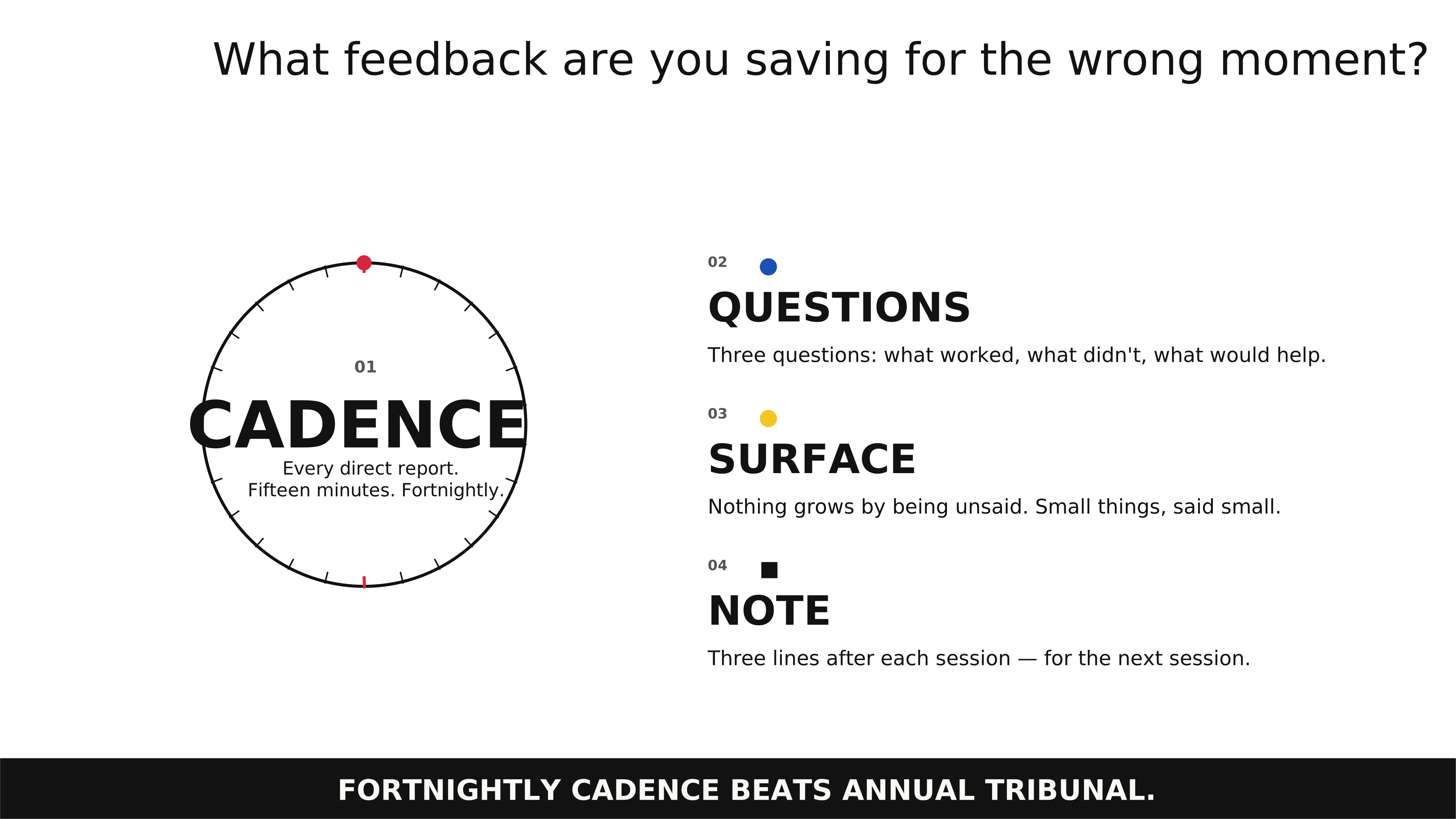
The uncomfortable core of the discipline is the conversation itself. Most performance management fails because managers avoid saying the direct thing until a formal process forces them to — by which point the feedback is stale and the relationship is strained. The unique strength is creating a rhythm of honest, developmental dialogue rather than a yearly tribunal.
Reach for it when expectations are unclear, when someone's performance is drifting, or when good work is going unrecognised. It works at every scale. It fails when focused on judgement rather than growth — performance systems designed primarily for ranking produce compliance, not improvement. And it requires managers who can have difficult conversations without hiding behind process or avoiding them entirely.
Your next move: What feedback are you saving for the formal review that the person should have heard six weeks ago — and whose comfort are you protecting by waiting?
What it looked like for them
Netflix, the Keeper Test, 2000s onwards. Netflix's performance management system compressed into a single question: "If this person told me they were leaving, how hard would I fight to keep them?" If the answer was "not very," the person was let go immediately with generous severance.
No performance improvement plan. No six-month review cycle. No paperwork designed to build a case that everyone in the room already knew the answer to. The Keeper Test replaced the standard performance management apparatus with a question that couldn't be hedged.
Managers either wanted to keep someone or they didn't, and the question forced them to answer honestly before the quarterly review gave them permission to defer. The severance was generous because the decision was fast — the company wasn't punishing underperformance, it was acknowledging a mismatch.
The real performance management insight wasn't the test itself. It was that a manager's reluctance to have the conversation is almost always more expensive than the conversation.
“I'm taking over a team that's just had a bad manager.”