
Cross-Functional Coordination
“Methods for enabling effective collaboration across different specialisms.”
Design finished their part. Engineering started theirs. Somewhere in between, a key assumption diverged and nobody noticed until integration week.
Cross-functional coordination is the practice of making dependencies between specialist teams explicit and managing them deliberately. You choose mechanisms — liaison roles, shared stand-ups, integration points, boundary contracts — matched to how tightly coupled the work actually is.
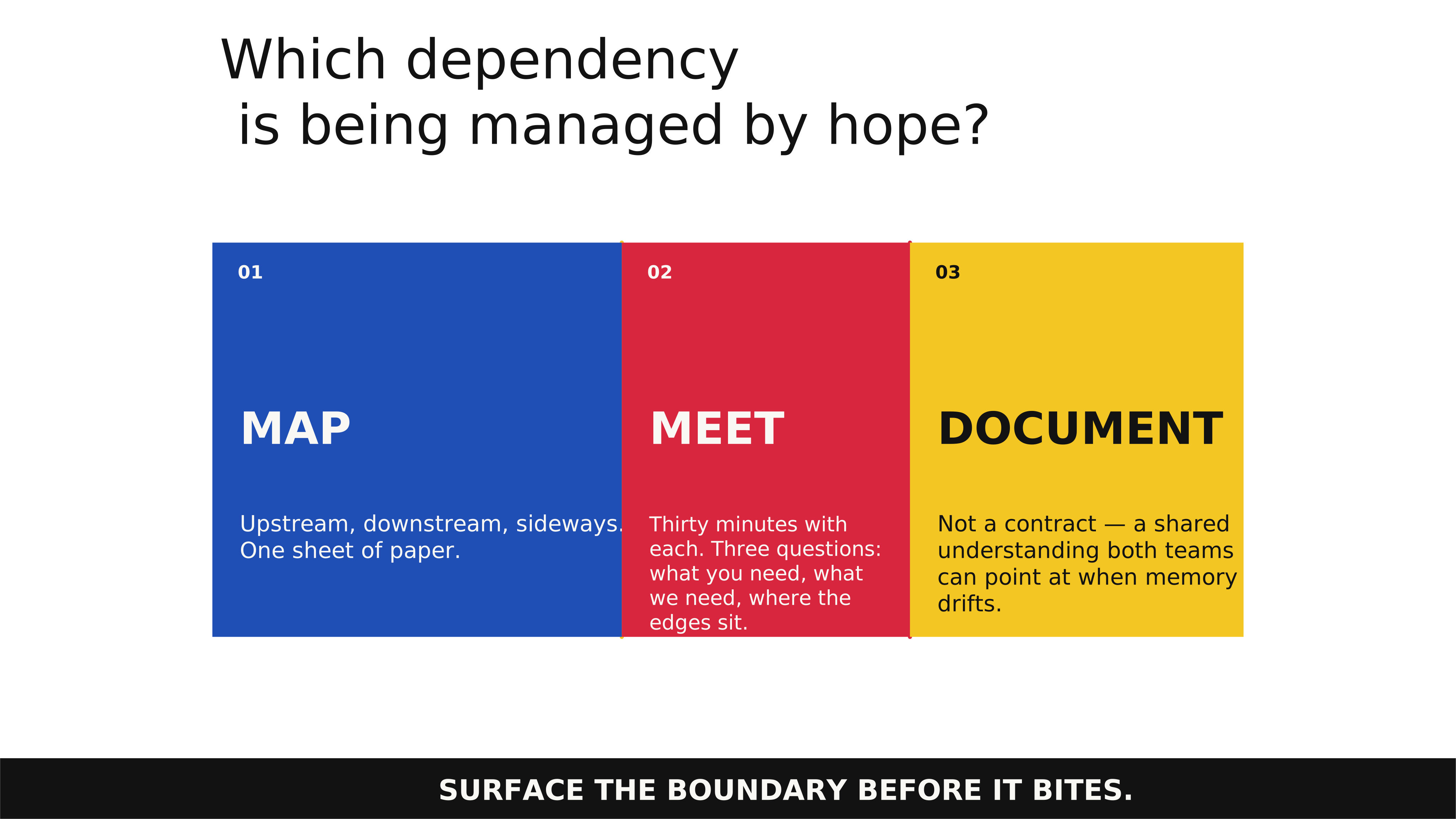
The unique strength is acknowledging that coordination costs are real and must be designed for, not left to goodwill. Loose dependencies need occasional syncs; tight ones need explicit ownership of the boundary between teams. Communication overhead grows non-linearly with team size, which is why "just talk to each other" stops working past a certain scale.
Reach for it when pieces built by different teams keep not fitting together, or when integration consistently surfaces surprises. Product development inherently requires cross-functional collaboration — the question is whether it happens by design or through friction.
It fails when it creates unnecessary dependencies or overhead for work that's genuinely independent, and when coordination forums become status-reporting rituals rather than spaces for resolving real conflicts.
Your next move: Which dependency between your team and another is currently being managed by hope — and what happens the week one side moves without telling the other?
What it looked like for them
Alan Mulally, Ford, 2006. Mulally inherited a company losing seventeen billion dollars a year. His first move was to institute a weekly Business Plan Review — every executive, every Thursday, same room, same colour-coded status system: green, yellow, red.
For the first several weeks, every status was green. A company losing seventeen billion dollars a year, and everything was fine. Mulally waited. Then one executive — Mark Fields — showed a red status on the launch of the Ford Edge.
The room held its breath. Mulally applauded. The culture changed that Thursday. Not because Mulally gave a speech about honesty, but because he rewarded it in front of everyone who'd been avoiding it. Within weeks, the status reports started reflecting reality. Ford turned around without taking government bailout money, while GM and Chrysler did. Cross-functional coordination doesn't start with a process. It starts with making honesty cheaper than silence.
“I'm taking over a team that's just had a bad manager.”