
Conflict Resolution
“Methods for addressing disagreements constructively to reach acceptable outcomes whilst preserving relationships.”
Two people disagree in the meeting. Neither says so directly. The real argument happens in DMs, or worse, in the work itself — passive misalignment that drags on for weeks.
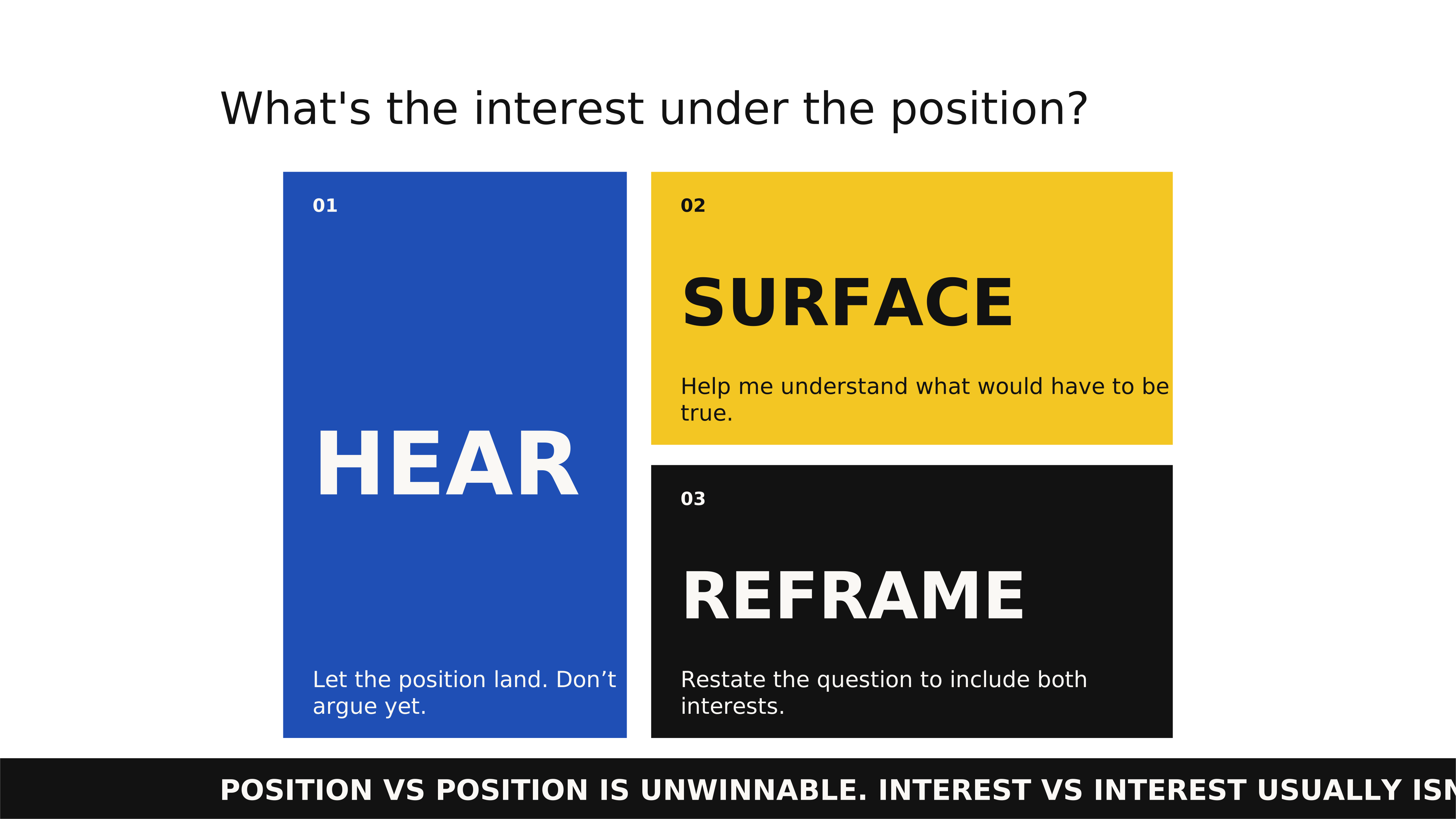
Conflict resolution is a set of techniques — collaborative problem-solving, mediation, negotiation — for addressing disagreements constructively while preserving relationships. You distinguish between positions (what people say they want) and interests (the underlying needs driving those positions), then work the interests.
Avoiding conflict isn't resolution; it's deferral with compound interest. The unique strength here is making it safe to surface disagreements before they calcify into factions. Most conflicts stem from miscommunication, scarce resources, or value differences — each requiring a different approach, so diagnosis matters.
Reach for it when you notice the symptoms: side conversations, passive agreement in meetings followed by inaction, or the same issue resurfacing in different guises. It works across priority disputes, technical disagreements, and stakeholder tensions. It fails when the real conflict is structural — no amount of facilitation fixes a genuinely zero-sum resource allocation — and when it's used to suppress necessary disagreement rather than channel it.
Your next move: Which two people on your team are pretending to agree in meetings and arguing in DMs — and what's it costing you to leave that conversation un-had?
What it looked like for them
Ben Horowitz, Opsware, early 2000s. Opsware's survival depended on renewing a twenty-million-dollar contract with EDS. The EDS executive in charge hated Opsware's product but had a personal attachment to an old inventory tool called Tangram.
The conflict was real: EDS wanted something Opsware didn't make, and Opsware needed the renewal to survive. Horowitz bought the company that made Tangram for ten million dollars and gave the software to the executive for free, unasked.
The renewal went through. The move was asymmetric — a disproportionate concession that changed the frame of the conflict entirely. Instead of arguing about whether Opsware's product was good enough, the conversation became about a gesture so unexpected it couldn't be dismissed.
Conflict resolution at this level isn't about finding the compromise between two positions. It's about changing the shape of the negotiation so that the original conflict stops being the relevant question.
“I'm taking over a team that's just had a bad manager.”