
Communication Planning
“Effective communication planning recognises that different stakeholders require different messages through different channels at different frequencies.”
The decision's been made. Three stakeholders hear about it second-hand. One of them had the authority to block it and now wants to.
Communication planning is a structured method for mapping who needs what information, through which channel, at what frequency. You design both push communications — proactively sent — and pull communications — available on demand — so that the right people hear the right thing at the right time.
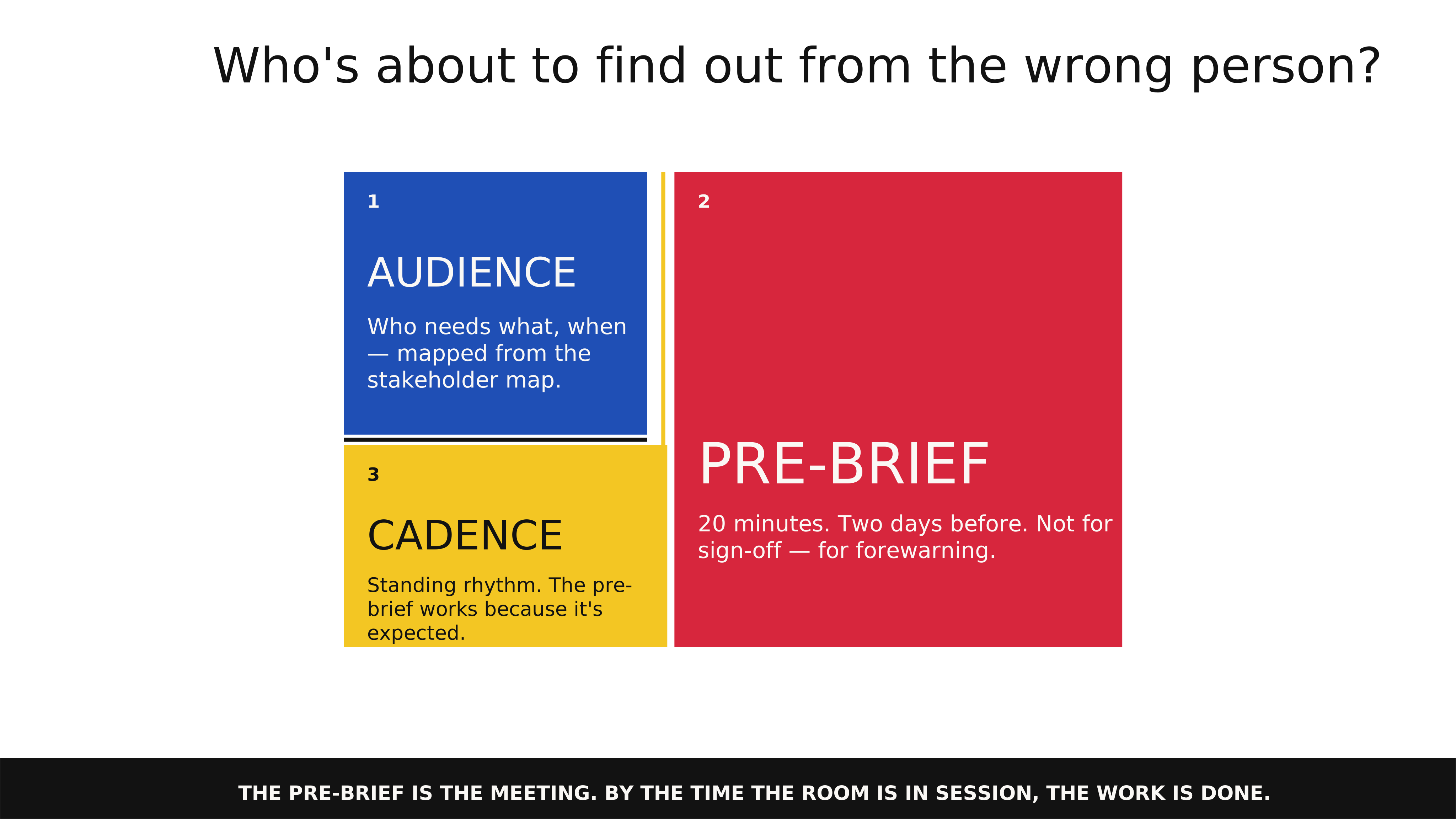
Poor communication is the most common complaint about projects, which makes it notable that communication planning is also the step most commonly skipped. The unique strength is forcing you to think from the stakeholder's information needs outward, rather than defaulting to whatever the team finds convenient.
Reach for it at project kick-off, before any major announcement, or when you notice stakeholders being surprised by things they shouldn't be. It works best when paired with stakeholder mapping so you know whose needs matter most. It fails when treated as a checkbox — a plan nobody revisits is just documentation theatre. And it needs feedback loops; without them, you're broadcasting, not communicating.
Your next move: Which stakeholder is going to find out about your decision from someone else — and what does it cost you when they do?
What it looked like for them
Enron, 1990s–2001. Enron's "rank and yank" system fired the bottom ten per cent of performers each review cycle. The effect on communication was structural. Contradicting a senior leader became career-ending. Meetings became performances of agreement.
Mid-level employees who saw the fraud, the off-balance-sheet vehicles, the numbers that didn't add up — couldn't speak without putting themselves next in line for the cull. The system didn't just suppress bad news.
It trained people to produce good news, regardless of what was actually happening. When the collapse came, it took twenty thousand jobs and sixty billion dollars in shareholder value with it. Communication planning isn't about slide decks and stakeholder updates.
It's about designing an environment where the information that needs to travel upward can actually survive the trip. Enron had communications. It had town halls and reports and all-hands meetings. What it didn't have was a structure where honest communication was cheaper than silence.
“I'm taking over a team that's just had a bad manager.”