
COM-B Model
“Susan Michie's behaviour change framework identifies three essential conditions: Capability, Opportunity, and Motivation.”
People know what they should do. They've had the training. They're still not doing it. You're about to schedule more training.
COM-B is Susan Michie's behaviour change framework. You diagnose which of three conditions is missing — Capability (physical and psychological), Opportunity (physical and social), or Motivation (reflective and automatic) — because all three must be present for behaviour to change.
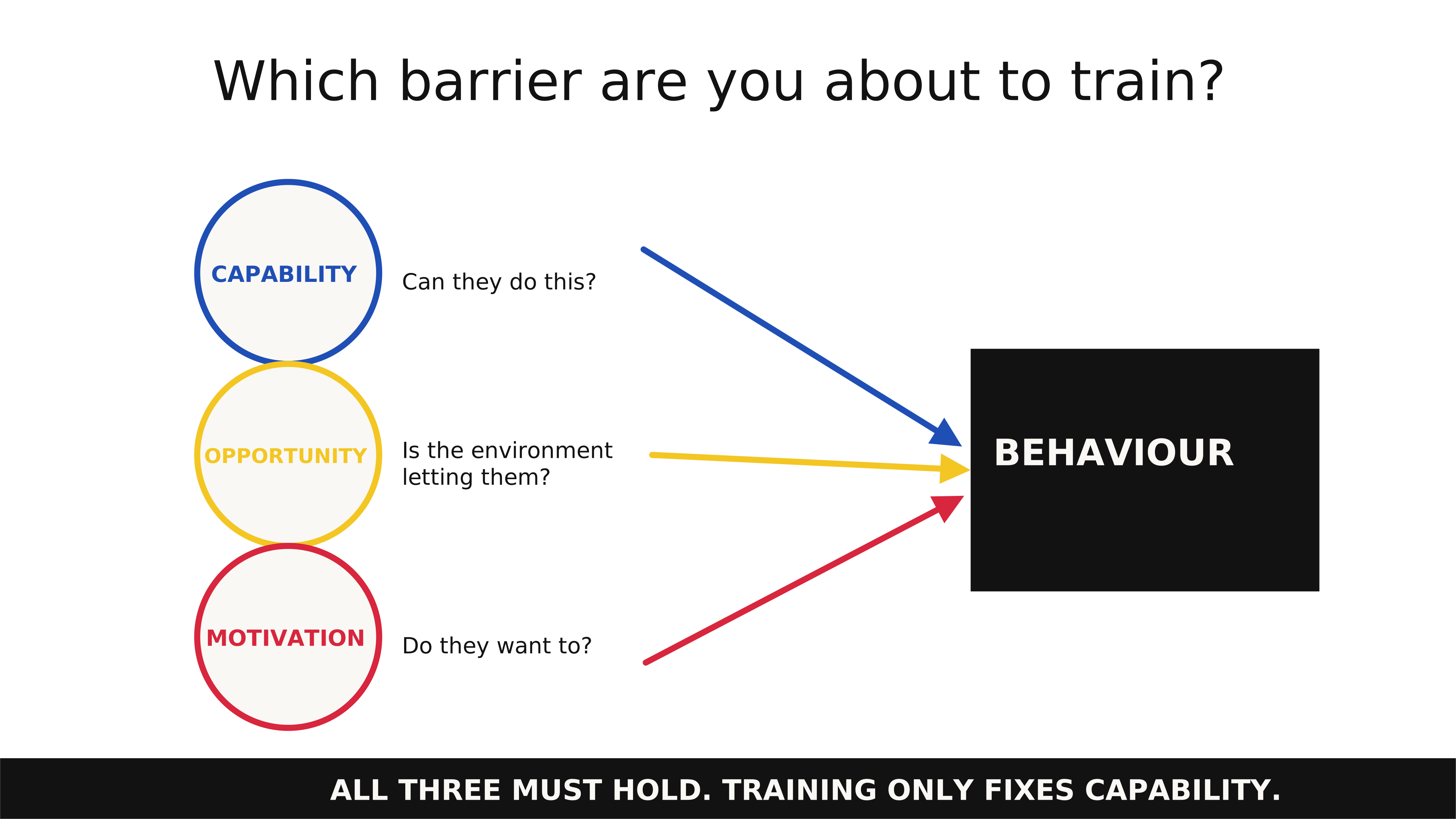
The model's unique move is stopping you from defaulting to training, which only addresses capability while leaving opportunity and motivation barriers untouched. That's why most training programmes don't stick. COM-B connects to the broader Behaviour Change Wheel, which maps specific intervention functions to each component, but the core diagnostic alone is powerful.
Reach for it when users or colleagues know what to do and still don't — the gap between understanding and action is where COM-B earns its keep. It works for product adoption, process change, and any context where behaviour is the bottleneck. It's less useful for purely technical problems with no behavioural component, and it requires honest diagnosis — teams that jump to their preferred intervention without doing the assessment miss the point entirely.
Your next move: When users aren't doing what your product expects, which of capability, opportunity, or motivation is actually missing — and which one are you about to throw more training at?
What it looked like for them
Robert West, Jamie Brown, and Emma Beard, UCL / Public Health England, 2012. England's Stoptober smoking cessation campaign was designed using behaviour change theory from UCL's Tobacco and Alcohol Research Group.
Rather than relying on fear-based messaging alone — targeting only motivation — the intervention addressed all three COM-B components. Capability: skills support via apps and text programmes teaching people how to handle cravings. Opportunity: a Facebook community and mass media creating a social norm around quitting together.
Motivation: a 28-day challenge framing, based on evidence that reaching 28 days makes permanent quitting five times more likely. The result: an estimated 350,000 additional quit attempts in October 2012 alone, at £414 per discounted life year saved. Over 2.3 million quit attempts followed between 2012 and 2020.
The campaign has since been adopted in France and the Netherlands. A single-component intervention targeting only motivation would have produced a fraction of the effect. The model's diagnostic value is in forcing the question: which of the three components is actually the binding constraint?
“I'm taking over a team that's just had a bad manager.”