
Alignment Techniques
“Alignment is widely invoked and frequently confused with its lesser substitute, compliance.”
The team agrees on the goal in the meeting. Then everyone goes back to their desk and executes a slightly different version of it. By quarter-end, the gap is visible to everyone except the people who thought they'd aligned.
Alignment techniques are structured methods — goal cascading, alignment workshops, shared metrics, synchronisation rituals — for building genuine shared understanding, not just surface agreement. You use them to close the gap between what people nod to and what they actually do.
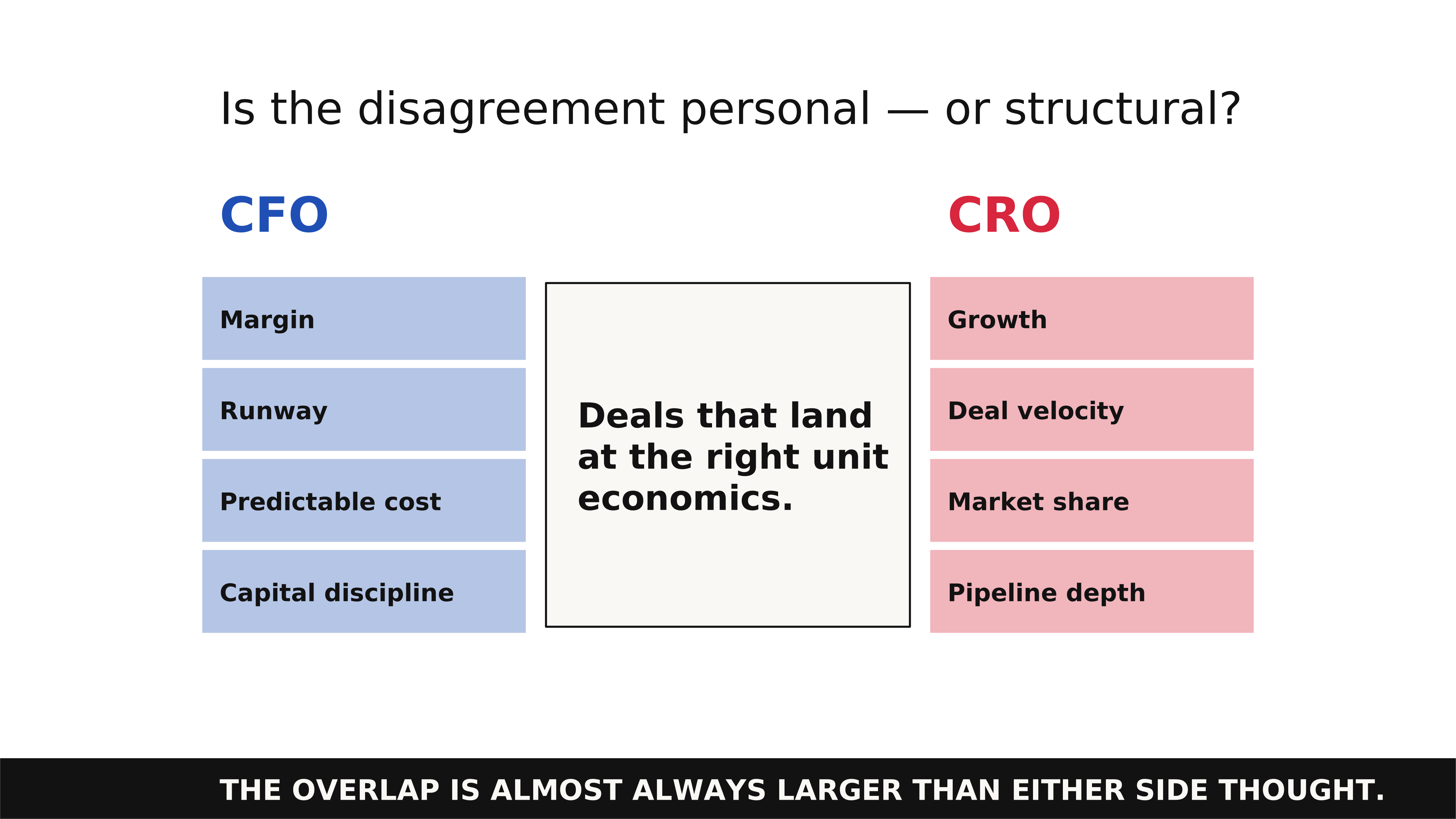
The unique move here is distinguishing real alignment from its cheaper substitute, compliance. Teams that comply without shared understanding deliver inconsistently and argue about whose priorities come first. Reach for these when teams feel they're working hard but in slightly different directions, or when stakeholder feedback seems contradictory.
They're most valuable at transition points — new strategy, new quarter, new team composition. They fail when used to force false consensus, papering over disagreements that need airing rather than smoothing. And alignment isn't a one-time exercise; what lined up last quarter can quietly diverge as conditions shift.
Your next move: Where is your team nodding along but quietly executing different plans — and what would it cost you to surface that disagreement in the next meeting instead of the next quarter?
What it looked like for them
Alan Mulally, Boeing, 2000s. Mulally was negotiating a contract worth twenty billion dollars with China Southern Airlines. The meeting stalled.
The chairman stopped proceedings and asked Mulally to sign the agreement not with a legal signature but with his personal aeroplane doodle — a sketch he was known for drawing on everything. Boeing's lawyers protested. The doodle wasn't legally binding. Mulally signed with the doodle anyway. The contract went through.
The meeting had stopped being about the paperwork. It was about the relationship, and the chairman needed a gesture that proved the relationship was personal, not transactional.
Mulally's willingness to break protocol — to align with what the room actually needed rather than what the process required — saved a deal that rigid adherence to procedure would have lost. Alignment isn't agreement on the document. It's agreement on what the room is actually deciding, which is sometimes not what's written on the agenda.
“I'm taking over a team that's just had a bad manager.”