
Agile Team Onion
“Allan Kelly's model visualises stakeholder relationships as concentric circles around the core team.”
Everyone wants to be in the room. Half of them don't need to be. The team is drowning in updates for people three layers removed from the work.
The Agile Team Onion is Allan Kelly's technique for visualising stakeholder proximity. You draw concentric circles — delivery team at the centre, then immediate collaborators, wider organisational stakeholders, and external parties — each ring with its own communication cadence and decision-making involvement.
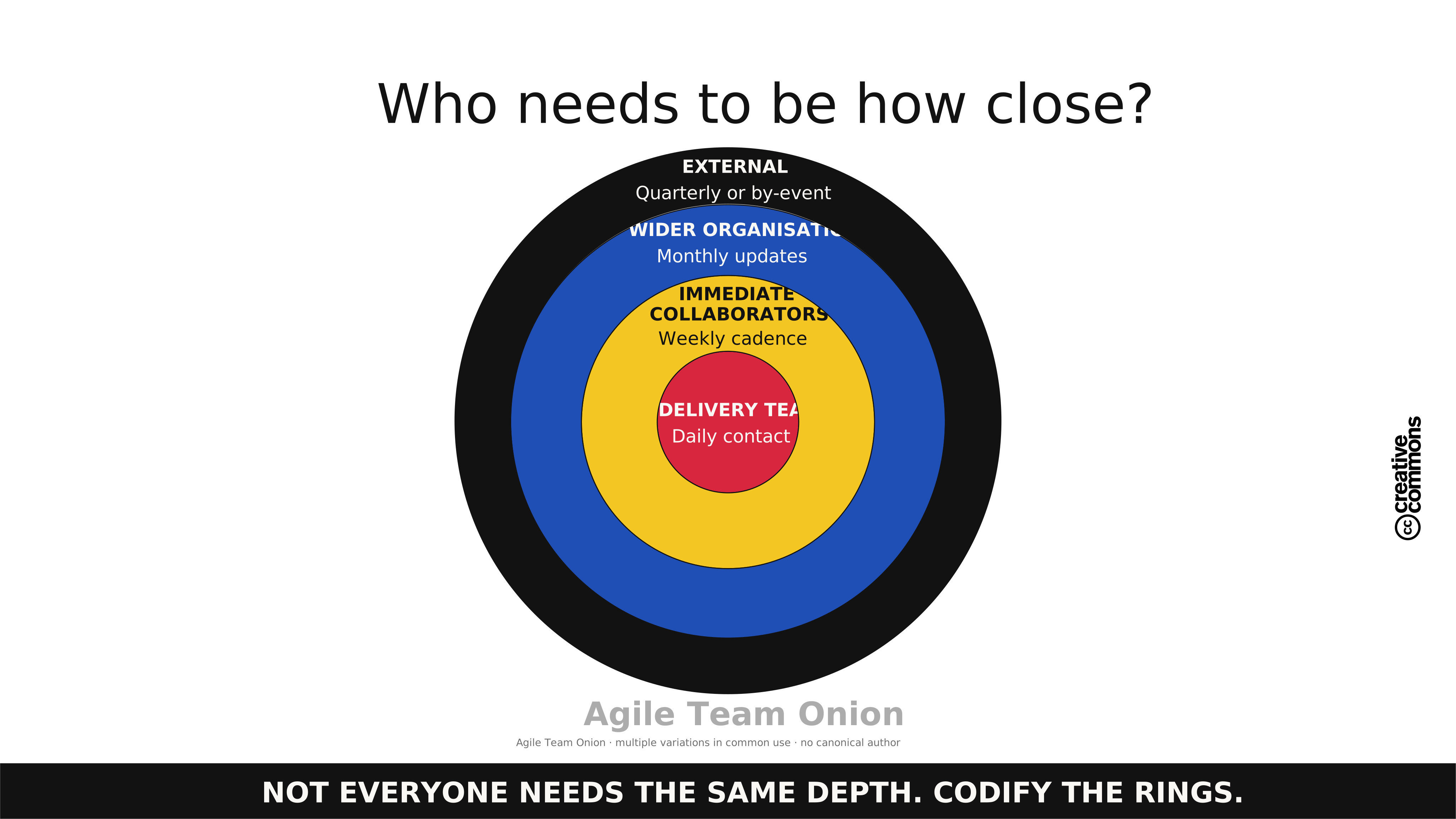
The model makes explicit what most teams sense but never codify: not everyone needs the same depth of information or frequency of contact. That clarity is its unique strength — it stops teams oscillating between over-communication that exhausts and under-communication that blindsides.
Reach for it when forming a new team, onboarding a wave of stakeholders, or when too many people are weighing in on decisions they shouldn't touch. It falls short for very small teams where everyone genuinely is in the inner ring, and it goes stale fast if you don't revisit it as the stakeholder landscape shifts.
Your next move: Which stakeholder is currently sitting in the inner ring of your team's attention who should be three layers out — and whose work are they crowding out by being there?
What it looked like for them
Russ Laraway, Google, mid-2010s. Laraway asked a new direct report what she wanted her life to look like in ten years. The answer — own a spirulina farm — told him everything he needed to know about the layers of her relationship with the organisation.
At the core: someone who wanted to build and own something from scratch. One layer out: a need for autonomy and end-to-end responsibility. Further out: tolerance for corporate structure only insofar as it taught her skills she'd use later.
Laraway mapped these layers and restructured her role accordingly — product launches she owned completely, projects where she was the single accountable person. Understanding which layer of the onion someone operates from determines how to structure their work, what authority to give them, and what kind of support they need. Laraway didn't guess. He asked one question and listened to the layers in the answer.
“I'm taking over a team that's just had a bad manager.”