
Workshop Design
“The practice of creating structured sessions that achieve specific outcomes.”
You've blocked two hours and invited twelve people. You haven't decided what you need them to produce. That's not a workshop — it's a meeting with ambitions.
Workshop design is the practice of creating structured sessions that achieve specific outcomes through carefully chosen activities, flow, and facilitation. You match activities to objectives, manage energy throughout, and create conditions for productive collaboration.
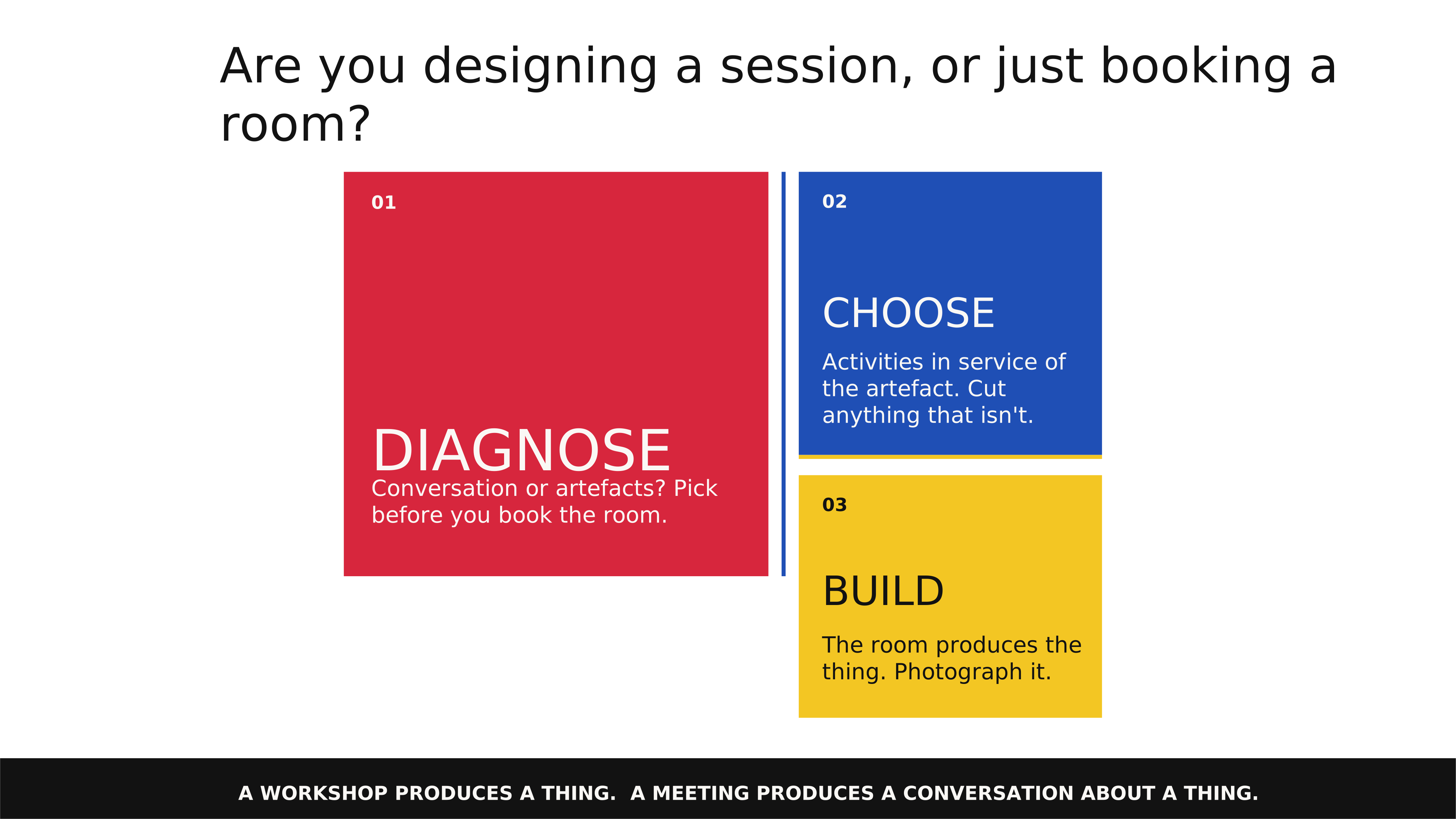
The discipline involves three phases: opening activities that build engagement, core activities that do the actual work, and closing activities that capture outputs and commitments. Good design creates value impossible to achieve through other means — genuine collective thinking, not just sequential presenting.
The investment is justified when the problem genuinely requires people to think together rather than separately, which is less often than most organisations assume. It fails when you over-design simple sessions that only needed a conversation, or when you run a workshop without a clear outcome — producing a day that feels productive but generates nothing anyone can use.
Your next move: What's the one specific outcome of the workshop you're about to run — and if you can't say it in one sentence, are you running a workshop or a meeting that wants to feel important?
What it looked like for them
A church congregation, steering committee, 2010s. The church needed to fund a new sanctuary entirely from congregational donations. The committee designed the process as a series of workshops rather than a series of announcements.
Each session had a specific output: the first produced architect shortlists, the second produced design preferences, the third produced budget constraints the congregation could live with. The workshops were structured so that participation was genuine — not consultation theatre where the decision had already been made.
Small groups fed into large groups. Constraints were visible. Trade-offs were named in real time. The design of each workshop determined what kind of decision it could produce: open exploration early, convergent choice later, budget commitment last. The congregation funded the build.
The key to the outcome wasn't the decision itself — it was that the workshops had been designed so that each session could only produce a decision the room was ready to make. Workshop design isn't about filling an agenda. It's about sequencing the conditions for commitment.
“The room has gone quiet and I don't know what to ask next.”