
Wicked Questions
“A Liberating Structure surfacing paradoxes.”
The same debate surfaces every quarter. Someone argues for speed, someone argues for quality. It never resolves because it was never meant to.
Wicked Questions is a facilitation technique that surfaces paradoxes through questions structured as "How is it that we are X and Y simultaneously?" — where X and Y seem contradictory. The technique opens both/and thinking rather than forcing false either/or choices.
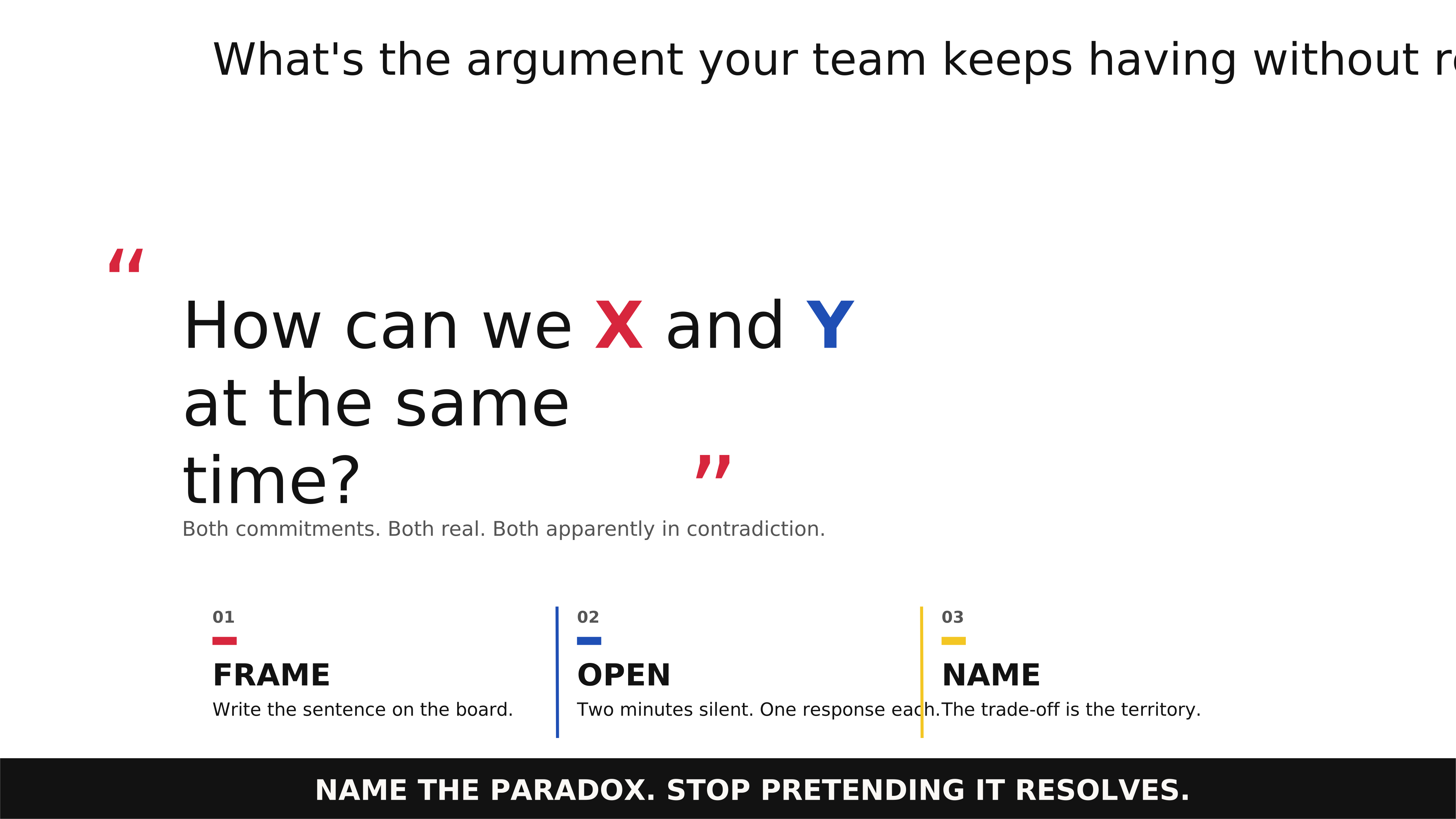
Organisations contain genuine contradictions — innovative and risk-averse, decentralised and aligned, agile and compliant. Surfacing these tensions explicitly enables productive engagement rather than endless oscillation between poles. Wicked Questions help teams stop treating paradoxes as problems to solve and start treating them as polarities to manage.
Reach for one when the team keeps having the same argument, which is usually a sign the underlying paradox hasn't been named. It fails when the group is seeking simple answers and won't tolerate ambiguity, or when what looks like a paradox is actually just poor communication that a straight conversation could resolve.
Your next move: Which argument does your team have over and over again without resolving — and what's the paradox underneath it that no one has bothered to name?
What it looked like for them
Steve Poland, MyFavorites, late 2000s. Poland's team spent months debating the right UX approach for their favourites-management app — sentence-structured tags versus simple category labels. The same meeting, the same sides, never resolved.
The debate felt productive because it was detailed, technical, and engaged. It wasn't productive at all. The answer depended on real users, and they had none, because they'd never shipped. The wicked question hiding underneath the debate was: "How do we build what users love without letting users near it?"
The team couldn't answer it because they couldn't see it. Every meeting was an attempt to resolve a design question that was actually an organisational question — the team had made shipping conditional on resolving an argument that only shipping could resolve. Poland eventually shut the project down without launching. The wicked question, had anyone named it, would have surfaced the paradox before months of circular meetings spent the runway.
“The room has gone quiet and I don't know what to ask next.”