
Troika Consulting
“A Liberating Structure for rapid peer consultation in groups of three.”
You've been circling the same problem for weeks. Everyone you've talked to has been polite. Nobody's told you what they'd actually say if you weren't defending your position.
Troika Consulting is a peer consultation technique for groups of three. The client presents a challenge, then turns away. The two consultants discuss approaches as if the client isn't there. The client turns back and responds to what was heard.
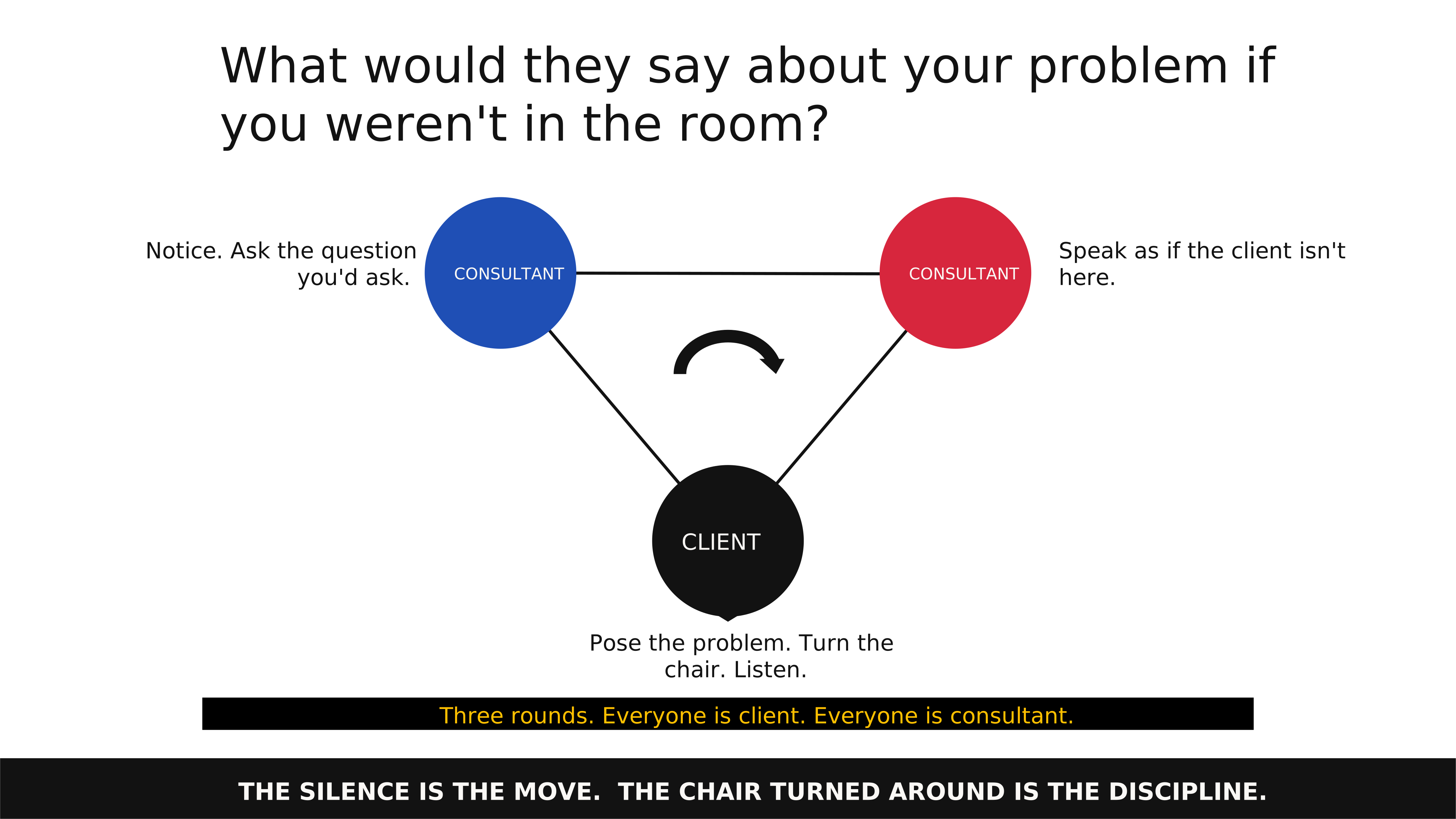
The enforced silence — client listening without responding — creates space for genuinely new perspectives that interactive conversation prevents. Consultants can speculate freely without triggering defensive reactions. The format generates practical help quickly whilst building trust through reciprocal vulnerability.
Reach for it when someone is stuck and needs fresh thinking, or when a team wants to support each other through individual challenges. It fails without trust between participants — the format requires willingness to be overheard — and for purely technical problems where expertise matters more than perspective.
Your next move: What problem are you stuck on that you've never properly described to anyone outside your own head — and who could you ask for thirty minutes this week?
What it looked like for them
Chesley Sullenberger, US Airways Flight 1549, January 2009. Both engines out, ninety seconds of altitude, a hundred and fifty-five passengers. Sullenberger didn't solve it alone. Crew resource management protocols meant every crew member was consulting simultaneously.
Co-pilot Jeff Skiles ran the engine restart checklist. The flight attendants prepared the cabin for impact. Air traffic control offered runway options. Each acted as a consultant to the others — offering their expertise without waiting to be asked, challenging assumptions without hierarchy getting in the way.
The structure mirrors troika consulting: one person owns the problem, two others consult from their own expertise, and the advice flows in real time without the consulting relationship slowing the decision. Sullenberger owned the landing.
Skiles owned the systems. The cabin crew owned the passengers. Nobody waited for a meeting to be scheduled. The consulting happened at the speed the situation demanded because the structure had been practised before the situation arose.
“The room has gone quiet and I don't know what to ask next.”