
Nine Whys
“A Liberating Structure for discovering deeper purpose by asking 'why' nine times in sequence.”
The team ships on time. They hit their metrics. But ask anyone why the work matters and you get job descriptions, not conviction.
Nine Whys is a paired conversation technique for discovering deeper purpose. Partners take turns asking "Why is that important to you?" nine times in sequence, each answer becoming the seed of the next question. Unlike Five Whys for root-cause analysis, Nine Whys explores motivation and meaning.
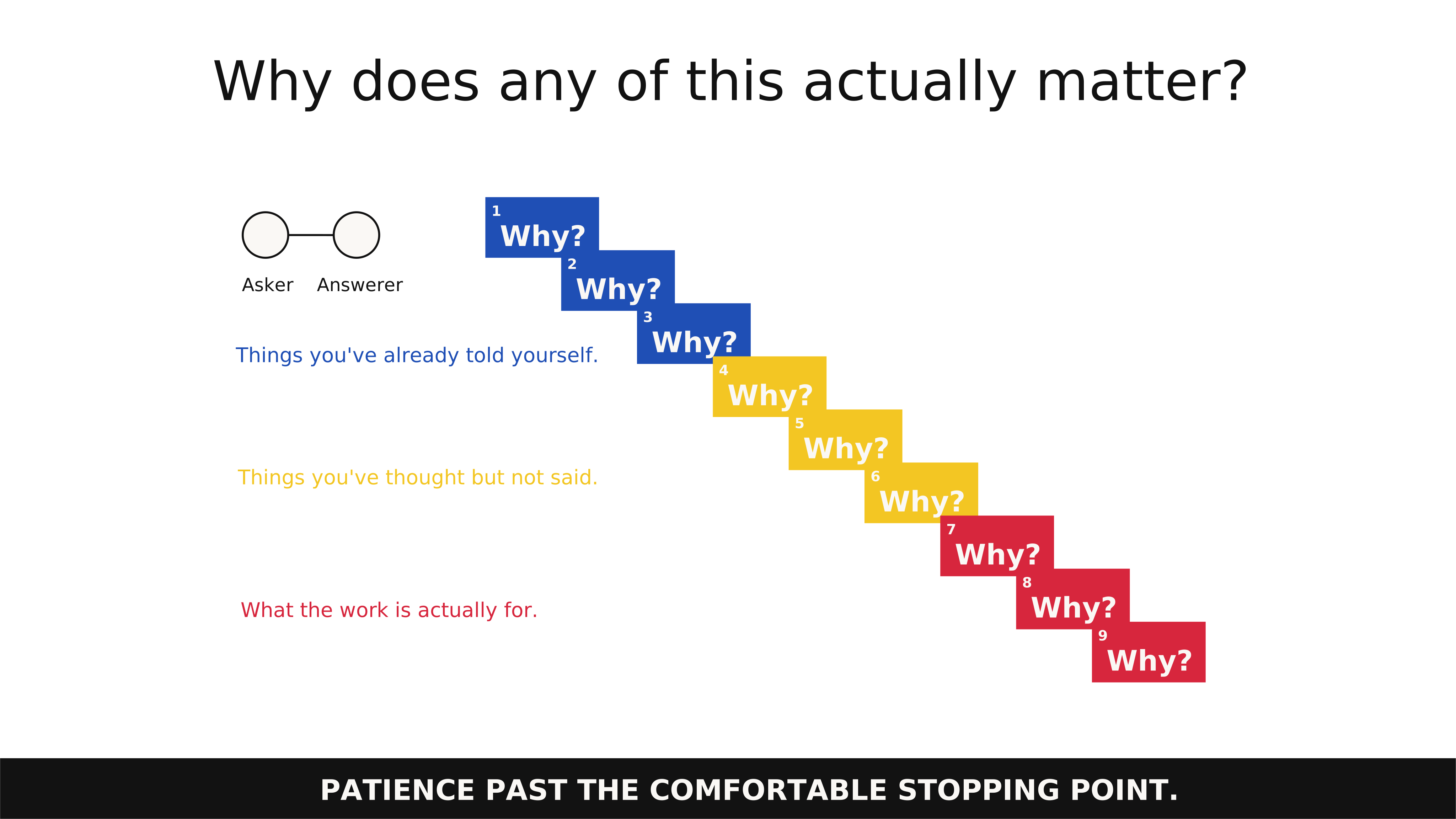
The ninth "why" often reaches something surprisingly universal — fundamental human needs that connect individual work to broader purpose. Run it with a new team before habits form, or with an existing team that's grown efficient at delivery but vague about why any of it matters.
The pairing structure creates an intimate conversation, and the structured repetition overcomes surface-level answers. It frequently surfaces powerful emotional connections to work that remain unspoken in normal discourse. It fails in cynical team cultures where sincerity feels unsafe, or when purpose is already clear and the exercise would feel patronising.
Your next move: If someone on your team had to explain to a stranger in a pub why this work actually matters, what would they say — and would they believe it themselves?
What it looked like for them
Chesley Sullenberger, US Airways Flight 1549, January 2009. Both engines dead. Ninety seconds of altitude. A hundred and fifty-five passengers. The crew resource management protocols that Sullenberger had trained in for decades required one thing above all: questioning purpose under pressure.
Why are we trying to reach Teterboro? Because it's the nearest runway. Why does the nearest runway matter? Because we need a flat surface. Why specifically a runway?
And then the chain breaks — because the Hudson River is also a flat surface, and it's closer. Sullenberger's decision to ditch on the river came from following the "why" past the obvious answer (airport) to the structural answer (any survivable landing surface).
The questioning wasn't leisurely. It happened in seconds. But the discipline of asking why — past the first answer, past the comfortable answer, until you reach the answer that actually determines the decision — is what the Nine Whys technique exists to practise when the stakes are lower.
“The room has gone quiet and I don't know what to ask next.”