
Meeting Facilitation
“The practice of guiding meetings to achieve their intended outcomes efficiently.”
Five meetings today. Three had no agenda. Two ended without a decision. One could have been an email.
Meeting facilitation is the practice of guiding meetings to achieve their intended outcomes efficiently. You design the agenda, manage time, draw out contributions, handle conflict, and drive toward decisions — all whilst remaining neutral on content and actively shaping process.
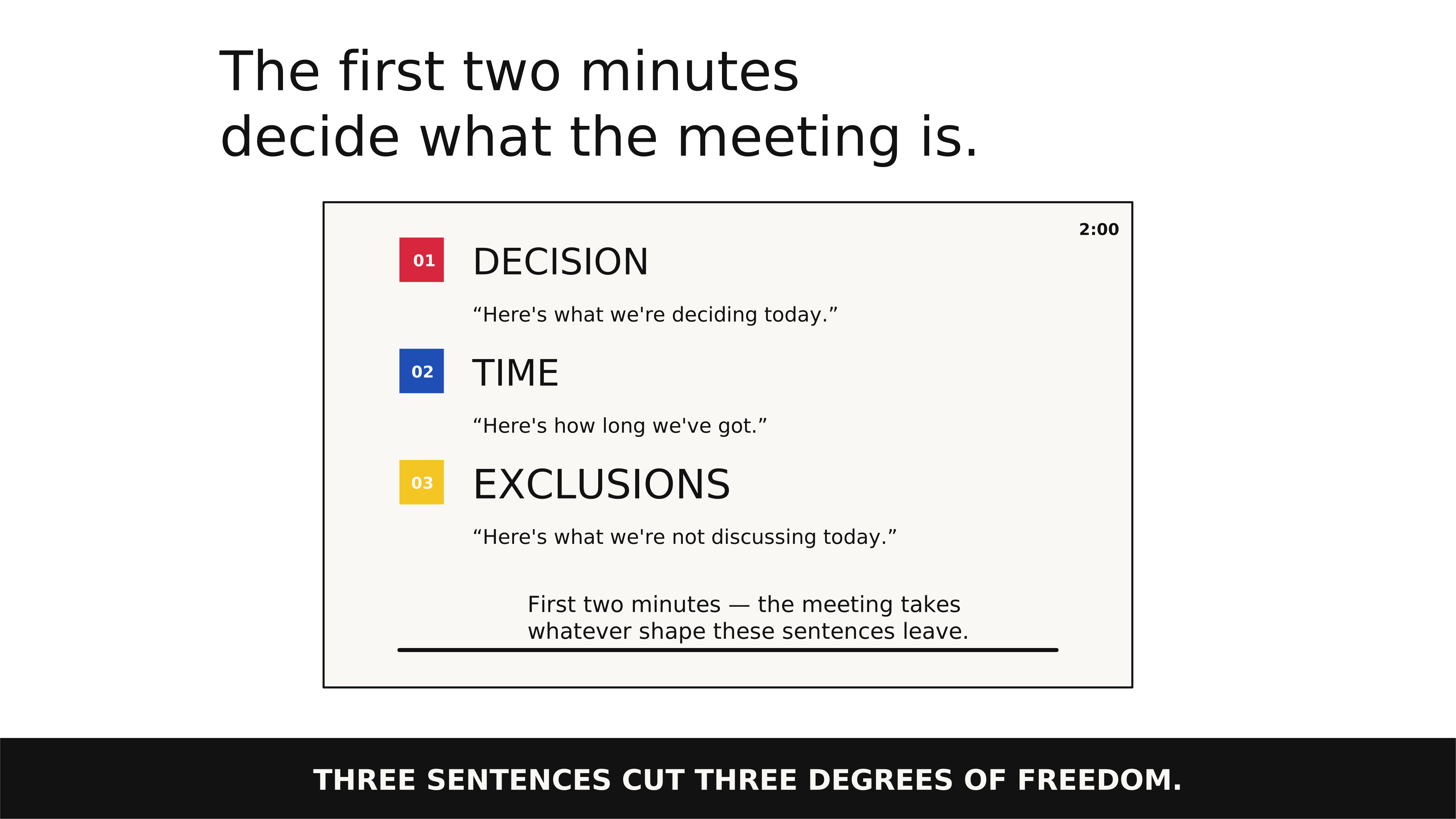
Meetings without facilitation tend toward dysfunction — dominated by the loudest voices, derailed by tangents, concluded without clear outcomes. The discipline recognises that someone must consciously attend to process, whether that's a professional facilitator for high-stakes sessions or simply a team member who takes the role seriously.
Reach for deliberate facilitation whenever the meeting's outcome matters enough to protect. Virtual meetings require adapted techniques — silence reads differently on a screen, and energy is harder to gauge. It fails when the meeting shouldn't exist at all — information-only updates and status checks that belong in async channels.
Your next move: How many of this week's meetings could have been a message — and which one are you about to schedule out of habit rather than need?
What it looked like for them
A church congregation, steering committee, 2010s. The church needed to fund and build a new sanctuary from congregational donations alone. The committee could have designed the building and asked the congregation to pay for it. Instead, they facilitated the congregation through every decision: architect selection, design review, budget allocation.
The meetings were structured to give everyone a voice — not as a courtesy, but as the mechanism for generating commitment. People who participate in the decision fund the outcome differently from people who are told about it afterward.
The facilitation was deliberate: questions before proposals, small-group discussion before full-room votes, transparent budgets updated in real time. Decisions were slower. They also stuck. Nobody claimed six months later that they hadn't been consulted.
The building got funded. The resentment that typically accompanies large congregational expenditures didn't materialise. Meeting facilitation at its best doesn't just produce decisions. It produces decisions people are willing to pay for.
“The room has gone quiet and I don't know what to ask next.”