
Consensus Building
“Techniques for reaching agreements that all participants can accept and support.”
The room is split. You're about to call a vote and declare the majority view "consensus." Half the team will leave uncommitted.
Consensus building is a set of techniques for reaching agreements that all participants can accept and support, even if it's not their first preference. You explore interests, generate options, and work through objections until a decision everyone can live with emerges.
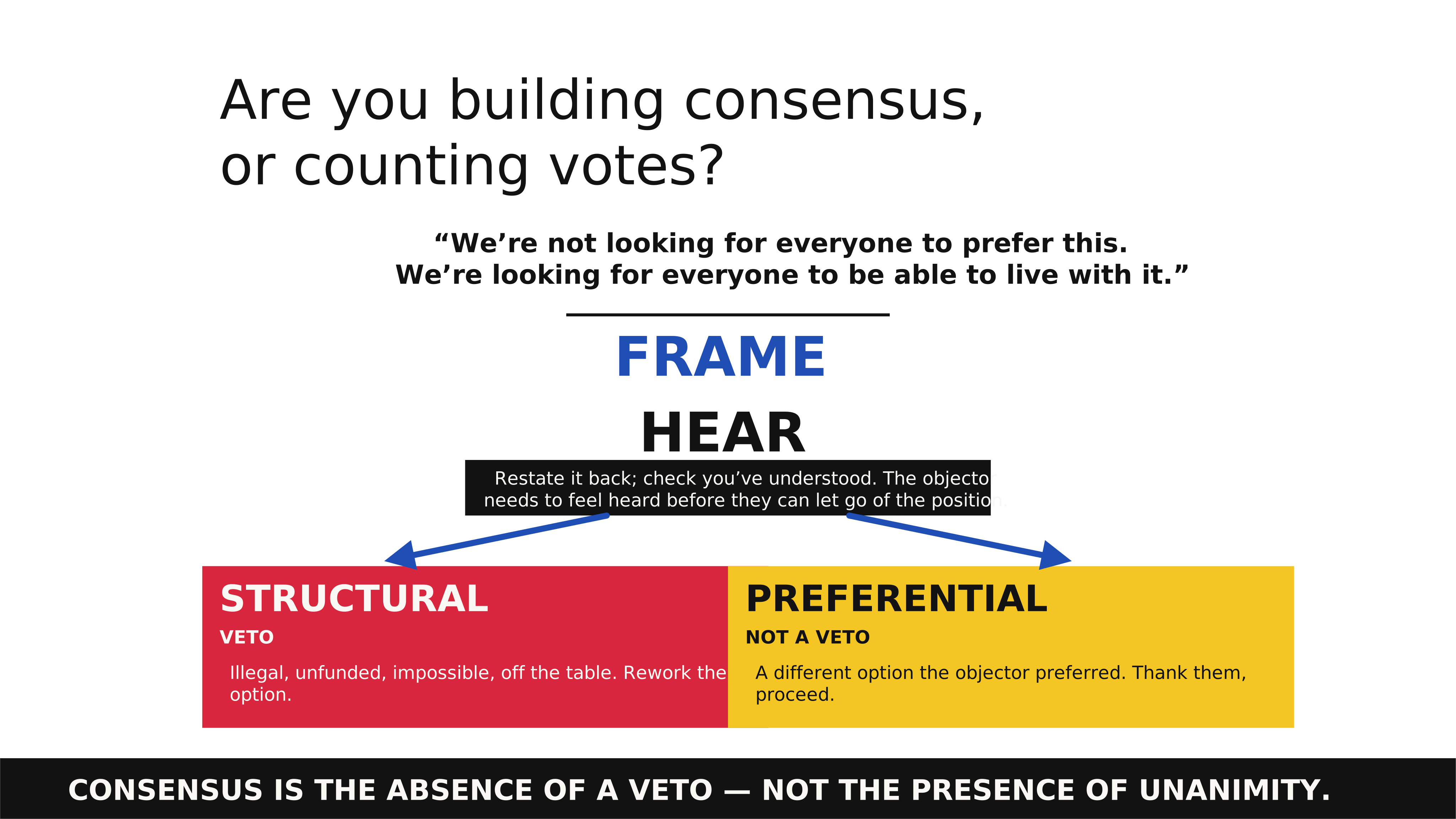
True consensus differs from majority voting — it requires addressing concerns rather than overruling them. That takes longer than autocratic decisions but produces stronger commitment and better implementation. Reach for it on consequential decisions where buy-in matters and diverse perspectives improve quality.
The goal is supportable agreement, not perfect alignment — teams often confuse consensus with unanimity and stall trying to reach a standard the method never demanded. It fails for time-critical decisions where speed outweighs buy-in, or without skilled facilitation to keep the group moving toward resolution rather than circling indefinitely.
Your next move: Are you actually building consensus in the next meeting, or running a vote and calling it consensus when your side wins?
What it looked like for them
James Burke, Johnson & Johnson, 1982. Seven people in Chicago died after taking Tylenol capsules laced with cyanide. The FBI investigation was still open. The board hadn't convened.
Financial analysts advised against a national recall — the contamination appeared local, and pulling every bottle from every shelf would cost roughly a hundred million dollars. Burke recalled everything anyway. Alone. Fast. Against the weight of the internal guidance. He didn't build consensus.
He bypassed it, because the cost of the time consensus would have taken exceeded the cost of being wrong. Johnson & Johnson's market share recovered within a year.
The case is taught in business schools as crisis leadership, but for consensus building it teaches the boundary condition: sometimes the right move is to recognise that consensus isn't available in the time you have, decide alone, and earn the consensus afterward by being right. Consensus is the goal. It isn't always the sequence.
“The room has gone quiet and I don't know what to ask next.”