
1-2-4-All
“A Liberating Structure that rapidly engages everyone in generating ideas simultaneously.”
The meeting's half over. Three people have spoken. Everyone else has checked out or is waiting to be asked.
1-2-4-All is a structured discussion technique for rapidly engaging every person in the room. You reflect alone for one minute, discuss in pairs for two, share in fours, then present to the whole group. The progressive scaling builds ideas organically whilst ensuring every voice contributes.
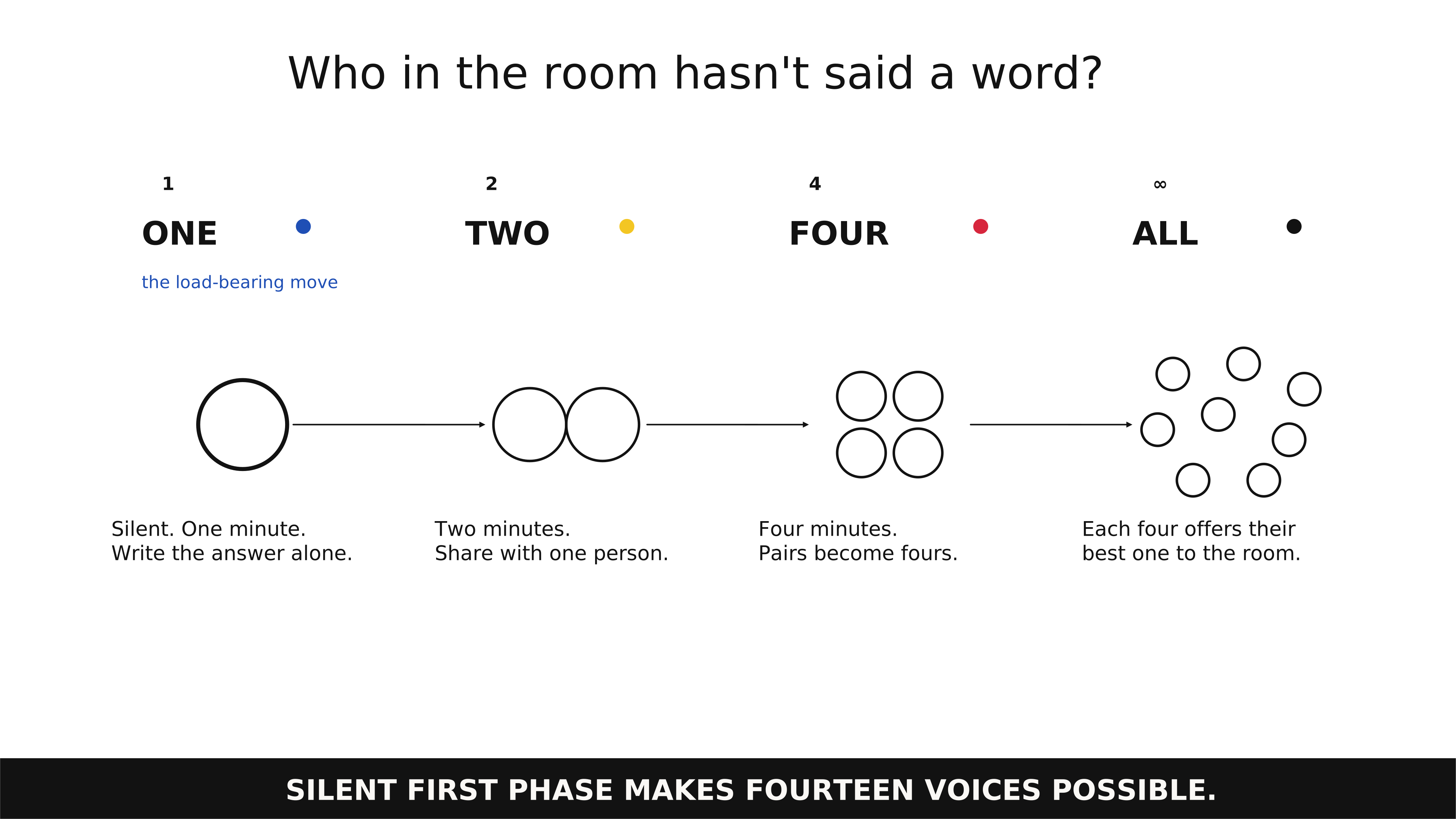
The structure defeats the default mode of meetings — loudest voice wins. It works because the solo minute gives introverts time to form thoughts, the pairs create safety, and the fours test ideas before they reach the room. Reach for it whenever you need diverse perspectives quickly and genuine buy-in through participation rather than presentation.
It requires no preparation and works equally well in person or remotely. It fails for simple binary decisions where broad input adds noise, or when the situation genuinely requires expert judgement rather than collective thinking.
Your next move: Who in your next meeting will say nothing for the entire hour — and what does the team lose every time that happens?
What it looked like for them
A church congregation, steering committee, 2010s. A local church needed to fund and build a new sanctuary entirely from congregational donations. The committee could have made the decisions and presented them for ratification — the standard approach.
Instead, they invited the entire congregation into every stage: choosing the architect, voting on designs, tracking the budget publicly. The structure was deliberate. Individuals reflected first. Pairs discussed. Small groups synthesised.
The full congregation decided. Decisions were slower. They also held. Nobody stood up six months later claiming they hadn't been consulted, because they had been — structurally, not as a courtesy.
The congregation funded the build without the resentment that accompanies being told what's been decided. The 1-2-4-All format doesn't just collect opinions. It builds commitment by making participation structural rather than optional. The committee gave up speed. They got durability in return.
“The room has gone quiet and I don't know what to ask next.”