
WSJF
“Weighted Shortest Job First, a SAFe prioritisation method, sequences work for maximum economic benefit.”
The backlog is prioritised by size. Big initiatives go first because they feel important. Meanwhile, small high-value work waits in the queue, losing value every day.
Weighted Shortest Job First (WSJF) is SAFe's economic sequencing method. You divide Cost of Delay — combining user value, time criticality, and risk reduction — by job size. Higher scores go first. The maths favours small, high-value items.
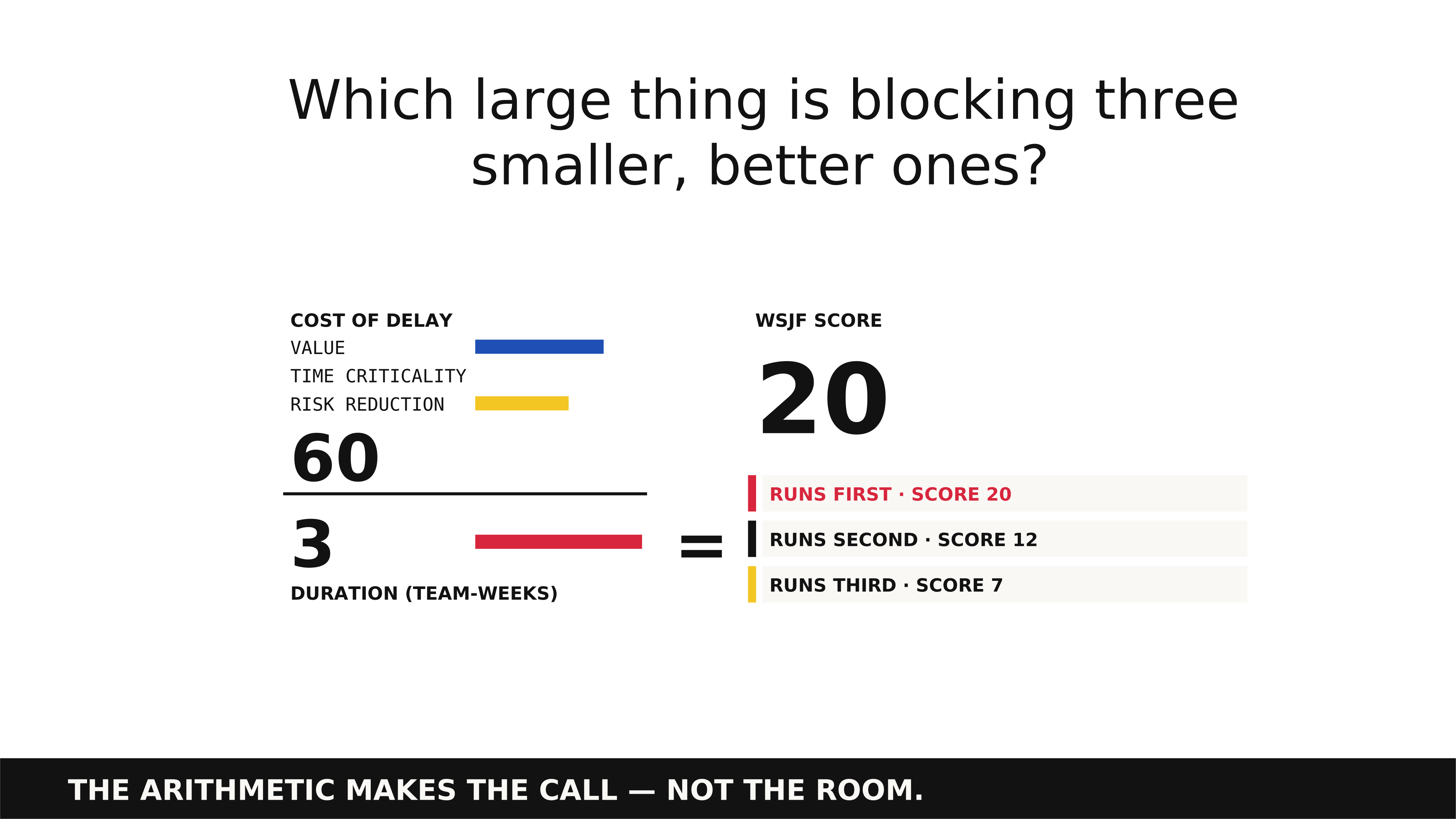
WSJF makes economic trade-offs explicit and comparable, surfacing assumptions teams usually leave implicit. It earns its keep in flow-based environments where continuous prioritisation matters more than fixed sprint commitments — anywhere delay has a real cost and items compete for the same capacity.
The discipline of estimating Cost of Delay forces conversations about what's actually time-sensitive versus what merely feels urgent. It fails for teams not working in flow, when duration estimates are unreliable, or when the formula becomes a shield against judgement rather than a tool for sharpening it.
Your next move: Which large initiative is currently blocking three smaller, higher-value ones — and what's preventing you from sequencing them the other way round?
What it looked like for them
Sarah Bryar, Rivet & Sway, 2012–2014. Rivet & Sway was an online eyewear retailer built on the home try-on model — ship five frames to a customer, they pick one, ship the rest back. The core marketing programme was expensive: shipping frames both ways, handling returns, absorbing the cost of frames that came back damaged.
Meanwhile, ninety-six per cent of eyewear purchases still happened in physical stores. Online customer acquisition at startup scale couldn't compete with Warby Parker's funding advantage.
Bryar's post-mortem, given on record to GeekWire, named the problem precisely: "Our progress wasn't strong enough to attract additional capital." The cost of delay on pivoting away from home try-on was rising every month — each month the unit economics stayed broken was a month closer to running out of runway.
The cost of delay on scaling home try-on was also rising, but toward a ceiling the company couldn't fund past. WSJF would have surfaced the question: which delay costs more?
“The room has gone quiet and I don't know what to ask next.”