
Value vs Effort Matrix
“A prioritisation tool plotting features or initiatives on a grid of value versus effort.”
The backlog is long. Everyone wants different things. You need a way to compare them that a room full of stakeholders can understand in five minutes.
The Value vs Effort Matrix is a prioritisation tool that plots initiatives on two axes: value delivered versus effort required. Four quadrants emerge — Quick Wins, Big Bets, Fill-Ins, and Time Sinks. You place each item, then let the grid do the arguing.
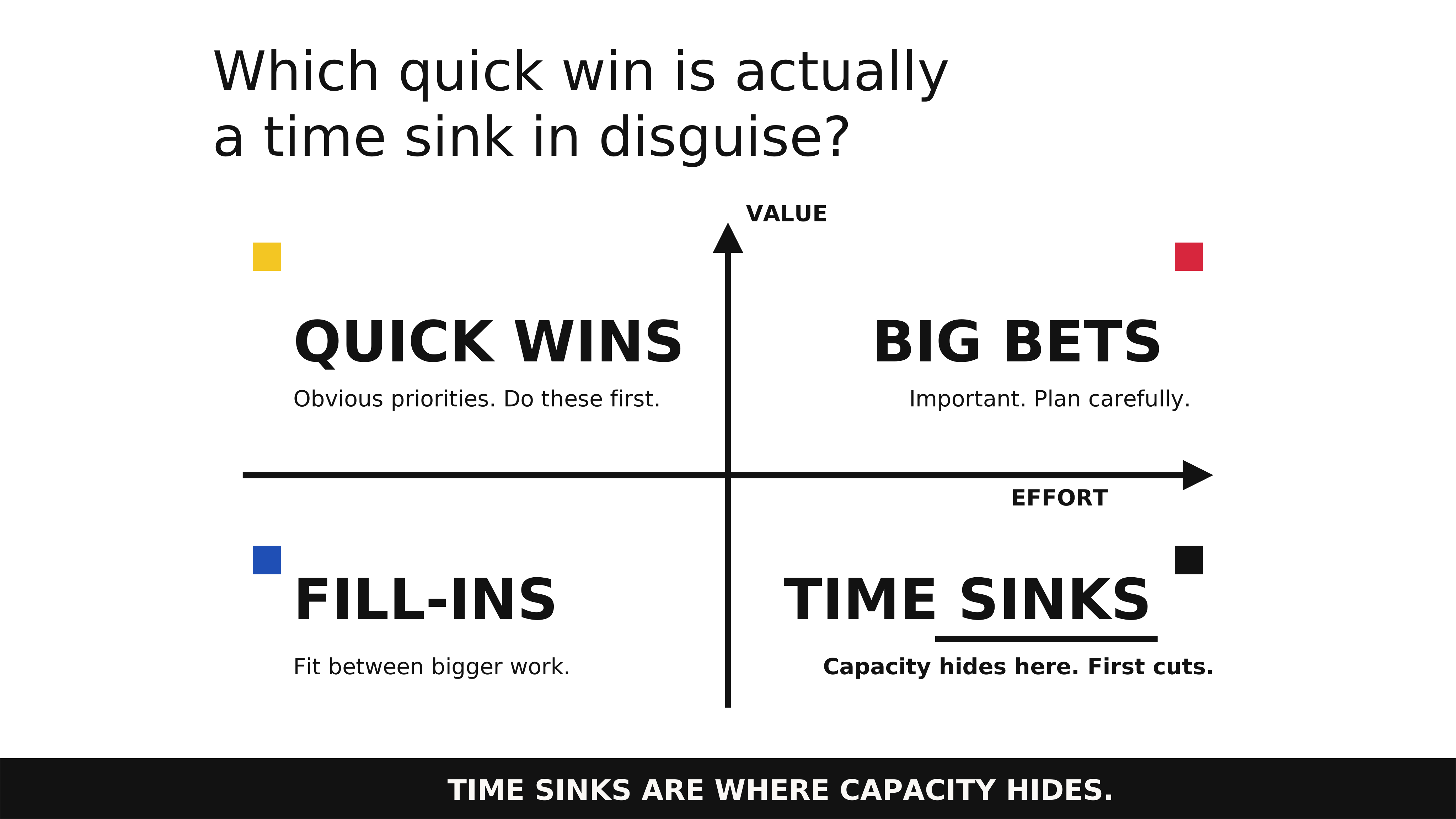
The elegant simplicity masks a deeper challenge: agreeing on what constitutes "value" in the first place. Teams must align on value criteria before the matrix becomes useful. Once they do, the grid makes trade-offs visible and intuitive — stakeholders who struggle with spreadsheets can engage with a quadrant.
Reach for it during triage sessions and stakeholder workshops where speed matters more than precision. It falls apart when effort estimates are unreliable, when items cluster in one quadrant, or for strategic long-term decisions where the two axes can't capture the real variables.
Your next move: Which item is your team calling a Quick Win that's really a Time Sink dressed up — and who benefits from that mislabel?
What it looked like for them
Berg, 2014. Berg made connected hardware. The Little Printer — a tiny thermal printer that delivered personalised content each morning — had genuine cult following, design awards, and press coverage that most startups would kill for. None of it was a business model.
The hardware was expensive to manufacture. The content partnerships were expensive to maintain. The user base was enthusiastic but small, and the path from "beloved niche object" to "sustainable business" required more investment than the returns could justify.
The founders did the arithmetic. The effort column — manufacturing, support, partnerships, infrastructure — kept growing. The value column — revenue, realistic growth projections, acquirer interest — didn't keep pace.
Rather than burn the remaining capital trying to force the numbers to cross, they made the harder choice: shut the company down, open-source the code so the devices could keep running, and leave with their reputations intact. When effort permanently exceeds value, the matrix has given its answer. Berg listened.
“The room has gone quiet and I don't know what to ask next.”