
Stack Ranking
“A prioritisation technique using pairwise comparison to create unique ranks without ties.”
Three priorities are tied for first place. Everyone says they're equally important. You both know what that actually means.
Stack ranking forces you to compare items pairwise and rank them all the way down — no ties allowed. You take the list, pick which of the top two matters more, then which of the next two, and keep going. The result is an ordered list from one to N where every item has a unique position.
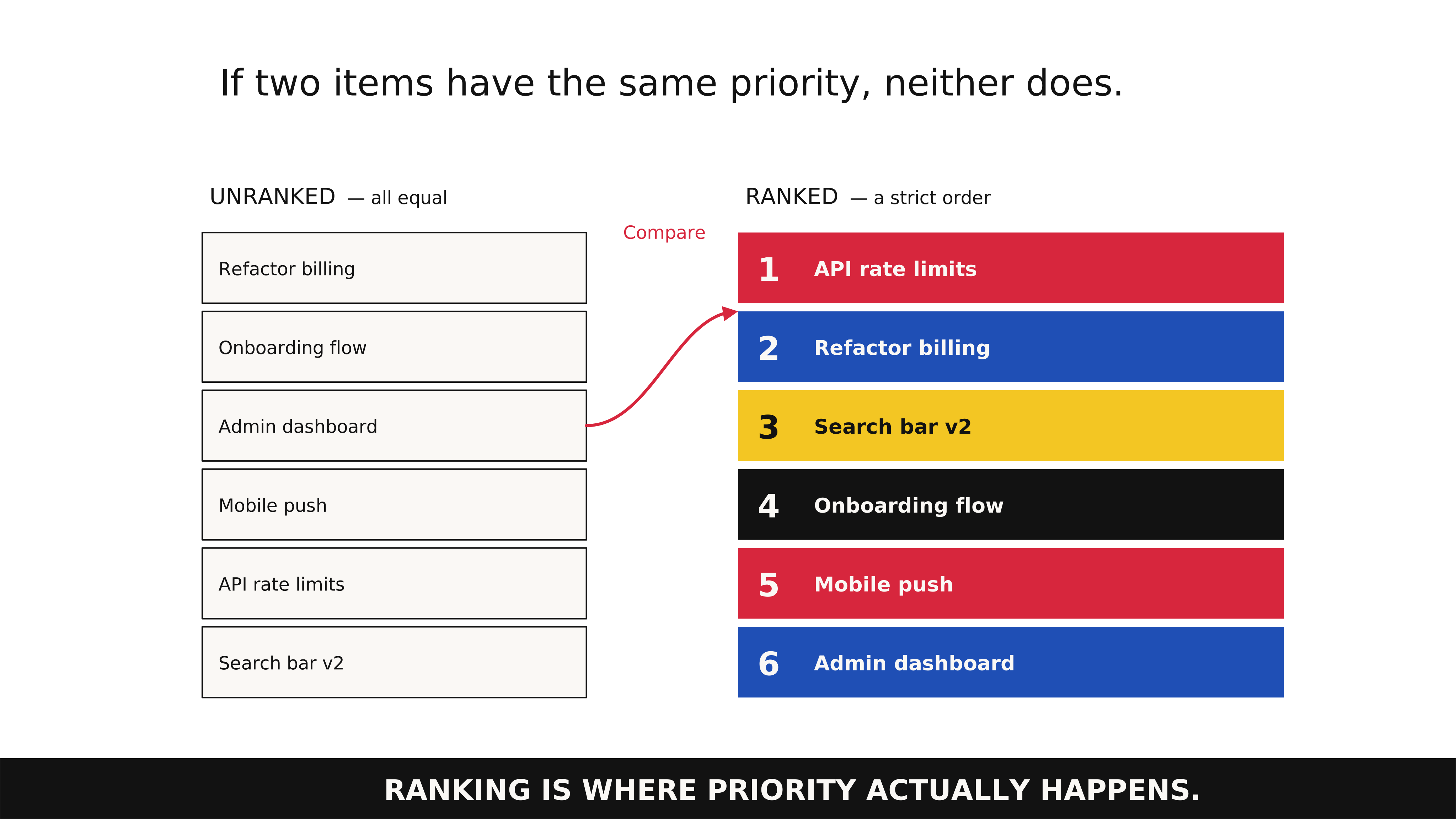
It earns its keep in rooms where "it's all important" is the diplomatic default. The technique can't accept that answer; it forces every comparison into the open. The arguments that surface are the conversations you'd otherwise have weeks later, in delivery, when the trade-offs become physical.
Reach for it on lists of 5–12 items where decision-makers are present and the authority to choose actually exists. It falls apart on lists over 15 — pairwise comparisons grow quadratically and patience runs out before the answer does. It also fails in rooms without the people who can decide; ranking by committee and then sending the result up for approval is just delay.
Your next move: If your team had to rank every item on the backlog from 1 to N right now, with no ties allowed, which two would they fight hardest about — and isn't that the conversation you're avoiding?
What it looked like for them
Decide.com, early 2010s. Decide.com built a price prediction engine: type in a product, and the system told you whether to buy now or wait. Central to the experience was showing prices from multiple retailers side by side, including Amazon.
Then a cease-and-desist letter arrived from Amazon's legal department. The team faced a forced ranking of two options with no middle ground. Option one: comply with Amazon, remove their prices, and ship a comparison engine that didn't compare with the dominant retailer.
Option two: refuse to comply, keep the prices, and spend runway on a legal fight. There was no third choice. No compromise. No "let's revisit this next quarter." The team chose option two. They kept the prices. The legal fight was expensive and consumed more time than it should have.
But the product stayed coherent. eBay acquired Decide a few years later — in part because what they bought was a product that had survived a binary choice without flinching. When the ranking forces you to pick, the ranking has done its job.
“The room has gone quiet and I don't know what to ask next.”