
RICE Scoring
“Intercom's prioritisation framework calculates (Reach x Impact x Confidence) divided by Effort.”
Three features are fighting for the next slot. Everyone has an opinion. Nobody's showing their working.
RICE is Intercom's prioritisation framework. You score each initiative on Reach, Impact, Confidence, and Effort, then calculate (Reach x Impact x Confidence) / Effort. The result is a comparable score that replaces gut feel with explicit estimation.
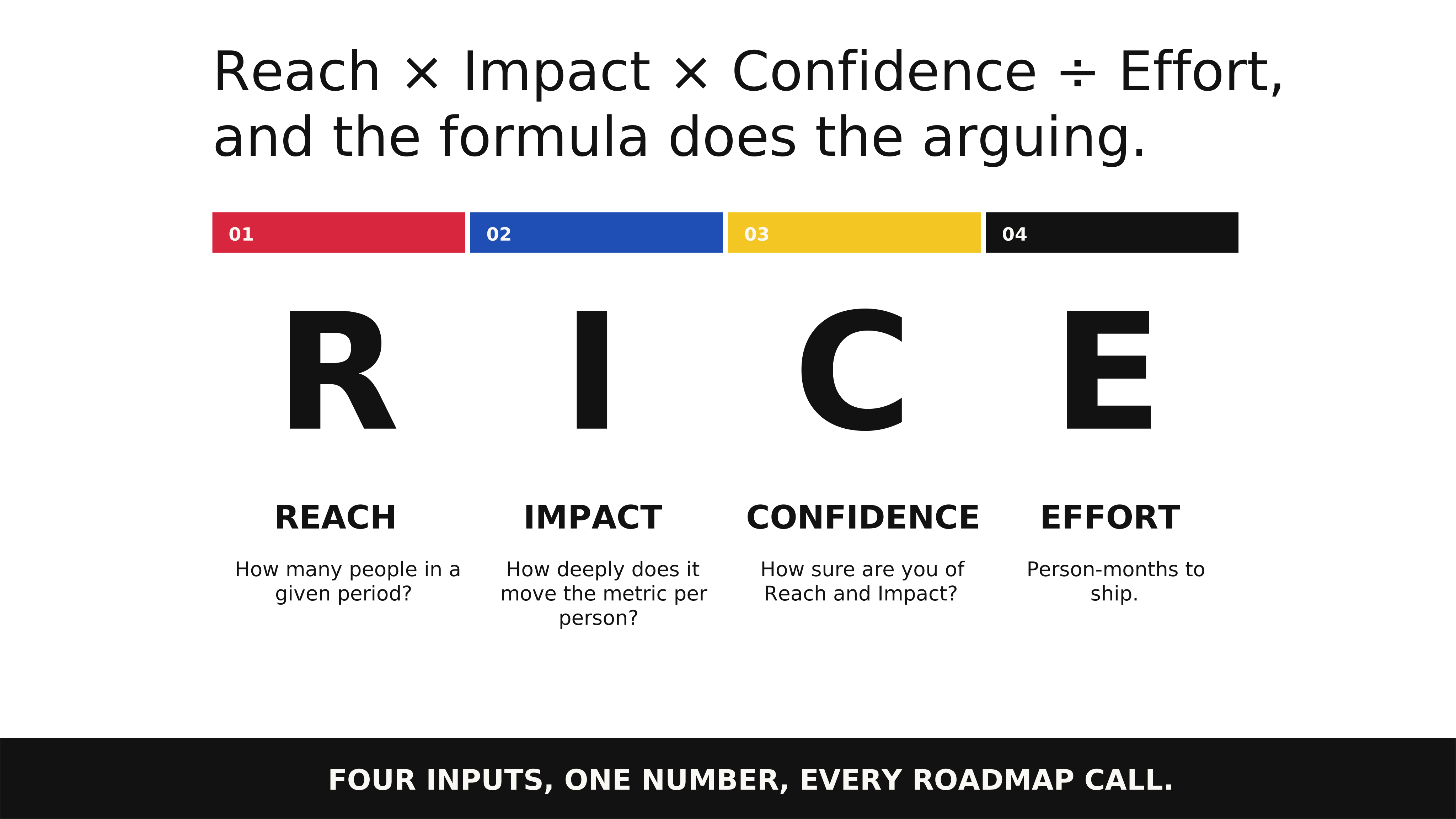
The confidence multiplier is the most honest part — it penalises wishful thinking by reducing scores for uncertain predictions. RICE earns its keep when comparing initiatives so different they resist intuitive comparison, like arguing whether a retention play outranks a new feature. The discipline of assigning scores surfaces disagreements about assumptions that would otherwise stay hidden until delivery.
Reach for it when prioritisation debates keep circling without resolution and you need a shared language for trade-offs. It fails when confidence in all estimates is very low — scoring guesses precisely creates false certainty — and for strategic pivots where the numbers can't capture what matters.
Your next move: What confidence score would you actually give the top item on your roadmap if you had to defend it under oath — and why isn't that score on the document?
What it looked like for them
Greg Linden, Findory, early 2000s. Linden had built Amazon's recommendation engine. He knew algorithms. He built Findory — a personalised news aggregator — with genuine technical sophistication, years ahead of its time. Early users loved it.
What killed Findory was how Linden scored his own priorities. Having watched the dot-com crash from inside Amazon, he was determined not to spend recklessly. He paid himself nothing. He hired no one. He bought the cheapest hardware. He spent nothing on marketing.
Every decision prioritised low effort over high reach. In RICE terms, the Confidence and Effort scores looked excellent — he was certain the product worked and the effort was minimal. But Reach was zero. Nobody could find a product nobody was telling them about.
Linden's post-mortem named the trap: by avoiding the dot-com failure mode of reckless spending, he'd walked into the opposite one — starvation. The frugality that prevented a fast death by burn rate produced a slow death by under-investment. The scoring was right. The weights were wrong.
“The room has gone quiet and I don't know what to ask next.”