
MoSCoW Prioritisation
“A prioritisation technique from DSDM categorising requirements as Must have, Should have, Could have, and Won't have.”
Everyone's defending their own work. Nothing's coming off the list. The deadline isn't moving.
MoSCoW sorts the work into four buckets. Must have — or the thing fails. Should have — important, not vital. Could have — nice if there's room. Won't have — not this time. It comes from the Dynamic Systems Development Method, an agile framework that treated deadlines as real.
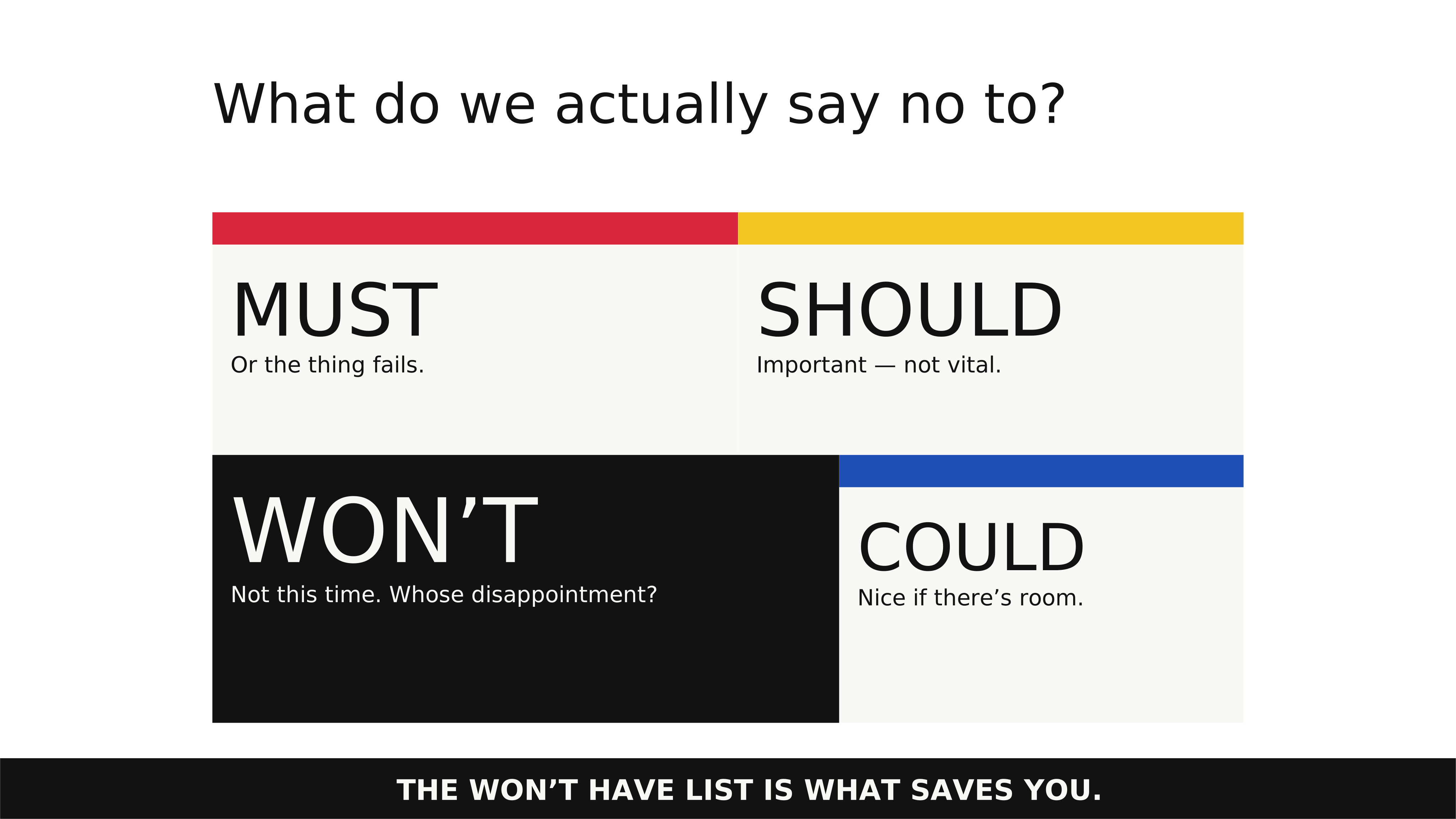
The trick isn't the four categories. It's the fourth one. Won't have puts what you're not doing on the page, which makes trade-offs negotiable without anyone having to concede out loud. Use it when the deadline is fixed and the scope is bigger than the time. It falls apart when everything genuinely is a Must have, or when the stakeholders who'd fight over the list aren't in the room.
Your next move: What's actually in your Won't Have list this quarter — and if the answer is 'nothing', whose disappointment are you avoiding by refusing to say no?
What it looked like for them
Jørgen Vig Knudstorp, LEGO, 2003. LEGO was eight hundred million dollars in debt. The company had expanded into theme parks, apparel, video games, and a catalogue of thirteen thousand unique brick designs — most of which appeared in one set and never again.
Everything was a Must Have. Nothing was a Won't Have. Knudstorp's move was to reverse the ratio. He sold the theme parks. He halved the brick catalogue. He dropped the apparel and licensing distractions.
The core construction sets — the thing the brand had been built on — were the only Must. Everything else was explicitly classified as Won't, not deferred or deprioritised but stopped. The company didn't grow its way out of the crisis. It subtracted its way out.
The discipline was in the Won't column. Any MoSCoW exercise produces a Must list and a Should list with relative ease. The hard column — the one most teams leave empty because filling it means saying no to someone — is the one that saved LEGO.
“The room has gone quiet and I don't know what to ask next.”