
Eisenhower Matrix
“A four-quadrant prioritisation tool plotting tasks on urgent versus important axes.”
Another week, another inbox cleared. The thing you actually wanted to move forward hasn't moved at all. Same as last week.
The Eisenhower Matrix is Dwight Eisenhower's task-sorting framework. Plot every task on two axes: how urgent, how important. Four quadrants. Q1 urgent and important: do now. Q2 important but not urgent: schedule. Q3 urgent but not important: delegate. Q4 neither: drop.
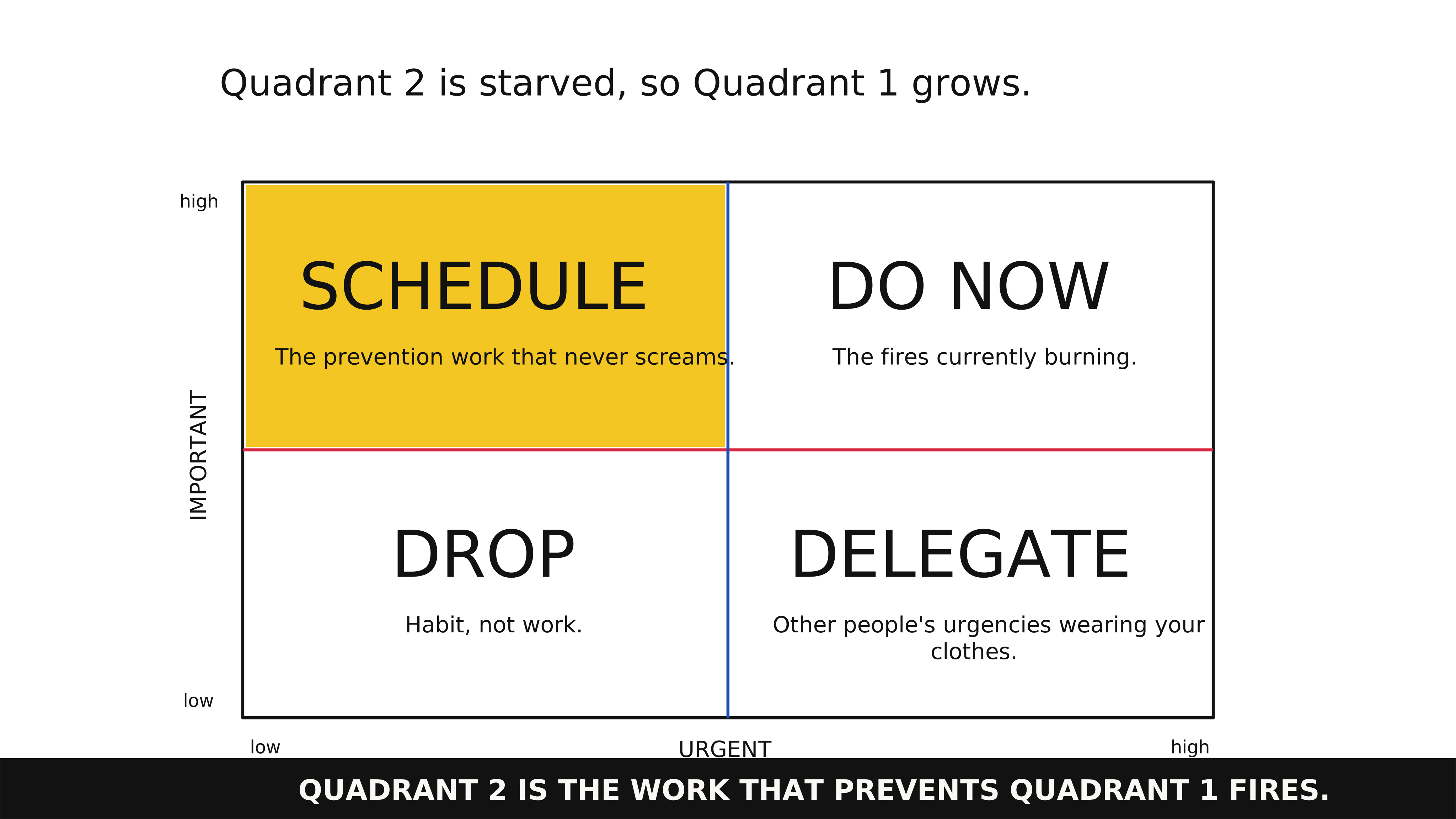
Most of the strategic work that actually moves things forward lives in Q2 — important but never screaming. The matrix exists because Q2 keeps losing to Q1, week after week, even when everyone knows it shouldn't. Reach for it when the to-do list keeps producing urgent fires but the things that would prevent next month's fires are still at the bottom.
The matrix doesn't solve the discipline problem; it makes it visible, which is where the conversation has to start. It's a poor fit for genuinely interdependent work where one task's urgency depends on another, or for roles where every task genuinely is urgent — emergency response, live operations, crisis management.
Your next move: Which Quadrant 2 task have you been postponing for three weeks because something more urgent kept appearing — and what's the cost of another week's delay?
What it looked like for them
Pierre-Olivier Latour, Everpix, 2012–2013. Everpix was one of the best photo storage products of its era. The conversion rate from free to paid was unusually high. Users loved it. The technology — automated organisation of personal photo libraries — was years ahead of the major platforms. None of it was enough. The problem was the AWS bill. Four hundred million hosted photos, and the infrastructure cost was growing faster than revenue.
Every week, the team faced a choice between working on features that would attract new paying users and dealing with the infrastructure crisis burning through their runway. The urgent kept winning. Server costs, billing integrations, scaling patches — all genuinely urgent, all pulling the team away from the growth work that was important but never on fire.
By the time the team had spent their energy on urgent infrastructure, there was nothing left for the important work of building a sustainable user base. A thirty-five-thousand-dollar AWS bill came due. They couldn't pay it.
“The room has gone quiet and I don't know what to ask next.”