
Shifting Perspectives
“The deliberate practice of examining scenarios through different lenses.”
The team keeps arriving at the same answers. The solutions feel narrow. You suspect the problem isn't a lack of ideas but a lack of viewpoints.
Shifting Perspectives is the deliberate practice of examining a problem through different lenses — competitors, non-users, different cultures, or entirely unfamiliar viewpoints. You structure exercises like 'How would X approach this?' where X is a specific person, organisation, or archetype.
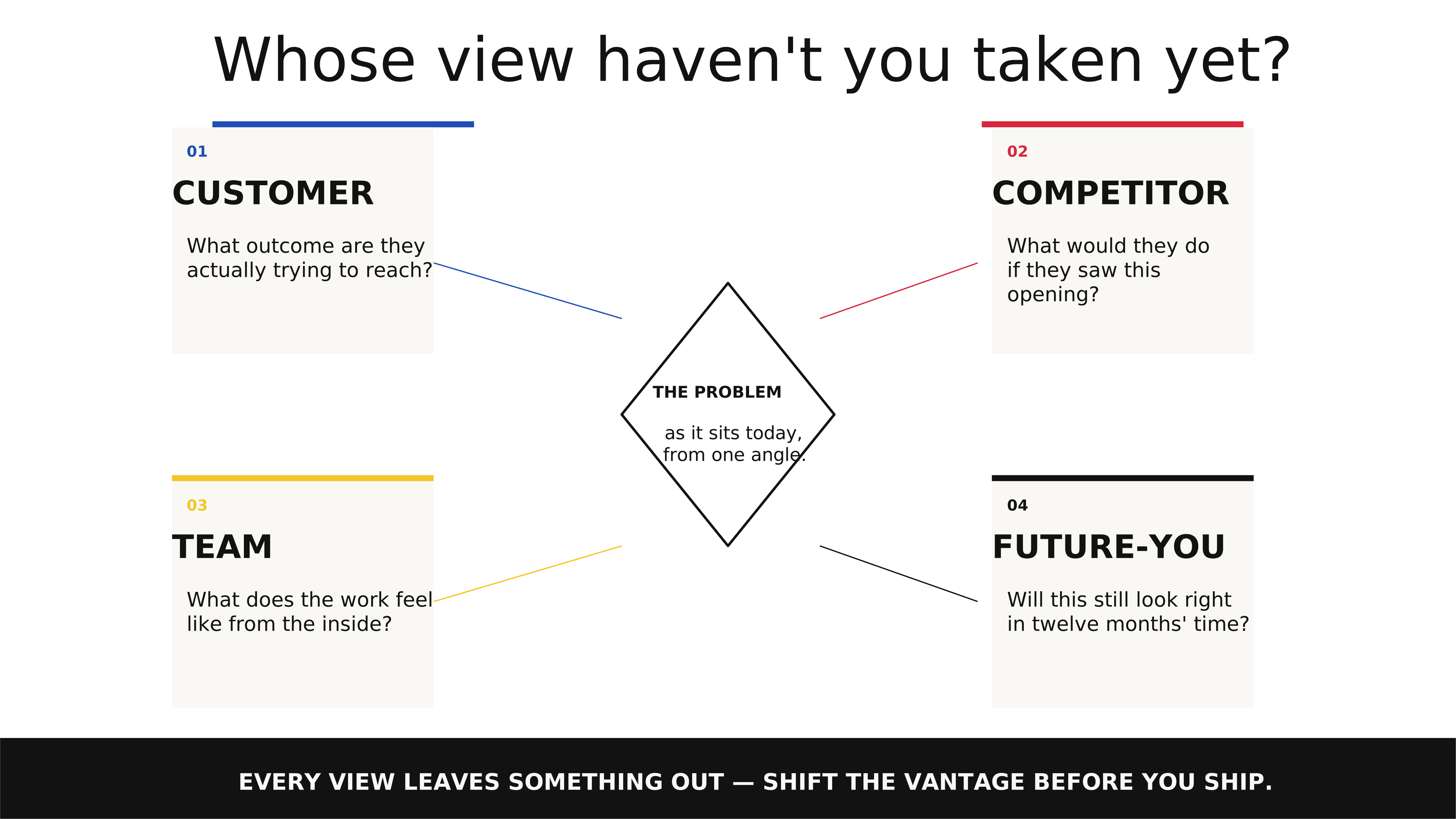
The most valuable perspective is often the one that feels most foreign or uncomfortable, precisely because it reveals blind spots invisible from familiar vantage points. The unique strength is expanding the solution space by changing the vantage point rather than trying harder from the same one. It builds empathy while generating options the team's default framing would never produce.
Reach for it when a group keeps converging on the same answers despite genuinely trying to think differently — that's usually a sign everyone's working from the same assumptions. It fails without genuine openness to what unfamiliar viewpoints reveal, or when the problem genuinely requires deep domain expertise rather than breadth of perspective.
Your next move: How would a competitor you secretly admire solve the problem in your next meeting — and would you be willing to copy them, or is pride going to stop you?
What it looked like for them
Nokia, late 2000s. Nokia's engineers saw the iPhone clearly. They knew Symbian was outclassed. They could describe the threat in precise technical detail. The perspective that needed shifting wasn't the engineering team's — it was leadership's.
Nokia's senior management viewed the mobile phone market through the lens of carrier relationships, hardware margins, and volume manufacturing. From that perspective, the iPhone looked like a niche luxury product with no physical keyboard and no carrier customisation.
The perspective that would have saved Nokia — seeing the phone as a software platform rather than a hardware product — required abandoning the frame that had made them dominant. Shifting to that perspective meant admitting the thing that generated their revenue was already dying.
They couldn't make the shift because the old perspective was still paying the bills. The mobile division was sold to Microsoft in 2014. The engineers had the right perspective all along. The organisation couldn't adopt it because adopting it meant seeing its own success as the problem.
“I've been told to 'be more innovative' and I don't know what that means.”