
Planting Limits
“The deliberate use of constraints as creative stimuli rather than obstacles.”
Scope is expanding faster than progress. The team has too many options and no forcing function. Every meeting adds features but removes nothing.
Planting Limits is the deliberate use of constraints as creative stimuli rather than obstacles. You consciously impose limits on time, budget, features, or options — even when none exist externally — to force trade-offs that prevent analysis paralysis and spark innovation.
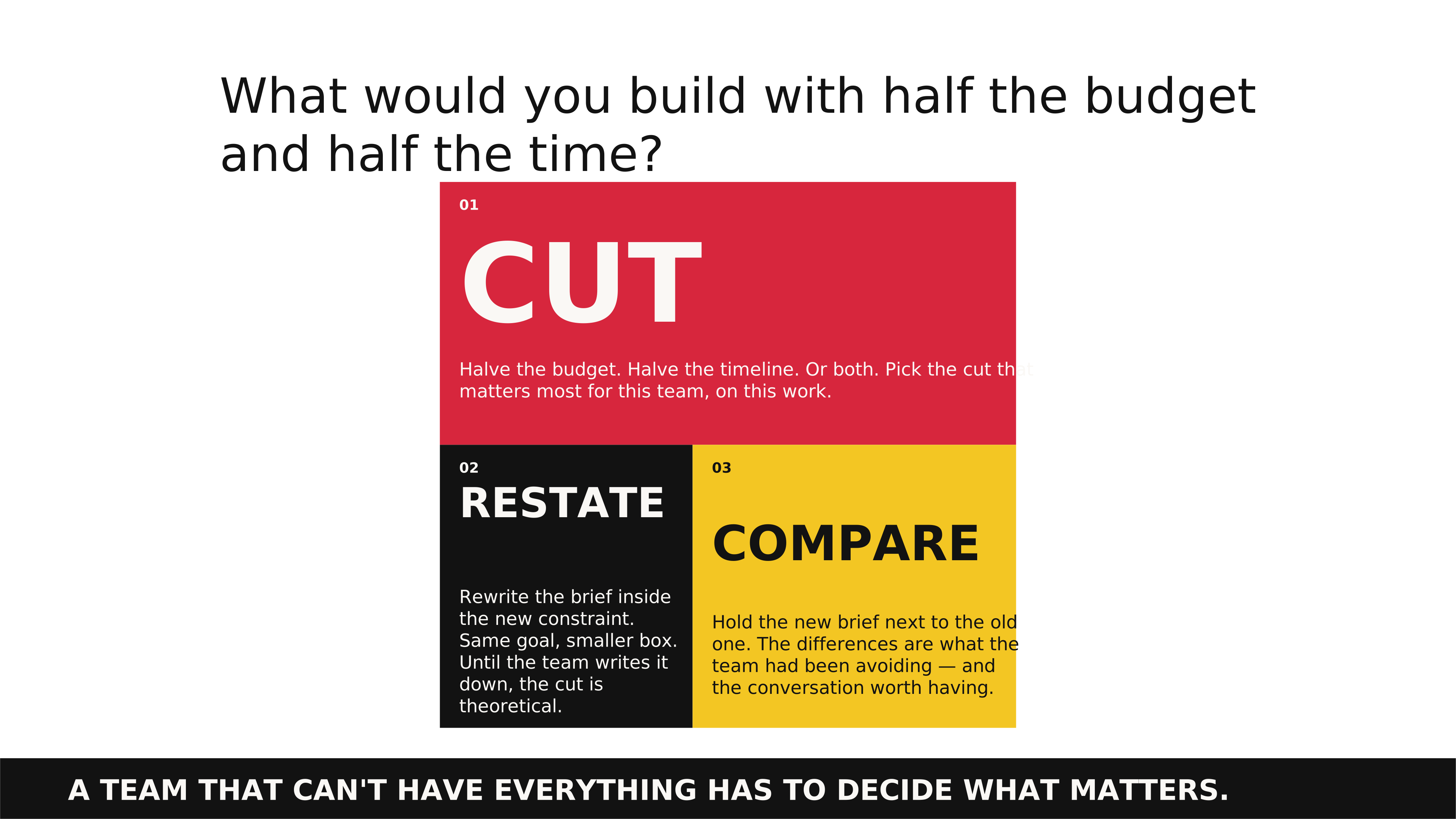
Constraints are not obstacles to creativity; they're often its precondition. Infinite options paralyse, while boundaries focus. Twitter's 140-character limit famously spawned creative communication; similar artificial constraints can produce surprising results in any domain. The unique strength is converting open-ended drift into focused output.
Reach for it when a team is stuck in endless exploration, when scope keeps growing, or when the group has run out of obvious options and needs a jolt. It fails when constraints are already severe — adding limits to a team that's already starved of resources isn't creative stimulus, it's cruelty — or when genuine open exploration is what the situation requires.
Your next move: What would your team build if you cut the budget in half and the deadline in two — and why aren't you considering that version, given how often it tends to be the better one?
What it looked like for them
Howard Schultz, Starbucks, 2008. Schultz returned as CEO to find sixteen thousand stores with drifting quality, diluted brand identity, and falling customer satisfaction. His response was to plant a limit so visible it couldn't be ignored.
He shut every store in the United States for an entire afternoon — all seven thousand — to retrain a hundred and thirty-five thousand employees on espresso technique. The lost revenue was estimated at six million dollars. The retraining content itself was unremarkable.
What mattered was the constraint: closing seven thousand stores in the middle of a business day is a signal that cannot be misread. It told every employee, every customer, and every investor that quality had become a non-negotiable boundary.
Schultz also closed six hundred underperforming stores permanently and launched a customer feedback site that collected ninety-three thousand suggestions in its first year. The share price bottomed two months after the store closures and recovered from there. The planted limit wasn't the training. It was the cost of the training — visible, expensive, and impossible to dismiss as corporate theatre.
“I've been told to 'be more innovative' and I don't know what that means.”