
Pattern Breaking
“Techniques for deliberately disrupting established patterns of thinking.”
The team keeps proposing variations of the same solution. Nobody questions the assumptions underneath. You suspect the real constraint is familiarity, not physics.
Pattern Breaking is a set of techniques for deliberately disrupting established thinking to enable creative breakthroughs. You use reversal (what if we did the opposite?), combination (what if we merged unrelated things?), and elimination (what if we removed this assumed necessity?) to force the group out of well-worn grooves.
Expertise creates mental ruts — the more experienced a team becomes, the harder it is to see alternatives to what's always worked. The discomfort of breaking a pattern is often precisely the signal that you should; comfort means you're in familiar territory where breakthroughs are unlikely. The unique strength is expanding the possibility space before anyone starts converging.
Reach for it when the team's solutions all feel like cousins of each other — recognisable variations rather than genuinely different options. It fails when established patterns actually work and the problem is execution, not imagination, or when breaking patterns becomes an end in itself without subsequent evaluation to sort the useful departures from the merely different.
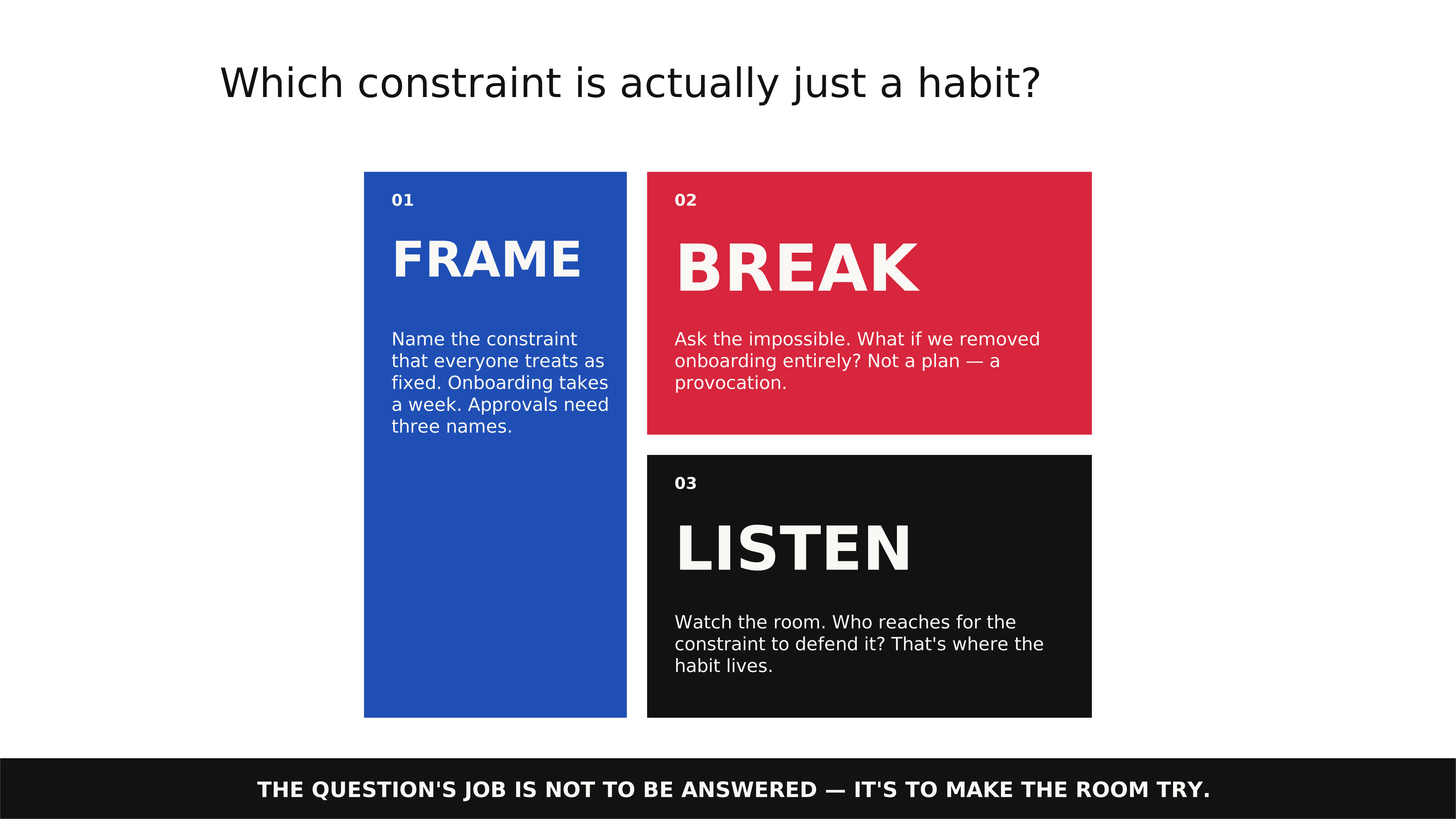
Your next move: Which 'obvious' constraint on the problem in your next meeting is actually a habit dressed up as physics — and what happens if you ignore it for ten minutes?
What it looked like for them
Darren Walker, Ford Foundation, 2010s. The Ford Foundation had operated for decades under a pattern common to large philanthropies: experts in New York decided what communities needed, then funded programmes to deliver it. Walker broke the pattern deliberately.
He introduced a practice of silence and deep listening in board meetings — creating space for what wasn't being said rather than filling the agenda with what headquarters wanted to present. The shift moved the Foundation from top-down solutions to power-sharing with communities.
Grantees began shaping strategy, not just receiving it. The pattern Walker broke wasn't inefficiency or incompetence. It was a decades-old institutional habit of assuming that the people with the money also had the answers. Breaking it required more than a new policy.
It required a new behaviour — silence — that ran directly counter to the culture of a boardroom where senior people are expected to speak. Pattern breaking at this scale isn't about doing something new. It's about stopping something old.
“I've been told to 'be more innovative' and I don't know what that means.”