
Ideation Techniques
“A collection of methods for generating creative ideas.”
The team can't generate enough good options. Every brainstorm produces the same handful of suggestions. You need different methods, or you need a sharper question — and you're not sure which.
Ideation Techniques are a collection of structured methods for generating creative ideas — from classic brainstorming through SCAMPER (Substitute, Combine, Adapt, Modify, Put to other uses, Eliminate, Reverse), morphological analysis, and constraint-based approaches. You pick the technique that fits the challenge: some work better for incremental improvement, others for radical departure.
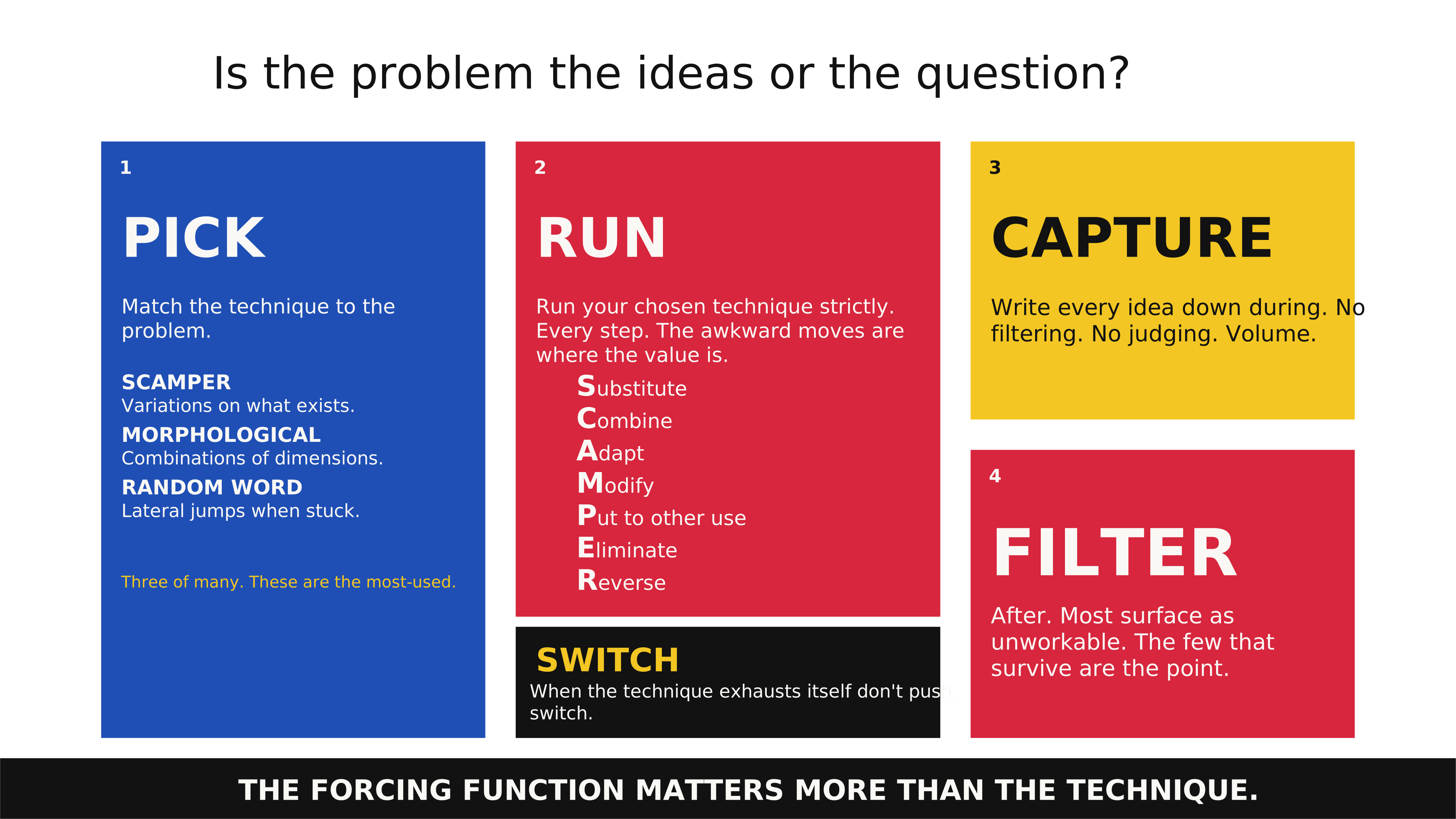
The quality of ideation depends more on problem framing than technique selection. A well-defined problem yields better ideas regardless of method; a vague brief produces vague output no matter how clever the exercise. Skilled facilitation maintains psychological safety and prevents premature convergence — keeping the group in generation mode long enough for non-obvious ideas to surface.
Reach for these when you need quantity and diversity, recognising that breakthrough solutions rarely emerge from obvious first thoughts. They fail without a convergence phase afterwards, because a wall of sticky notes with no evaluation is just colourful waste.
Your next move: How well-defined is the question you're about to ideate against — and is the team's frustration about lack of ideas actually about ideas, or about a problem nobody has properly framed?
“I've been told to 'be more innovative' and I don't know what that means.”