
Creative Problem Solving
“The insight behind CPS: creative thinking and critical thinking are different cognitive activities, and running them simultaneously kills the first.”
Ideas keep getting shot down before they're fully formed. The team defaults to critiquing too early. You need a way to separate imagination from judgement.
Creative Problem Solving (CPS) is the Creative Education Foundation's structured innovation method. You alternate between divergent thinking — generating options without critique — and convergent thinking — evaluating and selecting — moving through problem clarification, idea generation, and solution development.
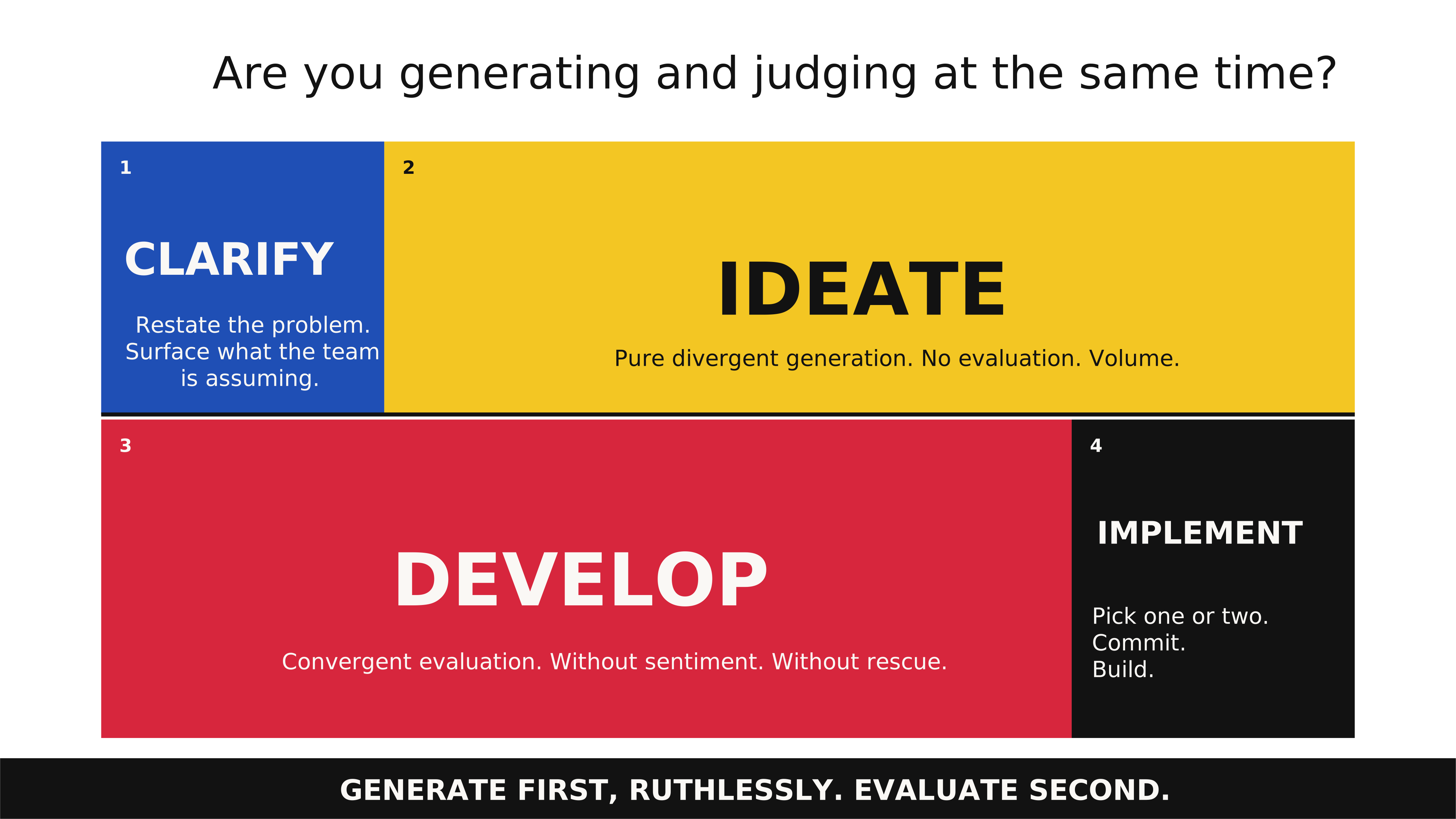
The insight is easily overlooked: creative thinking and critical thinking are different cognitive activities, and running them simultaneously kills the first. Unlike unstructured brainstorming, CPS provides discipline without constraining creativity. The framework gives teams structured permission to explore before converging, with clear boundaries between phases that prevent premature criticism.
Reach for it when obvious ideas are exhausted and the group needs to push further. It fails without skilled facilitation to enforce the phase boundaries — left to their own devices, most teams collapse back into simultaneous generation and evaluation within minutes.
Your next move: How quickly does your team start critiquing ideas in the next ideation session — and how many promising ones get killed before they ever get a fair hearing?
“I've been told to 'be more innovative' and I don't know what that means.”