
Choice Architecture
“The design of environments in which people make decisions.”
Users aren't choosing what you expected. Small interface changes produce outsized behaviour shifts you can't explain. You suspect the way options are presented matters more than the options themselves.
Choice Architecture is Richard Thaler and Cass Sunstein's framework for designing environments in which people make decisions. You use defaults, framing, anchoring, and simplification to make desired behaviours easy — without removing options.
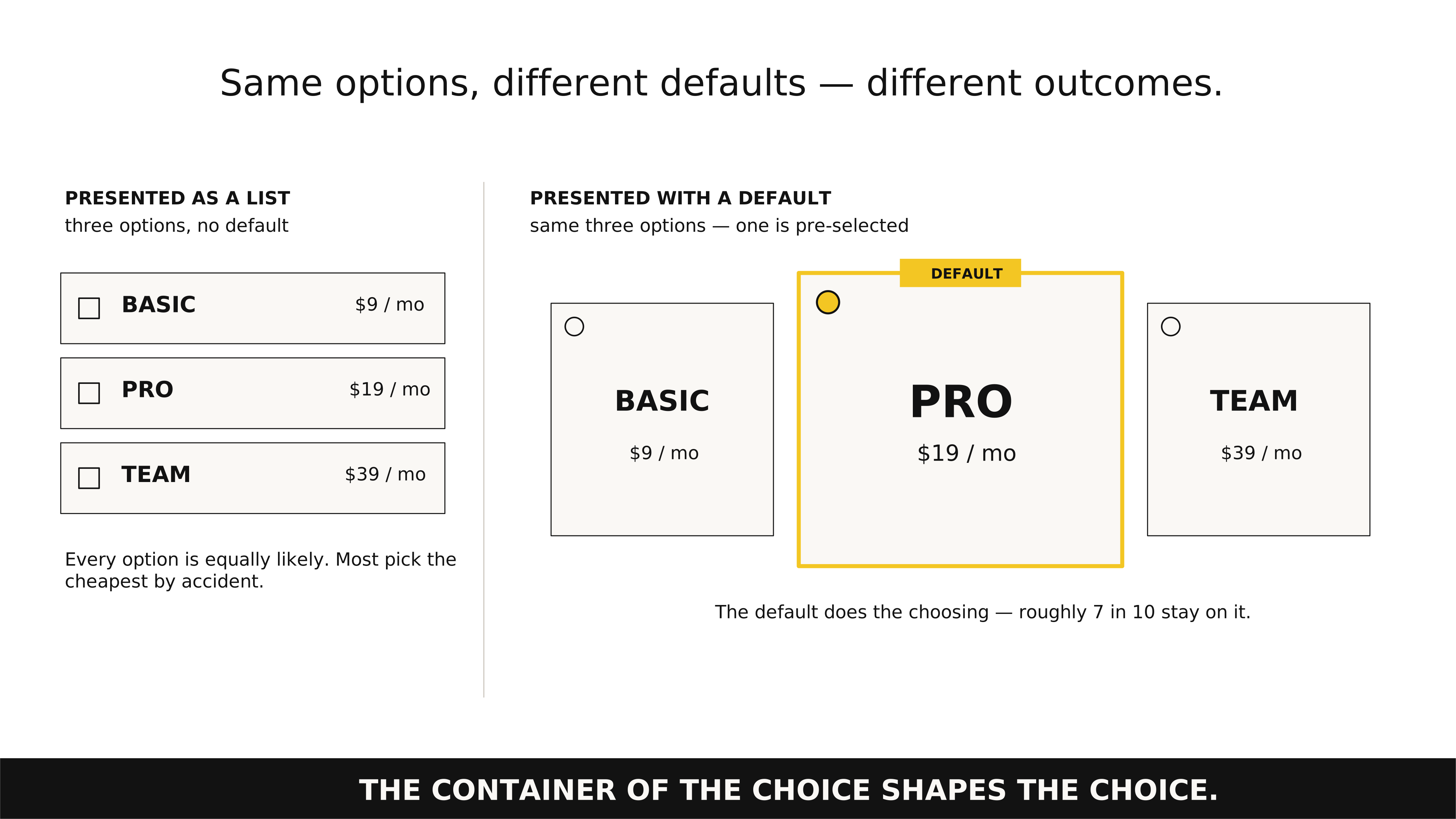
There is no neutral presentation. Every layout, every default, every ordering is a nudge whether you designed it to be or not. Understanding this lets you shape decisions intentionally rather than accidentally. The unique strength is making beneficial choices effortless while respecting autonomy.
Reach for it when user behaviour puzzles you or when conversion paths underperform despite good offerings. It fails when applied without ethical scrutiny — the same techniques that encourage beneficial behaviours can manipulate users against their interests. If you wouldn't be comfortable explaining the nudge to the person being nudged, you shouldn't be using it.
Your next move: Which default setting in your product is currently nudging users toward what's good for your metrics rather than what's good for them — and would you be comfortable explaining the choice to them out loud?
“I've been told to 'be more innovative' and I don't know what that means.”