
Brainstorming
“A group creativity technique designed to generate large quantities of ideas by deferring judgment.”
You need ideas. The same five people will dominate the room. The other six will nod and leave with theirs unsaid.
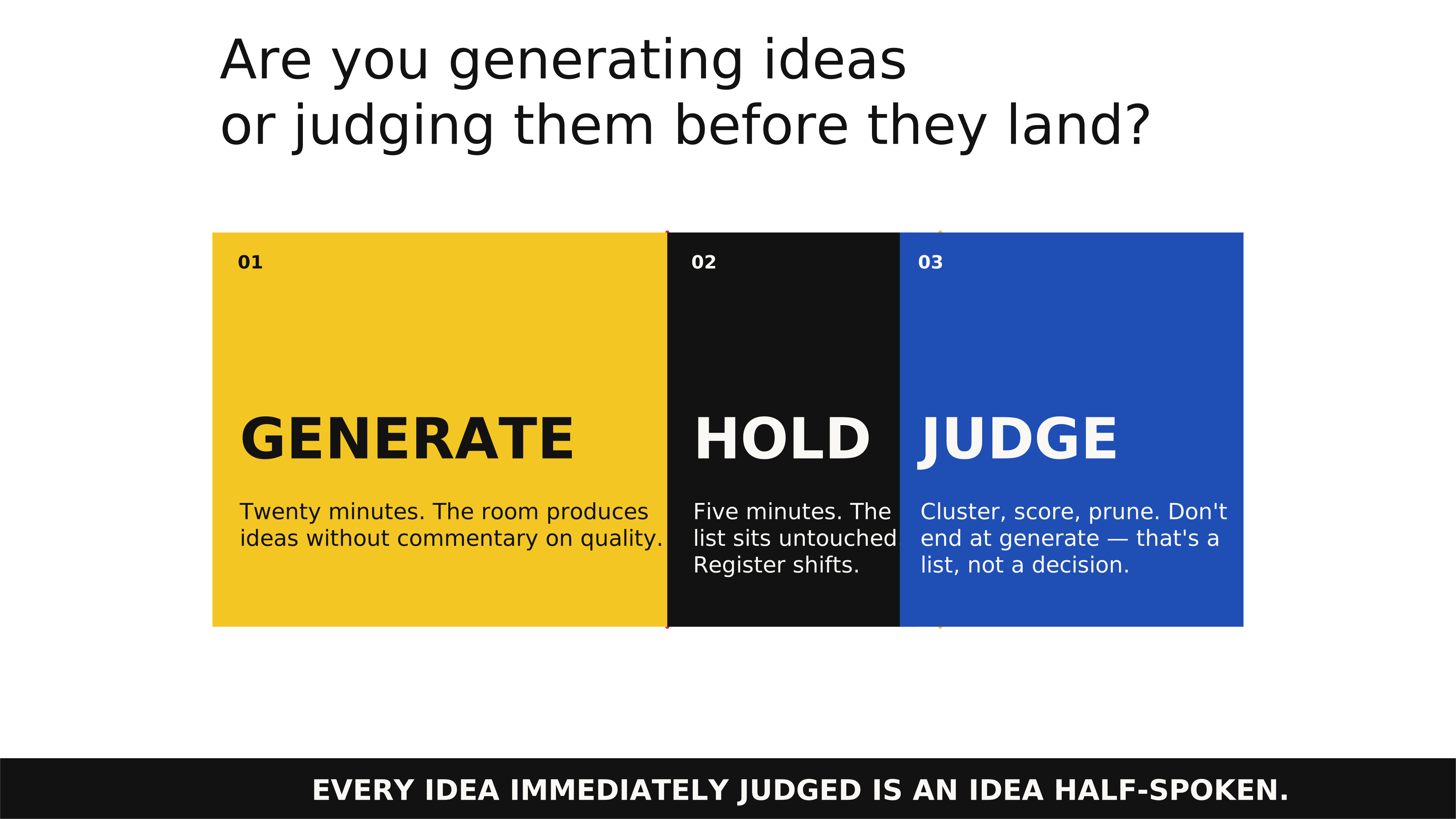
Brainstorming is Alex Osborn's group ideation technique from the 1950s. Four rules: defer criticism, welcome wild ideas, build on others' contributions, go for quantity. The point is to separate generating ideas from evaluating them, because doing both at once kills the first.
It's reached for so often it's become wallpaper, which is part of the problem. A poorly-run brainstorm is worse than no brainstorm — it convinces the team they've explored the option space when they've heard from the loudest three.
The fixes are well-known and rarely applied: have people generate ideas alone first, then bring them together; use a facilitator who isn't the most senior person in the room; set a focus question sharp enough to cut. The technique works for divergent exploration of a clearly-framed problem. It fails when the problem isn't framed yet, or when the room has a power gradient that makes silence safer than speech.
Your next move: When the loudest person in the next brainstorm starts speaking first, what are you going to do about it — or are you going to let them anchor everyone else's thinking yet again?
“I've been told to 'be more innovative' and I don't know what that means.”