
Design Sprints
“Google Ventures' five-day process for answering critical business questions through design, prototyping, and testing.”
You've been circling a big decision for weeks. Meetings produce discussion but not resolution. The team needs to test something real, not talk about testing it.
Design Sprints are Google Ventures' five-day process for answering critical business questions through design, prototyping, and testing with real users. You compress months of debate into a structured week: understand, sketch, decide, prototype, test.
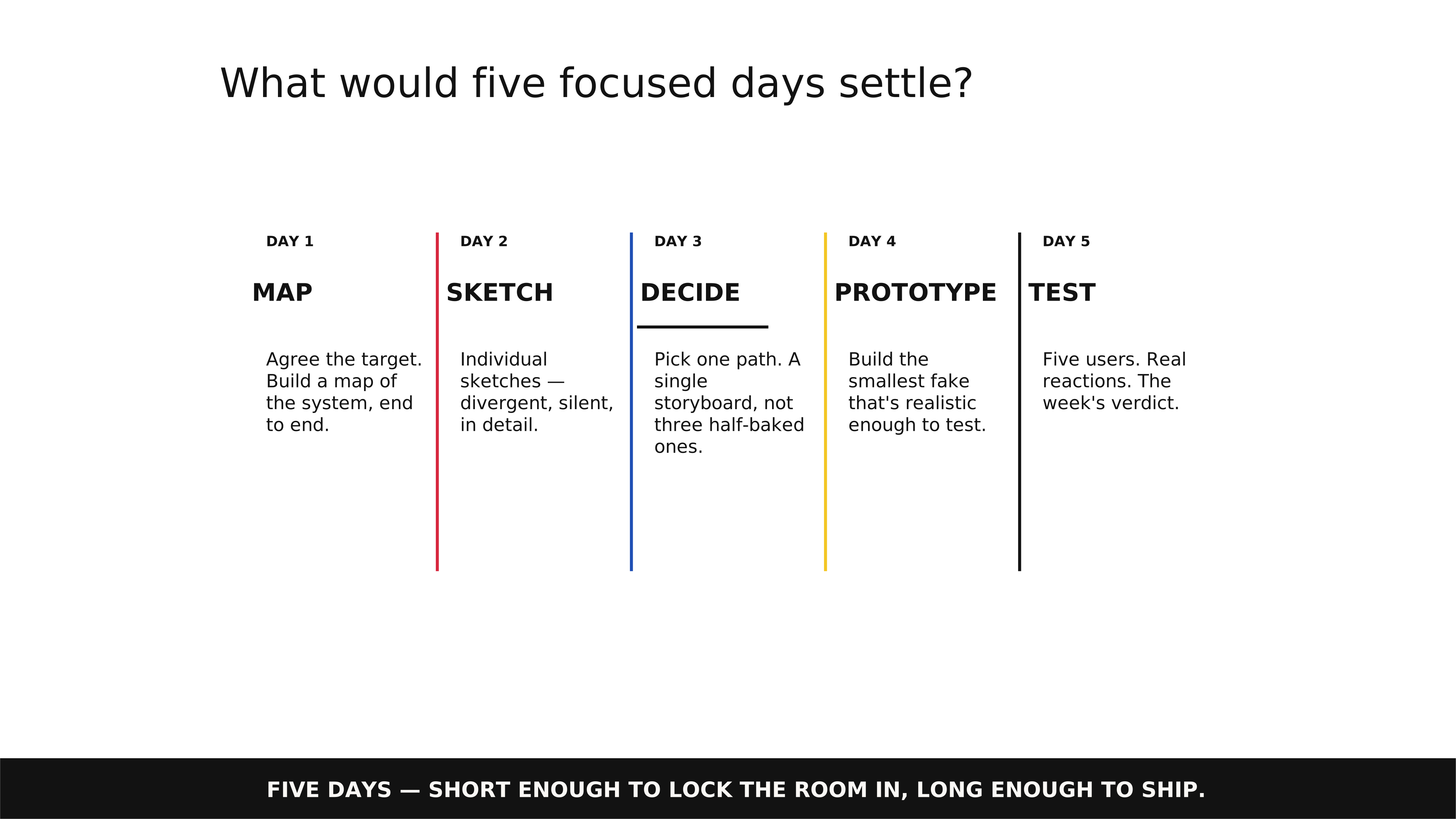
The time constraint is the mechanism — teams achieve more in five focused days than in months of ordinary work because the format eliminates the open-ended discussion that lets decisions drift. Sprints work best for significant problems where the status quo isn't working and conventional approaches haven't yielded answers.
They require a committed decision-maker in the room for the full week; without that authority present, the sprint produces options nobody can act on. They're wasted on well-understood problems where execution, not direction, is what's missing.
Your next move: Which question has been chewed over in three meetings without resolution — and what would happen if you locked the right people in a room for five days to settle it?
What it looked like for them
Stewart Butterfield, Slack, 2012–2014. Butterfield's company Tiny Speck was building Glitch, a multiplayer online game with thinning player numbers and no clear path to growth.
While the team diagnosed why the game was failing, Butterfield noticed something: the internal communication tool they'd hacked together to coordinate a distributed team was genuinely excellent. The game was dying. The tool was thriving. Rather than run another sprint on the game, Butterfield killed it and sprinted on the tool instead.
The diagnostic process — pulling apart what was working from what wasn't — had surfaced the answer. What became Slack wasn't a pivot born from brainstorming or market analysis. It was a product hiding inside the team's own workflow, visible only because the team had been forced to examine everything under pressure. The design sprint's value wasn't in generating new ideas. It was in creating the conditions where the right idea could be recognised.
“I've been told to 'be more innovative' and I don't know what that means.”