
Voice of Customer
“Systematic capture and action on customer feedback from multiple channels.”
Customers keep telling you what's wrong. Support tickets pile up. Surveys come back. But nothing visibly changes, and the feedback is starting to dry up.
Voice of Customer (VoC) is a systematic feedback programme. You capture customer input from multiple channels — surveys, reviews, support contacts, social media — then aggregate, analyse, route to the right teams, and close the loop by telling customers what changed.
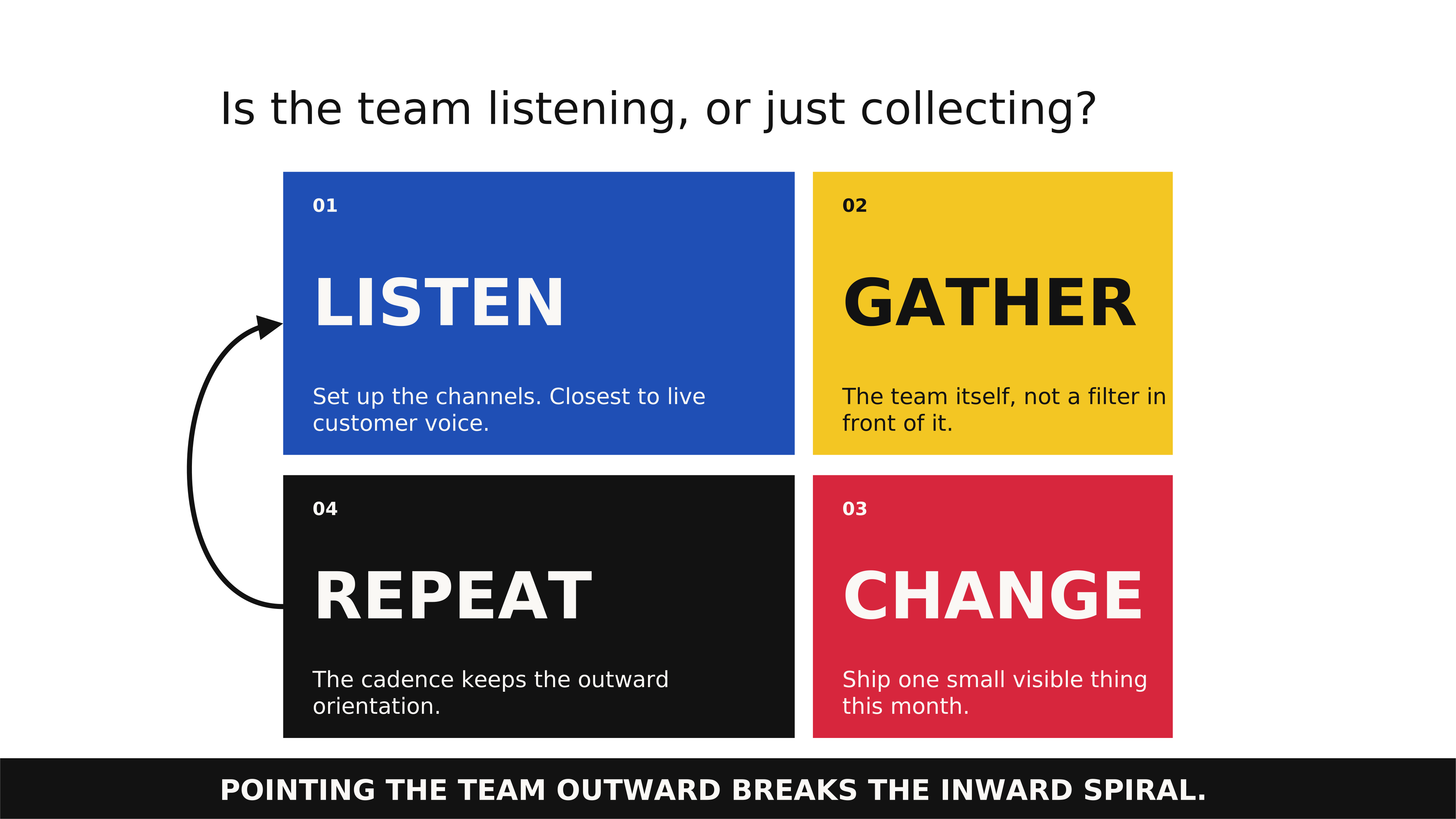
The "closing the loop" part is where most programmes fail, and it's where this one earns its keep. Collecting feedback without acting on it — or worse, without acknowledging it — trains customers to stop bothering. Reach for VoC when you have multiple feedback channels producing signal you're not connecting.
The discipline is distinguishing patterns worth addressing from individual noise. When done well, it creates competitive advantage through demonstrated responsiveness. The failure mode is building collection infrastructure without action infrastructure — a sophisticated funnel that pours into nothing.
Your next move: When a customer last gave you serious feedback, did you tell them what changed because of it — or did you thank them and quietly move on, training them never to bother again?
What it looked like for them
John Seddon, Aviva, 2000s. Seddon was brought in to address a problem Aviva could describe in dashboard language: processing times too long, customer satisfaction scores too low, NPS heading in the wrong direction. The standard response would have been a technology upgrade or a process redesign based on internal metrics.
Seddon did something different. He listened to the actual voice of the customer — not through satisfaction surveys, but by studying what customers were actually calling about, what they were asking for, and where the system was generating unnecessary demand by failing to resolve issues the first time.
The findings reframed the problem entirely. Most of the demand was "failure demand" — customers calling back because the first interaction hadn't worked. Fix the first interaction and the volume drops, the satisfaction rises, and the NPS follows.
The dashboard had been measuring the symptoms. The voice of the customer identified the cause. Seddon's systems thinking approach didn't start with what the company thought the problem was. It started with what customers were actually saying.
“A stakeholder keeps changing their mind and I can't lock the scope.”