
Usability Testing
“Observing real users attempting tasks with a product or prototype.”
Analytics show a drop-off but not the reason. The team thinks the interface is intuitive. Nobody's watched a real person try to use it.
Usability testing is an observational evaluation technique. You set realistic tasks, watch real users attempt them with your product or prototype, and note where they struggle, succeed, or show confusion — even five users reveal most major issues.
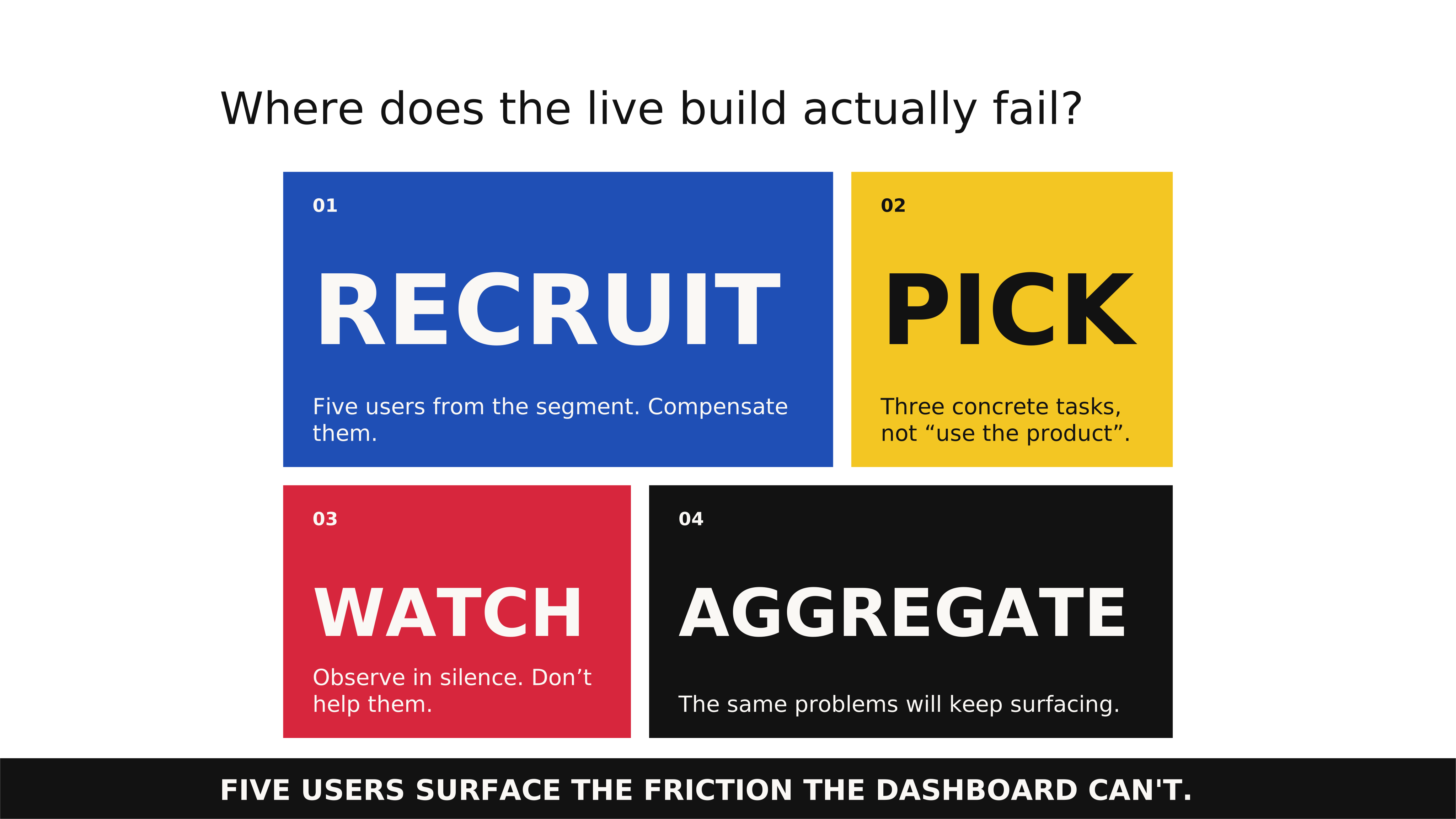
The technique's strength is capturing the qualitative insight that analytics miss — not just what users do, but why they do it and how they feel about it. Reach for it at any fidelity level, from paper prototypes through production software, whenever the team's assumptions about usability need testing.
Effective facilitation avoids leading users while encouraging them to verbalise their thought processes. The failure mode is testing too late, when the cost of change is high and the results become ammunition for arguments rather than drivers of iteration. Testing with unrepresentative users is almost as wasteful — you'll fix the wrong problems.
Your next move: When did you last sit behind a real user trying to use your product, watching them struggle in silence — and if you can't remember, what are you optimising for?
What it looked like for them
Pumodo, early 2010s. Pumodo's founders built a sports tracking app for spectators who wanted live match data. They never usability-tested it with the other half of their user base: the players who were supposed to generate that data.
In their post-mortem, the founders were blunt: "We were not users of our own product. We didn't obsess over it." The spectator experience had been designed and refined. The player experience — logging performance mid-match for an audience of strangers — had been assumed rather than tested.
A usability test with five players in the first month would have surfaced the friction: nobody mid-game wants to stop and enter data for someone else's benefit. The chicken-and-egg problem (no spectators without players, no players without spectators) was a usability gap the team never observed directly because they never put the product in front of the users whose experience would determine whether it worked.
“A stakeholder keeps changing their mind and I can't lock the scope.”